| Piú viste |
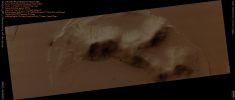
PSP_003570_1915_RED_abrowse-PCF-LXTT.jpgColourful Slope-Streaks in Marte Vallis (Natural Colors; credits for the additional process. and color.: Dr Paolo C. Fienga - Lunexit Team)74 visiteThis image of a large Hill in Marte Vallis has numerous dark- and light-toned Streaks along its Slopes, showing a variety of characteristics observed in other areas with these features.
For example, several dark Streaks have formed "fingers" at their Termini (such as the point where where the Streaks end).
Their formation may be due to the material "feeling" the roughness of the ground as it reaches shallower slopes near the base of the Hill. The dark Streaks also appear to travel over many obstacles along their paths, such as impact craters, small boulders, and rock outcrops. This indicates that the Slope Streaks have sufficient "momentum" and energy early in their descent downslope that they are not affected by such features or the ground.
The Slope Streaks also do not start at a common elevation along the sides of the Hill, suggesting that they are not related to any particular layer(s) of material.
Dark Slope Streaks are thought to fade over time by deposition of a new bright Dust Layer over the old streaked Surface. The presence of light-toned Streaks relative to their surrounding darker-toned surface is particularly interesting.
Scientists have wondered: if dark Streaks fade over time by deposits of new Dust, then how can there be light-toned streaks? Does this mean light-toned Streaks are formed differently? Are the materials of a light-toned Streak different from dark-toned Streaks?
Slope Streaks have been discovered and studied since the early Mariner and Viking Missions to Mars in the '60s and '70s. Scientists are hoping to resolve some of these questions using HiRISE images with its high spatial resolution compared to these previous Mars datasets.MareKromium
|
|

ESP_019526_2220_RED_abrowse.jpgNorhern Plains, S/W of Galaxias Colles (Absolute Natural Colors; credits for the additional process. and color.: Dr Paolo C. Fienga - Lunexit Team:)74 visitenessun commentoMareKromium
|
|
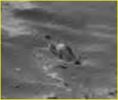
OPP-SOL2167-1N320567338EFFABJKP1986R0M1_v1-IT-01.jpgMartian Gargoyles: "The Rabbit" - Sol 2167 (EDM n.1 - credits for the research and add. process.: Ivana Tognoloni - Lunexit Team)74 visitenessun commentoMareKromium
|
|
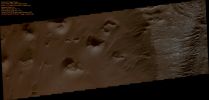
Ganges_Chasma-PIA13637.jpgFeatures of Ganges Chasma (Absolute Natural Colors; credits for the additional process. and color.: Dr Paolo C. Fienga - Lunexit Team)74 visitenessun commentoMareKromium
|
|

ESP_019599_1445_RED_abrowse-00.jpgBright Bedrock inside Hale Crater (Absolute Natural Colors; additional process. and color.: Dr Paolo C. Fienga - Lunexit Team)74 visitenessun commentoMareKromium
|
|

OPP-SOL2453-1P345950569EFFB0J3P2297L2M1.jpgHorizon - Sol 2453 (Slightly Saturated Natural Colors; credits for the additional process. and color.: Dr Paolo C. Fienga - Lunexit Team)74 visitenessun commentoMareKromium
|
|
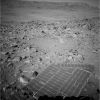
SOL399-2N161793676EFFA600P0675R0M1.jpgSee for Yourself... - Sol 39974 visiteRight Navigation Camera Non-linearized Full frame EDR acquired on Sol 399 of Spirit's Mission to Gusev Crater at approximately 15:20:40 Mars Local Solar Time.MareKromium
|
|
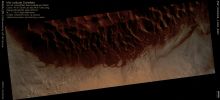
PSP_006648_1300_RED_abrowse-00-PCF-LXTT.jpgSouthern Dunefield (Absolute Natural Colors; credits: Dr Paolo C. Fienga - Lunexit Team)74 visiteSeen here is the Eastern Edge of a Dunefield located in a large, degraded crater in the Southern Hemisphere.
Similar to other Dunes on Mars, these Dunes are dark-toned and contain Gullies. Gullies are features found on Slopes and Dunes in the Mid-Latitudes of both Hemispheres. Both Slope and Dune Gullies were initially suggested to be a result of liquid water from the Surface or Subsurface. Slope and Dune Gullies usually have different morphologies: Dune Gullies are more linear and have Levees bordering their Channels. They typically have no distinguishable, or very small, Alcove and Debris Aprons.
Slope gullies, on the other hand, often have deeply incised Alcoves and Channels that exhibit fluvial characteristics such as Streamlined Islands.
What is highly unusual about this Dunefield is that one of its Gullies has the morphology of a "Slope Gully! (approx. 3 Km across)! This Dune Gully has a very incised Alcove, what appears to be Streamlined Islands on the Channel Floor, and a large, and "feathery" Debris Apron.MareKromium
|
|

Aeolian_Features-Windstreaks-h0165_0068_nd3-PCF-LXTT.jpgWindstreaks (Natural Colors; credits for the additional process. and color.: Dr Paolo C. Fienga - Lunar Explorer Italia)74 visitenessun commentoMareKromium
|
|
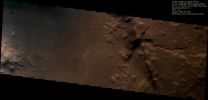
Craters-Unnamed_Crater_Delta-Xanthe_Terra-20080208a-PCF-LXTT.jpgUnnamed Crater's Delta in Xanthe Terra (Absolute Natural Colors; credits for the additional process. and color.: Dr Paolo C. Fienga - Lunexit Team)74 visitenessun commentoMareKromium
|
|

Channels-Hellas_Basin-20080415a-PCF-LXTT.jpgFeatures of Hellas Basin (Absolute Natural Colors; credits for the additional process. and color.: Dr Paolo C. Fienga - Lunexit Team)74 visitenessun commentoMareKromium
|
|
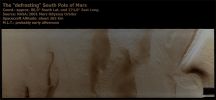
South_Polar_Regions-PCF-LXTT-2.jpgSouth Polar Features (Absolute Natural Colors; credits: Dr Paolo C. Fienga - Lunexit Team)74 visitenessun commentoMareKromium
|
|
| 25353 immagini su 2113 pagina(e) |
 |
|
|
|
|
876 | |
|
|
|
|





