| Piú viste |

PHOE-SOL042-AudioSignal.mp3Martian Sounds... - Sol 42 (File Audio - Full Process.; credits: Dr M. Faccin)74 visiteDa ascoltare, per riflettere.
E attenzione. Noi NON sappiamo esattamente che cosa sia questo "rumore", ma una cosa è certa: i "suoni" in arrivo dal Sol 42 sono in parte simili a quelli che abbiamo già ascoltato nel Sol 38, ma in parte diversi. C'è "qualcosa" in più, oltre ad un segnale portante continuo, che si può sentire bene intorno al secondo 55.
Che ne pensate?
Un consiglio: ascoltate questa emissione (estratta dal Grandissimo Marco Faccin attraverso la scansione di ben 22 frames Phoenix) "in cuffia"!MareKromium
|
|
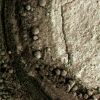
OPP-SOL806-1.jpgBerries and "Greenish" Dust - Sol 806 (Superdefinition + natural - but enhanced - colors; credits: Dr G. Barca)74 visitenessun commentoMareKromium
|
|
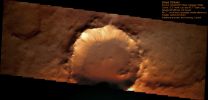
Craters-Unnamed_Crater_in_Terra_Sabaea-20071122a-PCF-LXTT.jpgUnnamed Crater in Terra Sabaea (Absolute Natural Colors; credits for the additional process. and color.: Dr Paolo C. Fienga - Lunar Explorer Italia)74 visiteCaption NASA:"The Dark Slope Streaks on the Interior Rim of this Unnamed Crater located in Terra Sabaea mark those places where the upper layer of Dust has been removed, exposing the darker rock beneath". MareKromium
|
|

PHOE-SOL070-MF.jpgMorning "Water Frost" on Vastitas - Sol 70 (True Colors; credits: Dr M. Faccin)74 visitenessun commentoMareKromium
|
|
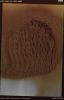
PSP_009233_2535_RED_abrowse-00.jpgEvolution of North Polar Dunes (ctx frame - natural colors; credits: Lunexit)74 visiteThis small unnamed crater is adjacent to the North Polar Erg and contains a fascinating Dunefield. Scientists are interested in the source of the dunes in the crater and the evolution of the Dunefield’s circular shape.
Wind transports material and shapes the dunes; the dominant wind comes from a Westerly-SouthWesterly direction and forms barchans (crescent-shaped) and barchanoid dunes. Secondary winds also play a role in shaping the dunes.
This can be seen in the Southern part of the Dunefield where the barchans transition into transverse dunes. On the northern edge of the dune field are opposite facing barchans formed by winds from the North-East.MareKromium
|
|
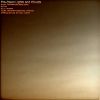
PHOE-SOL101-lg_29677-1.jpgPre-Dawn Lights and Clouds - Sol 101 (stretched - True Colors; credits: Lunexit)74 visitenessun commentoMareKromium
|
|
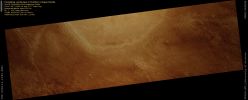
PSP_008214_2285_red.jpgPeriglacial Landscape in Northern Utopia Planitia (Saturated Natural Colors; credits for the additional process. and color.: Dr Paolo C. Fienga - Lunexit Team)74 visitenessun commentoMareKromium
|
|

OPP-SOL1666-1P276098039EFF90__P2357L2M1.jpgFarewell Victoria! - Sol 1666 (possible True Colors; credits: Lunexit)74 visitenessun commentoMareKromium
|
|

North_Polar_Features-The_Erg-PCF-LXTT-4.jpgNorth Polar Erg (Absolute Natural Colors; credits for the additional process. and color.: Dr Paolo C. Fienga - Lunexit Team)74 visiteCoord.: 73,8° North Lat. and 310,3° East Long.MareKromium
|
|

OPP-SOL1637-PAN-GB-1-2.jpgVictoria Crater: Partial Panorama - Sol 1637 (Tri-chromatic Version; credits: Dr G. Barca & Lunexit)74 visitenessun commentoMareKromium
|
|

The_Rings-N00124200-N00124206.gifAnother UFO in the Space of Saturn? (GIF-Movie; credits: Dr G. Barca)74 visiteQuesto GIF-Movie costituisce una (bella!) risposta del Dr Barca al quesito posto in sede di commento ai frames che potrebbero raffigurare un OVNI che sfreccia nello Spazio di Saturno, a ridosso del suo Anello "F": osservate la traiettoria dell'oggetto.
Essa è palesemente iperbolica (nota: "...in Astrodinamica ed in Meccanica Celeste una Traiettoria Iperbolica è un'orbita con eccentricità maggiore di 1. Sotto le ipotesi standard, un corpo che viaggia lungo una Traiettoria Iperbolica arriverà all'infinito con una Velocità Orbitale (detta anche Velocità d'Eccesso Iperbolica, Eccesso Iperbolico o Terza Velocità Cosmica), rispetto al Corpo Centrale, non nulla (ricorda: la Velocità Orbitale di un Corpo Celeste, generalmente un pianeta, un satellite naturale, un satellite artificiale o una stella parte di un sistema multiplo, è la velocità con cui esso orbita attorno al Baricentro del Sistema - ed in genere attorno ad un corpo con massa maggiore. Il termine può riferirsi sia alla Velocità Orbitale Media (misurata su un'intera orbita), sia alla Velocità Istantanea in un certo punto dell'orbita).
Analogamente alle Traiettorie Paraboliche, quelle Iperboliche sono Orbite di Fuga e l'energia specifica di una Traiettoria Iperbolica è positiva...") e quindi - come ben spiegato dalla definizione estrapolata da Wikipedia - del tutto incoerente rispetto alle orbite e traiettorie (dette "Stazionarie") proprie dei satelliti (naturali e non) di un Corpo Celeste.
E questo è un PRIMO elemento che ci porta ad escludere l'eventualità che il Corpo Anomalo in transito sia una Luna Saturniana...Altre idee?MareKromium
|
|

PSP_009309_2725_RED.jpgHigh-Latitude Exposure of North Polar Layered Deposits (possible True Colors; credits: Lunar Explorer Italia)74 visiteMars Local Time: 19:52 (evening)
Coord. (centered): 87,5° North Lat. and 327,2° East Long.
Spacecraft altitude: 317,6 Km (such as about 198,5 miles)
Original image scale range: 31,8 cm/pixel (with 1 x 1 binning) so objects ~95 cm across are resolved
Map projected scale: 25 cm/pixel
Map projection: EQUIRECTANGULAR
Emission Angle: 5,2°
Phase Angle: 60,3°
Solar Incidence Angle: 64° (meaning that the Sun is about 26° above the Local Horizon)
Solar Longitude: 101,9° (Northern Summer)
Credits: NASA/JPL/University of Arizona
Additional process. and coloring: Lunar Explorer ItaliaMareKromium
|
|
| 25353 immagini su 2113 pagina(e) |
 |
|
|
|
|
871 | |
|
|
|
|





