| Piú viste |

North_Polar_Features-The_Erg-PCF-LXTT-4.jpgNorth Polar Erg (Absolute Natural Colors; credits for the additional process. and color.: Dr Paolo C. Fienga - Lunexit Team)74 visiteCoord.: 73,8° North Lat. and 310,3° East Long.MareKromium
|
|

OPP-SOL1637-PAN-GB-1-2.jpgVictoria Crater: Partial Panorama - Sol 1637 (Tri-chromatic Version; credits: Dr G. Barca & Lunexit)74 visitenessun commentoMareKromium
|
|
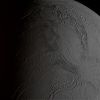
Enceladus-9_cassini_big.jpgEnceladus (natural colors; credits: Lunexit)74 visiteCaption NASA:"What telling impurities taint the ice plumes of Enceladus? To help answer this question, the robotic Cassini spacecraft dove last week to within 30 kilometers of Saturn's ice-plume emitting moon. At this closest-ever approach, Cassini attempted to sniff and obtain chemical data on particles ejected from Enceladus' regular surface, while at other times Cassini flew right through -- and sampled -- ice geysers directly. Searches in the data for impurity clues in the water-ice dominated plumes and surface ejecta are progressing. Although the main purpose of this flyby was particle analysis, several interesting images are emerging. Visible in the above image, for example, is an unusual gray sheen running vertically up the image center that might be water vapor escaping from surface canyons. Other notable features visible above include vast plains of craterless icy grooves, the day-night terminator across the image left, and an area near the top comparatively rich in craters. Cassini is scheduled to buzz by Enceladus in an imaging run near the end of this month".MareKromium
|
|

Teoria_di_Schiapparelli_dei_Canali_Paralleli_di_Marte-3.jpgThe "Schiaparelli's Parallelism" (Mars-like Version, by Roberto Tremolada & Lunexit)74 visitenessun commentoMareKromium
|
|

The_Rings-N00124200-N00124206.gifAnother UFO in the Space of Saturn? (GIF-Movie; credits: Dr G. Barca)74 visiteQuesto GIF-Movie costituisce una (bella!) risposta del Dr Barca al quesito posto in sede di commento ai frames che potrebbero raffigurare un OVNI che sfreccia nello Spazio di Saturno, a ridosso del suo Anello "F": osservate la traiettoria dell'oggetto.
Essa è palesemente iperbolica (nota: "...in Astrodinamica ed in Meccanica Celeste una Traiettoria Iperbolica è un'orbita con eccentricità maggiore di 1. Sotto le ipotesi standard, un corpo che viaggia lungo una Traiettoria Iperbolica arriverà all'infinito con una Velocità Orbitale (detta anche Velocità d'Eccesso Iperbolica, Eccesso Iperbolico o Terza Velocità Cosmica), rispetto al Corpo Centrale, non nulla (ricorda: la Velocità Orbitale di un Corpo Celeste, generalmente un pianeta, un satellite naturale, un satellite artificiale o una stella parte di un sistema multiplo, è la velocità con cui esso orbita attorno al Baricentro del Sistema - ed in genere attorno ad un corpo con massa maggiore. Il termine può riferirsi sia alla Velocità Orbitale Media (misurata su un'intera orbita), sia alla Velocità Istantanea in un certo punto dell'orbita).
Analogamente alle Traiettorie Paraboliche, quelle Iperboliche sono Orbite di Fuga e l'energia specifica di una Traiettoria Iperbolica è positiva...") e quindi - come ben spiegato dalla definizione estrapolata da Wikipedia - del tutto incoerente rispetto alle orbite e traiettorie (dette "Stazionarie") proprie dei satelliti (naturali e non) di un Corpo Celeste.
E questo è un PRIMO elemento che ci porta ad escludere l'eventualità che il Corpo Anomalo in transito sia una Luna Saturniana...Altre idee?MareKromium
|
|
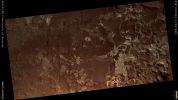
PSP_009381_1720_RED.jpgBlocky Floor Deposit in Melas Chasma (natural colors; credits: Lunar Explorer Italia)74 visiteMars Local Time: 15:27 (early afternoon)
Coord. (centered): 8,0° South Lat. and 282,7° East Long.
Spacecraft altitude: 266,7 Km (such as about 166,7 miles)
Original image scale range: 26,7 cm/pixel (with 1 x 1 binning) so objects ~80 cm across are resolved
Map projected scale: 25 cm/pixel
Map projection: EQUIRECTANGULAR
Emission Angle: 0,1°
Phase Angle: 60,2°
Solar Incidence Angle: 60° (meaning that the Sun is about 30° above the Local Horizon)
Solar Longitude: 104,4° (Northern Summer)
Credits: NASA/JPL/University of Arizona
Additional process. and coloring: Lunar Explorer ItaliaMareKromium
|
|

Psp_009743_2565_red.jpgNorthern Dunes (possible True Colors; credits: Lunar Explorer Italia)74 visiteMars Local Time: 14:20 (early afternoon)
Coord. (centered): 76,2° North Lat. and 95,3° East Long.
Spacecraft altitude: 330,1 Km (such as about 206,3 miles)
Original image scale range: 33 cm/pixel (with 1 x 1 binning) so objects ~99 cm across are resolved
Map projected scale: 25 cm/pixel
Map projection: EQUIRECTANGULAR
Emission Angle: 17,0°
Phase Angle: 71,6°
Solar Incidence Angle: 57° (meaning that the Sun is about 33° above the Local Horizon)
Solar Longitude: 117,3° (Northern Summer)
Credits: NASA/JPL/University of Arizona
Additional process. and coloring: Lunar Explorer ItaliaMareKromium
|
|

Psp_009758_2030_red.jpgExtremely Unusually-looking Northern Dunefield (possible True Colors; credits: Lunar Explorer Italia)74 visiteMars Local Time: 15:24 (early afternoon)
Coord. (centered): 22,7° North Lat. and 65,8° East Long.
Spacecraft altitude: 282,4 Km (such as about 176,5 miles)
Original image scale range: 28,3 cm/pixel (with 1 x 1 binning) so objects ~56,5 cm across are resolved
Map projected scale: 25 cm/pixel
Map projection: EQUIRECTANGULAR
Emission Angle: 4,8°
Phase Angle: 51,5°
Solar Incidence Angle: 47° (meaning that the Sun is about 43° above the Local Horizon)
Solar Longitude: 117,8° (Northern Summer)
Credits: NASA/JPL/University of Arizona
Additional process. and coloring: Lunar Explorer ItaliaMareKromium
|
|

APOLLO_15_AS_15-98-13302.jpgAS 15-98-13302 - Mare Vaporum and the "Lunexit Cuspid" (possible True Colors; credits: Dr Paolo C. Fienga)74 visitenessun commentoMareKromium
|
|
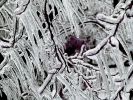
Ice-7.JPGFrozen Life (by Dr Marco Faccin)74 visite"...Gli Schemi sui quali è costruita la Natura sono frattali e, come sai, si ripetono - sempre uguali - sino all'infinito: dunque se tracci lo Schema corretto di una Goccia d'Acqua, avrai tracciato anche quello di una Galassia.
Anzi...di tutte!..."
P.C. Floegers - "Conversations for Tomorrow"
MareKromium
|
|
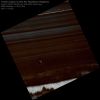
Psp_001462_2630_red~0.jpgFresh crater in the Northern Regions (possible Natural Colors; credits: Lunar Explorer Italia)74 visitenessun commentoMareKromium
|
|

ice6.jpgOnce in a While (by Marco Faccin)74 visitenessun commentoMareKromium
|
|
| 25353 immagini su 2113 pagina(e) |
 |
|
|
|
|
870 | |
|
|
|
|





