| Piú viste |

NGC-2403+Supernova_(HD).jpgNGC 2403 + Supernova (HST)74 visite"...Supponiamo che l'Universo sia, effettivamente, curvo. Questa possibile configurazione riguarda, se così possiamo esprimerci, la 'forma' dell'Universo stesso, non certo la sua estensione. Vorrei dunque capire perchè, ogniqualvolta parliamo di Universo curvo, ci sentiamo automaticamente autorizzati a parlare di 'Universo Limitato'? Non esistono, forse, delle 'curve' che sono, per loro stessa natura, infinite?!?..."
Johaan Gael Van Hoekstra - "Appunti di Filosofia della Scienza"
|
|

Io-sulphur_s role-PIA02547_modest.jpgThe Role of Sulphur in Io's Volcanoes74 visiteCaption NASA originale:"Sulphur gas, consisting of pairs of sulphur atoms (S2) - as detected above Io's volcano Pele by the HST in October 1999 - is ejected from the hot vents of Io's volcanoes (green arrow). Such sulphur gas lands on the cold surface where the sulphur atoms rearrange into molecules of 3 or 4 atoms (S3 and S4) which give the surface a reddish color. In time, the atoms rearrange into their most stable configuration (S8) that forms ordinary pale-yellow sulphur".
|
|

Coronal Mass Ejection.jpgA "Coronal Mass Ejection"74 visiteCaption NASA originale:"Magnetic fields buckle releasing previously constrained hot material from the upper atmosphere of the Sun. As a result, hot gas streams out into the Solar System, impacting planets, moons, spacecraft, and making space a dangerous place for astronauts. Known as "Coronal Mass Ejections" (CMEs), billions of tons of scathing plasma can be accelerated to millions of miles per hour. CMEs are more common but less intense than solar flares".
|
|

NGC-1512.jpgNGC 151274 visite"...Lo vuoi davvero sapere qual'è il vero problema e qual'è il vero dilemma?
Ascolta, ecco il problema: pensa se tutto quello che fai nella tua Vita - di bene o di male, di giusto o di sbagliato, di importante o di non importante - non avesse comunque alcuna importanza. Zero.
Pensa che cosa sarebbe di te se tu sapessi che tutto quello che fai, che hai fatto e che farai è stato, è e sarà sempre ed in ogni caso completamente irrilevante.
Ora pensa, invece, che cosa resterebbe di te se tu sapessi che tutto quello che fai, hai fatto e farai nella tua Vita - di bene o di male, di giusto o di sbagliato, di importante o di non importante - è stato, è e sarà sempre e comunque rilevante. Decisivo.
Ogni azione od omissione che sia stata compiuta, che si compia e che si compierà, dalla più grandiosa alla più minuscola ed insignificante, è sempre fondamentale.
Questo è il problema.
E questo è il dilemma: quale delle due situazioni, secondo te, dovrebbe farci più paura?..."
P.C. Floegers - "Conversations"
|
|

NGC-2237_and_NGC_2244-6.jpgNGC 2237 - The "Rosette Nebula", and Globular Star Cluster NGC 224474 visite"...Who controls the present, controls the past
Who controls the past, controls the future..."
G. Orwell - "1984"
|
|
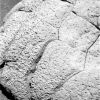
OPP-SOL250-1P150376510EFF3649P2598L5M1.jpgAn unusual rock inside Endurance Crater (4)74 visiteSe è vero, come dicono alla NASA, che - forse - un tempo l'intera Meridiani Planum era un mare, anche se non molto profondo, allora è fortemente probabile che Endurance Crater (al pari di tutto ciò su cui oggi il Rover Opportunity si muove), un tempo fosse sommerso. Forse le "Sferule", o "Martian Berries" - o qualsiasi altro nome venga dato a queste "palline" -, non sono altro che il residuo fossile di forme elementari di vita acquatica Marziana. Forse le sferule sono l'equivalente delle nostre "telline" e, al pari di esse, queste piccole forme di vita si attaccavano alle rocce sommerse o semi sommerse, come le vediamo oggi sulle nostre scogliere, da quelle affioranti, a quelle perennemente sommerse, ma mai troppo lontano dalla superficie. Forse anche le "telline" marziane avevano bisogno di luce...
Questa ipotesi, oggi, è fantascienza. Però, a nostro avviso, essa è verosimile e noi la esponiamo. Poi, quando avremo maggiori dati, ci ritorneremo sopra.
E Voi cosa ne pensate?
|
|

OPP-SOL251-1F150467089EFF36A3P1201L0M1.jpg"Big Rock" from Front Hazcam (1)74 visiteVisione leggermente distorta (ma forse anche per tale motivo maggiormente suggestiva...) della Grande Roccia Bianca ricoperta di "Frutti di Bosco Marziani" - o anche "granuli rocciosi" o magari anche "spherules", come dicono alla NASA.
|
|

SOL270-Layered_Outcrops-Sp-PIA06938_modest.jpgLayered Outcrops - Sol 270 (True Colors; credits: NASA/JPL)74 visitePer questa immagine abbiamo pensato di offrirVi anche la caption originale NASA. Si tratta, secondo noi, di un tentativo - così grossolano da risultare divertente - da parte della NASA stessa di far sembrare la definizione dei "true colors of Mars" come un'opera di "cesello matematico", estremamente complessa e meritevole di un Nobel. Eccola:"NASA's Mars Exploration Rover Spirit acquired the images that went into this color composite with its panoramic camera around 1:00 p.m. martian time on its 270th martian day (Oct. 5, 2004). The view represents the panoramic-camera team's best current attempt at generating a "true color" view of what this scene would look like if viewed by a human on Mars. It was generated from a mathematical combination of six calibrated images acquired through filters for wavelengths between 430 and 750 nanometers".
BRAVI! Ma ora chi gli va a dire che già 30 anni fa si scattavano fotografie favolose - ed a colori veri! - nello spazio, senza usare questa scienza da Star Trek???
|
|

Aurora_Borealis-Coronal_Aurora-1.jpg"Auroral Corona" from l'Observatoire de la Découverte in Val Belair near Quebec - Canada74 visiteDa "NASA - Picture of the Day" del 9 Novembre 2004: "...This fisheye picture captures a particularly active and colorful 'Auroral Corona' that occurred on November 7, 2004 (...) The above aurora has an unusually high degree of detail, range of colors and breadth across the sky. The vivid green, red, and blue auroral colors are likely caused by high atmospheric oxygen and hydrogen reacting to incoming electrons. The trigger events were magnetically induced explosions on the Sun from sunspot region 696 over the past few days. Continued activity from this active solar region could mean more auroras visible to northern observers over the next few days. Early in the morning but far in the background, planets, stars and the Moon will be simultaneously putting on their own show".
Una piccola (nostra) nota di commento: dietro la vivace bellezza dell'immagine ed i "romantici" commenti, c'è un nuovo incremento dell'attività solare in un periodo in cui, invece, il nostro Sole è usualmente calmo.
|
|
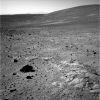
SOL312-2N154066468EFF9200P0655R0M1.jpgA frame from Sol 31274 visitePanoramica di Marte ripresa intorno alle ore 14 (MLT). Da notare, come sempre, la nebbiolina che avvolge le colline più lontane e la splendida definizione delle rocce Marziane vicine al Rover.
|
|

Comets-Comet_Ikeya_Zhang_3.jpgComet Ikeya-Zhang - the "ion tail"74 visiteThis composite color image from March 3rd, 2002, captured with a wide-field telescope, shows this active comet's bright, condensed coma and a delightful array of subtle structures in its developing tail. The bluish tail stretches for 5 degrees or so against a background of stars in the constellation Pisces. Cataloged as comet C/2002 C1, improved orbit determinations now make it seem very likely that Comet Ikeya-Zhang has been around here before. Refined calculations indicate this comet's last trip through the inner Solar System was 344 years ago, in 1661, when it was recorded as a bright comet.
|
|

s going to Titan-IMG000616-br500.jpgDown to Titan!74 visiteCaption NASA originale:"This artist's conception of the Cassini orbiter shows the Huygens probe separating to enter Titan's atmosphere. After separation, the probe drifts for about 3 weeks until reaching its destination, Titan. Equipped with a variety of scientific sensors, the Huygens probe will spend 2-2,5 hours (maybe more) descending through Titan's dense, murky atmosphere of nitrogen and carbon-based molecules, beaming its findings to the distant Cassini orbiter overhead. The probe could continue to relay information for up to 30 minutes after it lands on Titan's frigid surface, after which the orbiter passes beneath the horizon as seen from the probe".
|
|
| 25353 immagini su 2113 pagina(e) |
 |
|
|
|
|
863 | |
|
|
|
|





