| |
| Piú viste |

Craters-Kasimov_Crater-ESP_030609_1550-PCF-LXTT-IPF-3.jpgInverted Channels in Kasimov Crater (Absolute Natural Colors; credits for the additional process. and color.: Dr Paolo C. Fienga - Lunar Explorer Italia/Italian Planetary Foundation)75 visiteBy slightly enhancing an Absolute Natural Color image such as the EDM (see the inset to the right of the CTX Frame, which represents an about 1-Km wide - such as 0,621 miles - section of the whole area photographed by the NASA - Mars Reconnaissance Orbiter), can help us to achieve a better understanding of the imaged Surface Features, as well as to clearly distinguish between Surface Materials possessing different Histories, Textures and Mineral (---> Chemical) Compositions.
The whole image shows us a portion of the Floor of the Martian Impact Crater named "Kasimov" (a large - approx. 91 Km in diameter - and extremely ancient Impact Crater located in the Southern Hemisphere of the Red Planet), with several brown-gray (with subtle reddish nuances) Ridges that run from the bottom center to the upper left side of the frame. If you look carefully at all these different Ridges, you will notice that the Main Ridge is joined by a smaller one (look at the central portion of the CTX Frame) like small Tributary Rivers join together with larger ones on Earth. Indeed, this is exactly what happened here, on Mars, but - most likely - a few billions of years ago.
These Ridges are called "Inverted Channels" and they mark the locations of ancient Martian Riverbeds (in this case the Main River flowed towards the upper left of the image). Such Inverted Channels formed because the bottoms of these Rivers (---> Tributaries) were all full of Gravel-sized Rocks, whereas the areas around them were made of fine Clays. A VERY long time after the Rivers stopped flowing and dried-up, the Wind, slowly, removed completely the fine and light Clays, but it was not strong enough to blow away the heavy Gravel. In the end, after all the Clays were gone, the old Riverbeds were left as High-standing Gravel Ridges, such as the ones very well visible here (both in the CTX Frame as well as in the EDM).
Mars Local Time: 15:49 (Middle Afternoon)
Coord. (centered): 35,729° North Lat. and 129,386° East Long.
Spacecraft altitude: 258,2 Km (such as about 160,3 miles)
Original image scale range: 25,8 cm/pixel (with 1 x 1 binning) so objects ~ 78 cm across are resolved
Map projected scale: 25 cm/pixel
Map projection: EQUIRECTANGULAR
Emission Angle: 11,0°
Sun-Mars-Spacecraft (or Phase) Angle: 47,6°
Solar Incidence Angle: 58° (meaning that the Sun was about 32° above the Local Horizon at the time the picture was taken)
Solar Longitude: 203,7° (Northern Fall - Southern Spring)
Credits: NASA/JPL/University of Arizona
Additional process. and coloring: Lunar Explorer Italia
The CTX Frame (which is an Original Mars Reconnaissance Orbiter non-map projected b/w frame, identified by the serial n. ESP_030609_1550) and the EDM (which is an Original Mars Reconnaissance Orbiter enhanced color frame, identified by the serial n. ESP_030609_1550-1) have both been additionally processed and then colorized (as far as the EDM is concerned, re-colorized) in Absolute Natural Colors (such as the colors that a human eye would actually perceive if someone were onboard the NASA - Mars Reconnaissance Orbiter and then looked down, towards the Surface of Kasimov Crater - Mars), by using an original technique created - and, in time, dramatically improved - by the Lunar Explorer Italia Team. Different colors, as well as different shades of the same color, mean, among others, the existence of different Elements present on the Surface of Kasimov Crater, each having a different Albedo (---> Reflectivity) and Chemical Composition.MareKromium
|
|

ZZ-Mercury-Craters-Unnamed_Crater-PIA17290-PCF-LXTT-IPF-0.jpgUnnamed and (relatively) Fresh Impact Crater (CTX Frame - Absolute Natural Colors; credits for the additional process. and color.: Dr Paolo C. Fienga/Lunar Explorer Italia/Italian Planetary Foundation)75 visiteThis Absolute Natural Color Image-Mosaic shows us a bright (and, of course, relatively speaking, "fresh") Impact Crater - approx. 33 Km (such as about 20,49 miles) in diameter - exhibiting possible evidence of a Pyroclastic Deposit on it's Eastern Side (---> Dx of the Crater for the Observer), as well as a series of Secondary Impact Craters which have unearthed some - still unknown - kind of Sub-Surface Material, barely visible (and lightly gray-colored) in the North-Eastern corner of the picture (---> upper right quadrant).
Date acquired: November, 6th, 2011
Images Mission Elapsed Time (MET): 229105596, 229105592, 229105588
Images ID: 980566, 980565, 980564
Instrument: Wide Angle Camera (WAC) of the Mercury Dual Imaging System (MDIS)
Center Latitude: 25,42° North
Center Longitude: 266,80° East
Solar Incidence Angle: 52,3° (meaning that the Sun, at the time that the picture was taken, was about 37,7° above the imaged Local Mercurian Horizon)
Emission Angle: 16,8°
Sun-Mercury-Messenger (or "Phase") Angle: 69,1°
This picture (which is an Original NASA - MESSENGER Spacecraft's false colors Map-Projected image-mosaic published on the NASA - Planetary Photojournal with the ID n. PIA 17290) has been additionally processed, contrast enhanced, magnified and then re-colorized in Absolute Natural Colors (such as the colors that a human eye would actually perceive if someone were onboard the NASA - MESSENGER Spacecraft and then looked down, towards the Surface of Mercury), by using an original technique created - and, in time, dramatically improved - by the Lunar Explorer Italia Team. Different colors, as well as different shades of the same color, mean, among other things, the existence of different Elements (Minerals) present on the Surface of Mercury, each having a different Albedo (---> Reflectivity) and Chemical Composition.MareKromium
|
|

ZZ-ZZ-ZZ-ZZ-ZZ-ZZ-ZZ-ZZ-Pluto_and_Charon-01-NewHorizons-1422.jpgSo close, and yet so far...75 visitenessun commentoMareKromium
|
|

ZZ-ZZ-ZZ-ZZ-ZZ-ZZ-Z-Pluto-Map.jpgA few names for the Main Features of Pluto75 visiteEcco i nomi di alcune delle aree e Regioni di maggior interesse di Plutone. Su molte, devo dire che la scelta é stata felice. Su qualcuna.... Beh, decidete Voi.
Alcyonia Lacus, a possible frozen Nitrogen Lake on Pluto's Surface, is named for the bottomless lake in or in the vicinity of Lerna, a region of Greece known for springs and swamps; the Alcyonian lake was one of the entrances to the underworld in Greek mythology.
Elcano Montes is a mountain range honoring Juan Sebastián Elcano (1476–1526), the Spanish explorer who in 1522 completed the first circumnavigation of the Earth (a voyage started in 1519 by Magellan).
Hunahpu Valles is a system of canyons named for one of the Hero Twins in Mayan mythology, who defeated the lords of the underworld in a ball game.
Khare crater honors planetary scientist Bishun Khare (1933–2013), an expert on the chemistry of planetary atmospheres who did laboratory work leading to several seminal papers on tholins – the organic molecules that probably account for the darkest and reddest regions on Pluto.
Kiladze crater honors Rolan Kiladze (1931–2010), the Georgian (Caucasus) astronomer who made pioneering early investigations the dynamics, astrometry and photometry of Pluto.
Lowell Regio is a large region honoring Percival Lowell (1855–1916), the American astronomer who founded Lowell Observatory and organized a systematic search for a planet beyond Neptune.
Mwindo Fossae is a network of long, narrow depressions named for the Nyanga (Eastern Dem. Rep. Congo/Zaire) epic hero who traveled to the Underworld and after returning home became a wise and powerful king.
Piccard Mons is Mountain and suspected Cryo-Volcano that honors Auguste Piccard (1884–1962), a 20th century inventor and physicist best known for his pioneering balloon flights into Earth's Upper Atmosphere.
Pigafetta Montes honors Antonio Pigafetta (c. 1491–c. 1531), the Italian scholar and explorer who chronicled the discoveries made during the first circumnavigation of the Earth, aboard Magellan's ships.
Piri Rupes is a long cliff honoring Ahmed Muhiddin Piri (c. 1470–1553), also known as Piri Reis, an Ottoman navigator and cartographer known for his world map. He also drew some of the earliest existing maps of North and Central America.
Simonelli Crater honors astronomer Damon Simonelli (1959–2004), whose wide-ranging research included the formation history of Pluto.
Wright Mons honors the Wright brothers, Orville (1871–1948) and Wilbur (1867–1912), American aviation pioneers credited with building and flying the world's first successful airplane.
Vega Terra is a large land mass named for the Soviet Vega 1 and 2 missions, the first Spacecraft to fly balloons on another planet (Venus) and to image the Nucleus of a Comet (1P/Halley).
Venera Terra is named for the Venera missions sent to Venus by the Soviet Union from 1961–1984; they included the first human-made device to enter the Atmosphere of another Planet, to make a soft landing over there and to return images from an alien planetary surface.MareKromium
|
|
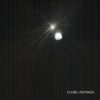
Dart-1.jpgGreat Balls of Fire! - 175 visiteAlle ore 01:14 del 26 Settembre 2022 la sonda Dart della NASA ha disintegrato un asteroide grande quanto il Colosseo a circa 11 MKM di distanza dalla Terra. E il satellite italiano Licia-Cube ha ripreso tutto. Ma non c'è stata nessuna diretta alla Armageddon. Gli scienziati hanno dovuto aspettare 3 (tre) ore prima di riprendere i contatti con il «computer di bordo». «Sono state le tre ore più lunghe della mia vita; - ci racconta David Avino, ceo di Argotec (Torino) che ha realizzato il mini-satellite per la missione NASA - il tempo non passava più. Poi sono arrivate le prime immagini ed è stata un'emozione indescrivibile. Tutt'ora ho talmente tanta adrenalina addosso che non sento nemmeno la stanchezza».
Già, perché dietro quelle immagini c'è un lavoro di anni e un team infinito di tecnici e ingegneri. Tutto racchiuso in una specie di drone spaziale, un satellite che misura appena 30 centimetri per 20 per 10. «Quando si va così lontano - spiega Avino - puoi studiare quanto vuoi ma sei sempre nello spazio profondo e può andare male qualsiasi cosa. Possono avvenire cose che non hai calcolato».
Cosa è successo nelle ore di silenzio, prima dell'impatto? È successo che di fatto ha guidato l'AI, l'intelligenza artificiale. Il software ha ricevuto i parametri ottimizzati in base alle sperimentazioni fatte in laboratorio. Il satellite LiciaCube ha iniziato a scattare fotografie da quattro minuti prima dell'impatto, viaggiando a una distanza di 50 chilometri e a una velocità di 7 chilometri al secondo. Poi ha puntato il suo obbiettivo e zac, ha ripreso perfettamente la scena in cui la sonda centra l'asteroide. Regia perfetta. Dall'impatto è scaturita una pioggia di polvere luminosa, come un flash, ben visibile in alcune delle 620 immagine riprese. Luminosa perché i massi e i detriti schizzati nello spazio dopo l'impatto hanno riflettuto la luce del sole, come se brillassero. Ora le immagini verranno studiate, fotogramma per fotogramma, per capire la natura dei materiali del meteorite.
E qualche soddisfazione più grande c'è del giorno della «missione compiuta» della prima prova di difesa planetaria? Quello in cui l'algoritmo progettato in ogni sua variabile funziona alla perfezione e anche di più?
Quello della sonda Dart è stato solo un test «Al momento tranquillizziamo tutti, possiamo dormire sonni tranquilli! - spiegano all'Agenzia Spaziale - Non c'è nessun rischio che un asteroide si diriga sulla terra. Ma ora sappiamo che, anche se dovesse mai capitare, siamo in grado di disintegrarlo».
«È un momento d'oro per le attività spaziali italiane, stiamo investendo tanto nello spazio e si vedono importanti ricadute in termini di missioni e anche di dialogo dell'Italia con i grandi player spaziali nel mondo» commenta il presidente dell'Asi, Giorgio Saccoccia.
Ieri è stato il giorno dei festeggiamenti. Perfino l'home page di Google ha dedicato alla missione l'animazione della pagina. E anche Thomas Zurbruchen, associate administrator for the Science mission directorate della Nasa, ha fatto i complimenti alla squadra italiana: «Ci siamo svegliati con un enorme successo, ed enorme successo è stato anche di Licia-Cube».
Caption NASA:"Could humanity deflect an asteroid headed for Earth? Yes. Deadly impacts from large asteroids have happened before in Earth's past, sometimes causing mass extinctions of life. To help protect our Earth from some potential future impacts, NASA tested a new planetary defense mechanism yesterday by crashing the robotic Double Asteroid Redirection Test (DART) spacecraft into Dimorphos, a small asteroid spanning about 170-meters across" .
Nota: l'oggetto in primo piano è l'asteroide 65803 Didymos.MareKromium
|
|

Dart-4.jpgGreat Balls of Fire! - 475 visitenessun commentoMareKromium
|
|

SOL3749-mars_nasa_gov_msl-raw-images_msss_03749_mhli_3749MH0008600001304041C00_DXXX-0.jpgLittle "Red Point": do you see it? - Sol 374975 visiteUn micro-dettaglio che mi è balzato agli occhi. Se non riuscite a vederlo, Vi rimando all'EDM che segue.MareKromium
|
|

M-011-2.JPGM 11 - Open Star Cluster74 visite"...Ubique medius caelus est..."
(Petronio)
"...Il cielo splende su tutte le cose..."
Nota: a nostro parere, questa massima esprime, sia pure in maniera 'letteraria', il paradosso della "linea infinita" per il quale "ovunque tale linea si spezzi, quel punto è sempre il suo centro".
E così avviene per il Cielo: qualsiasi porzione di esso venga guardata - e senza che rilevi il punto da cui la si guarda -, essendo il Cielo infinito, è sempre la sua porzione "media", ossia centrale.
|
|
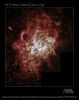
M-033-1.jpgInside M 33 - NGC 604 Emission Nebula - HST74 visite"...Ti sei trovato a vagare, lungo le strade del Regno, cercando quella rara Bellezza che non hai saputo trovare. Ora mi chiedi, al limitare del tuo cammino, dove Essa sia. Ebbene io ora ti dico: se vuoi vedere la Meraviglia delle Meraviglie, recati fuori dalla città ed attendi che il Sole sia tramontato. Poi distenditi a terra e leva gli occhi al Cielo..."
P.C. Floegers - "Viaggi"
|
|

M-061-1.jpgM 61 - Spiral Galaxy74 visite"...Più guardo questo Cielo e più mi accorgo che non lo riconosco..."
(anonimo)
|
|

PIA05075-Color Rings.jpgThe "A" Ring of Saturn in the ultraviolet74 visiteColori "falsi" - decisamente... - ma grande "suggestione per questa vista di Saturno, colta attraverso la radiazione ultravioletta.
|
|

Enceladus from Voyager 2.jpgEnceladus from Voyager 274 visiteImmagine Voyager 2 di Enceladus in "natural colors". Anche per questa fotografia il contrasto è stato leggermente esaltato, in maniera tale da rendere visibili i lievi dettagli e le formazioni crateriche e montuose (canali inclusi) che caratterizzano questa "Luna di Ghiaccio".
|
|
| 25353 immagini su 2113 pagina(e) |
 |
|
|
|
|
862 | |
|
|
|
|
|
|





