| Piú viste |

OPP-SOL2515-HD3D-MF-LXTT.jpgThe "Mark" - Sol 2515 (Superdefinition and High-Def-3d; credits for the additional process. and color.: Dr Marco Faccin - Lunexit Team)75 visitenessun commentoMareKromium
|
|
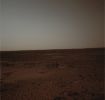
SOL010-2N127266230ESF0224P1513L0M1-PCF-LXTT.jpgHorizon - Sol 10 (Natural Colors; credits for the additional process. and color.: Dr Paolo C. Fienga - Lunexit Team)75 visitenessun commentoMareKromium
|
|

SOL1209-2M233696642EFFATEEP2956M2M1.jpgWatching Closer and Closer... - Sol 1209 (Absolute Natural Colors; credits for the additional process. and color: Dr Paolo C. Fienga - Lunexit Team)75 visitenessun commentoMareKromium
|
|

052-569814main_dawn-image-062411-43_946-710.jpgApproaching 4-Vesta75 visitenessun commentoMareKromium
|
|
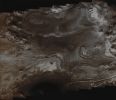
Chaotic_Terrain-Jani_Chaos-PIA03200-PCF-LXTT.jpgFeatures of Iani Chaos (Natural Colors; credits for the additional process. and color: Dr Paolo C. Fienga - Lunexit Team)75 visiteOriginal caption:"This VIS image of Iani Chaos shows the Layered Deposit that occurs on the Floor. It appears that the layers were deposited after the chaos was formed.
Image information: VIS instrument;
Latitude: 2,3° South;
Longitude: 342,3° East:
Resolution: 17 meter/pixel.
MareKromium
|
|

ZZ-Mercury-Limb-PIA16429-PCF-LXTT-IPF.jpgMercurian Horizon (Absolute Natural Colors; credits for the additional process. and color.: Dr Paolo C. Fienga/Lunar Explorer Italia/Italian Planetary Foundation)75 visiteImages of Mercury's Limb provide information about the shape and topography of Mercury, but they also provide a sense of what it would be like to fly over the Innermost Planet, and to look out of the Spacecraft's window and toward the distant Horizon. See anywhere good to land?
Date acquired: July 24, 2012
Image Mission Elapsed Time (MET): 251598850
Image ID: 2258481
Instrument: Narrow Angle Camera (NAC) of the Mercury Dual Imaging System (MDIS)
Center Latitude: 18,25° South
Center Longitude: 353,70° East
Scale: the bottom of this scene is approximately 150 Km (about 93 miles) across, from left to right
Solar Incidence Angle: 58,6° (meaning that the Sun was about 31,4° above the imaged Local Horizon at the time the picture was taken)
Emission Angle: 80,0°
Sun-Mercury-MESSENGER (or "Phase") Angle: 138,6°MareKromium
|
|
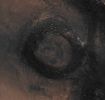
ESP_028957_2085-PCF-LXTT-IPF-01.jpgInteresting Surface Feature in Nilosyrtis Mensae (EDM - Absolute Natural Colors; credits for the additional process. and color.: Dr Paolo C. Fienga - Lunar Explorer Italia/Italian Planetary Foundation)75 visiteNilosyrtis Mensae is an ancient Terrain with a wonderful variety of Landforms and Rock Types. And so: what is this Circular Landform? It probably got its shape from an Impact Crater long ago, but was subsequently eroded and filled in, and then eroded again, so that now it is something like a "Low Mesa", surrounded by a Boulder-rich Geological Unit.
Mars Local Time: 15:34 (Middle Afternoon)
Coord. (centered): 28,286° North Lat. and 75,424° East Long.
Spacecraft altitude: 287,8 Km (such as about 179,9 miles)
Original image scale range: 28,8 cm/pixel (with 1 x 1 binning) so objects ~ 86 cm across are resolved
Map projected scale: 25 cm/pixel
Map projection: EQUIRECTANGULAR
Emission Angle: 8,5°
Sun-Mars-MRO (or "Phase") Angle: 50,4°
Solar Incidence Angle: 59° (meaning that the Sun was about 31° above the Local Horizon of the imaged Region, at the time that the picture was taken)
Solar Longitude: 180,1° (Northern Autumn - Southern Spring)
Credits: NASA/JPL/University of Arizona
Additional process. and coloring: Lunar Explorer ItaliaMareKromium
|
|

Aeolian_Features-DD_Tracks-PIA16316-PCF-LXTT-IPF.jpgDust Devils Tracks in Utopia Planitia (Absolute Natural Colors; credits for the additional process. and color.: Dr Paolo C. Fienga/Lunar Explorer Italia/IPF)75 visiteOrbit Number: 47084
Latitude: 52,1033° North
Longitude: 91,7234° East
Instrument: VIS
Captured: July, 26th, 2012MareKromium
|
|

Enceladus-PIA14599-PCF-LXTT-IPF.jpgEnceladian Night (Absolute Natural Colors; credits for the additional process. and color.: Dr Paolo C. Fienga/Lunar Explorer Italia/Italian Planetary Foundation)75 visiteBelow an almost completely darkened Enceladus, huge Plumes of Water Ice, coming from at least 4 (four) different Sulci (---> cracks of the Surface) located its South Polar Regions, are backlit in this view of one of Saturn's most dramatic moons. The lit Terrain seen here is on the Leading Hemisphere of Enceladus (whose diameter is approx. 313 miles - such as about 504 Km). North is up.
The picture was taken in Visible Light with the NASA - Cassini Spacecraft Narrow-Angle Camera, on February 20, 2012. The view was acquired at a distance of approximately 83.000 miles (such as approx. 134.000 Kilometers) from Enceladus, and at a Sun-Enceladus-CASSINI Spacecraft (also known as "Phase"), Angle of 165°. Image scale is 2628 feet (801 meters) per pixel.
This picture (which is an Original NASA - CASSINI Spacecraft b/w frame published on the NASA - Planetary Photojournal with the ID n. PIA 14599) has been additionally processed and then colorized, according to an informed speculation carried out by Dr Paolo C. Fienga (LXXT/IPF), in Absolute Natural Colors (such as the colors that a human eye would actually perceive if someone were onboard the NASA - CASSINI Spacecraft and then looked outside, towards the Saturnian moon, Enceladus), by using an original technique created - and, in time, dramatically improved - by the Lunar Explorer Italia Team. Different colors, as well as different shades of the same color, mean, among other things, the existence of different Elements (Minerals) present on the Surface of Enceladus, each having a different Albedo (---> Reflectivity) and Chemical Composition.MareKromium
|
|

SOL0121-1-GB-LXTT-IPF.jpgProximities of Yellowknife Bay - Sol 121 (an Image-Mosaic in Calibrated Natural Colors; credits for the additional process. and color.: Dr Gianluigi Barca/Lunar Explorer Italia/Italian Planetary Foundation)75 visitenessun commentoMareKromium
|
|
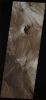
Volcanoes-Nili_Patera-PIA16653-PCF-LXTT-IPF.jpgFeatures of Nili Patera (Absolute Natural Colors; credits for the additional process. and color.: Dr Paolo C. Fienga/Lunar Explorer Italia/Italian Planetary Foundation)75 visiteThis frame, taken by the NASA - Mars Odyssey Orbiter during its 48021st orbit around the Red Planet shows us a portion of the very large Dunefield that covers most of the Floor of Nili Patera. This ancient Volcano, located in the Martian Region of Syrtis Major, spans about 50 Km (about. 31,5 miles) wide, 2 Km (such as a little more than 1 mile) deep, and forms part of a bigger Caldera Complex that stretches some 400 Km (a little less than 250 miles) along a North-to-South direction. What gives Nili Patera special interest for Planetary Geologists is that it contains two kinds of Lava: Basalt and Dacite. This is an unusual circumstance for Mars, where most Lavas are Basalt, and this discovery showed that the Red Planet is, even from a Volcainc point of view, an extremely complex world.
Furthermore, the execution of a series of Gravity Field Measurements which covered the whole Region, showed evidence of a Positive Gravity Anomaly, centered on the Caldera Complex, and suggesting the presence, deep under the Surface, of an approx. 600-by-300 Km (such as about 373-by-186 miles), North-to-South oriented and elongated (now extinct) Magma Chamber, probably containing some very dense Minerals (like, for instance and mainly, Pyroxene, with Olivine also possible).
Latitude: 8,95193° North
Longitude: 67,3367° East
Instrument: VIS
Captured: October, 11th, 2012
This frame (which is an Original Mars Odyssey Orbiter b/w frame published on the NASA - Planetary Photojournal with the ID n. PIA 16653) has been additionally processed and then colorized in Absolute Natural Colors (such as the colors that a human eye would actually perceive if someone were onboard the NASA - Mars Odyssey Orbiter and then looked down, towards the Surface of Mars), by using an original technique created - and, in time, dramatically improved - by the Lunar Explorer Italia Team.MareKromium
|
|

SOL0198-MR1007040000E1_DXXX-EB-MF-LXTT-IPF-2.jpg"The Horned Mars"... - Sol 198 (False Colors; credits for the additional process. and color.: Elisabetta Bonora and Marco Faccin/Lunar Explorer Italia/Italian Planetary Foundation)75 visiteOsservate bene: è, a nostro modestissimo parere, impossibile non vedere ed è impossibile non ritenere questa Configurazione Superficiale una, se non altro, "Singolarità". Poi, per l'Amor di Dio, ognuno può credere quello che vuole (anche alle "spiegazioni" - con "s" rigorosamente minuscola... - della GRANDE NASA), però per arrivare a dire (così come inevitabilmente accadrà) che questo "dettaglio" è qualcosa di "normale", ci vuole una faccia di bronzo di "Caratura Suprema"!....MareKromium
|
|
| 25353 immagini su 2113 pagina(e) |
 |
|
|
|
|
861 | |
|
|
|
|





