| |
| Piú viste |
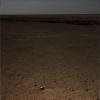
OPP-SOL1009-1P217765022EFF768UP2432R2M1~0.jpgAround Victoria Crater - Sol 1009 (Natural Colors; credits: Lunexit)75 visitenessun commentoMareKromium
|
|
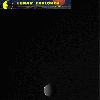
EnceladusSky-EB-N00148200-N00148225.gifIcy-Jets, Cosmic Rays and other UFO's in the Space of Saturn (GIF-Movie; credits: Elisabetta Bonora)75 visiteDalla nostra Amica e Partner, Elisabetta Bonora, un suggestivo GIF-Movie che ci porta nello Spazio circum-Enceladiano ad ammirare, ancora una volta, assieme alle Fontane di ghiaccio tipiche della "Luna di Neve", una serie di interssantissimi targets: dalla semplice "noise" (i puntini bianchi che tempestano il filmato e che assecondano patterns del tutto casuali) ai noti ed agevolmente riconoscibili "Cosmic Rays", passando dal transito di (MOLTI) altri OVNI - e cioè Oggetti Volanti Non Identificati - i quali, talora in coppia (porzione superiore del quadro), talora singolarmente (porzione inferiore), sfrecciano davanti alle ottiche di CASSINI.
Si tratta di Lune Saturniane? Sinceramente, noi ne dubitiamo...
Grandissimi Complimenti ad Elisabetta Bonora!
Technical Data: from N00148200 up to N00148229 ---> frames taken between 16:00 and 16:35 UTC; from this data we can derive that the average time-lap existing between each exposure was about 1' and 10" (in other words, the captioned pictures were taken about every 70" from each other). During that period of time the speed of the CASSINI Probe varied from 10,23 Km-per-sec up to 10,42 Km-per-sec.MareKromium
|
|

OPP-SOL1160-MF2.jpgJust like "Chains of Pearls"! - Sol 1160 (EDM - credits: Dr M. Faccin)75 visiteLa indiscutibile Singolarità che caratterizza la disposizione di innumerevoli "berries" la si può osservare con estrema chiarezza in questo EDM: ci sono, infatti, almeno TRE "Catene di Mirtilli" che caratterizzano i dintorni del piccolo Cratere Secondario che, come si scriveva in sede di commento del CTX Frame, si trova nei pressi del "Gigante" Victoria Crater.
Osservate con attenzione le parti evidenziate e la Singolarità (in senso assoluto) di queste "catene" NON Vi potrà sfuggire.
Detto questo, quale potrebe essere l'origine delle "Catene di Mirtilli Marziani"? A noi vengono in mente - per ora - quattro possibilità:
1) sferule che, spinte dal vento, vanno a posizionarsi lungo le (più marcate ---> rectius: nette e profonde) linee di frattura del suolo (e/o dei Pavimenti Marziani);
2) sferule che appaiono posizionate in sembianza di "catena" solamente a causa dell'angolo di ripresa adottato da Opportunity (ergo si potrebbe trattare di un'illusione ottica o, se preferite, di una "mini Struttura Effimera");
3) sferule in corso di aggregazione (la quale avviene per motivi sconosciuti);
4) sferule che "assecondano" le linee disegnate da campi di forza di modesta e/o modestissima entità, i quali si generano solamente in alcune zone della Superficie di Meridiani - p.e.: a causa dell'esistenza di Anomalìe Magnetiche di portata medio-bassa (un fenomeno, questo, che noi sappiamo esistere, oltre che sulla Terra, anche sulla Luna).
Commenti.
A nostro modo di vedere, la sistemazione delle sferule è TROPPO regolare, in questi casi, per far pensare ad un semplice effetto ottico e l'idea secondo cui esse potrebbero disporsi lungo le più marcate linee di frattura esistenti nel suolo (conoscendo la caratterizzazione dominante della Superficie di Meridiani) è troppo riduttiva.
L'ipotesi di "aggregazione" (spontanea?) delle sferule è eccessivamente esotica e del tutto insostanziabile.
L'idea, invece ed infine, che le "Catene di Mirtilli" possano costituire l'espressione visibile della verificazione di fenomeni di magnetizzazione (e non dimentichiamo il possibile ruolo recitato a questo riguardo dai Venti Marziani, secchi e violentissimi!), a noi non dispiace.
Certo, adesso ci sarebbe da iniziare a discutere del "materiale" di cui le sferule sarebbero costituitee del motivo (o dei motivi) per cui ALCUNE si "aggregano" ed ALTRE "NON si aggregano" ma, almeno per il momento, ci fermiamo qui.
Questo frame è solo uno spunto di discussione e di riflessione.
E Voi? Che ne pensate? Sviste o Campi Magnetici? Aggregazioni o semplici allineamenti dovuti all'azione del vento ed alla peculiare conformazione del terreno su cui le sferule poggiano?
Se avete delle idee, scrivetele: a volte, l'intuizione corretta (e decisiva) parte proprio dal confronto fra le ipotesi più eterogenee e controverse...MareKromium
|
|
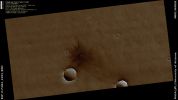
ESP_015962_1695_RED_abrowse-00.jpgRelatively fresh Impact Crater (CTX Frame - Natural Colors; credits: Dr Paolo C. Fienga - Lunexit Team)75 visiteThis image shows a very fresh-looking Impact Crater with an extensive Radial Ejecta Blanket.
The Crater was first seen in an image acquired with MRO's Context Camera (CTX). The best image of this Region prior to CTX was from one of the Viking Orbiters, and the Crater is not visible in it.
This could either mean that the Crater formed sometime between 1976 and 1999, or that there might have been more Dust on the Surface in 1976, or that maybe the air could have been hazy, thus obscuring the Crater.
Based on the HiRISE image, we suspect that the Crater is more than several decades old, because at full resolution we see a "Textured Surface" (see EDM n.2) that is common in Dust-Mantled Regions of Mars, but absent in the youngest craters.MareKromium
|
|

LRO-2503-Mare_Moscoviense.jpgMare - Highlands Boundary in Mare Moscoviense75 visiteMare Moscoviense: a "Window" to the Lunar Far-Side Volcanism
It's clear from looking at pictures of the Moon that the Near-Side and the Far-Side are very different from a geologic standpoint.
The darker, basaltic mare deposits dominate the Near-Side, whereas the Far-Side is dominated by bright deposits of anorthosite thought to be remnants of the Moon's original crust. Mare Moscoviense is one of the few (and also the largest) deposits of mare basalts on the Lunar Far-Side.
Why are there so many mare basalts on the Near-Side, but so few on the Far-Side? Lunar scientists simply don't know the answer to that question. One idea is that the Far-Side crust is simply thicker than the near side crust, and rising basaltic magma simply solidified before it was able to push through the thicker Far-Side crust. That's where Moscoviense comes in. We know enough about the Moscoviense Region from previous missions that we have a well-defined set of questions that potential future missions might be able to answer. For example, the Lunar Prospector mission showed that there are high concentrations of thorium in the Moscoviense Basin. Thorium acts as a tracer for the Lunar KREEP (Potassium - K -, Rare Earth Elements and Phosphorus) geochemical component found in abundance on the Near-Side but not on the Far-Side.
Understanding the extent and distribution of thorium in the basin may tell us about the global distribution of the Lunar KREEP component and thus the evolution of the Lunar Mantle. We also know from the Clementine mission that the Moscoviense basalts are rich in both Iron and Titanium. Since basalts form by partial melting of the Lunar Mantle, sampling Moscoviense basalts provides lunar scientists with vital insights into how the Lunar Mantle on the Far-Side differs from the Near-Side one, which in turn would help us to learn why mare basalts are so much rarer on the Far-Side and provide key insights about the formation of all of the terrestrial planets, including Mars and Earth.
For these reasons, a Constellation Program region of interest is located within Mare Moscoviense. The region is at the edge of Moscoviense, allowing explorers to collect samples from both the mare basalts and the surrounding highlands terrain during their traverses.
The materials at the edge of the basin provide important insights into the formation of the Moscoviense Basin itself. By exploring and sampling the Moscoviense Region, we would date the basalt flows and definitively determine their composition. This sampling would let us determine how Moscoviense basalts differ from the near side basalts sampled during Apollo. Age-dating Moscoviense basalts also provides important insights into the history of lunar volcanism by determining whether the Moscoviense basalts are older or younger than Near-Side basalts.
While the scientific goals of exploring the Moscoviense Region are certainly important, no less important is access to key lunar resources. The lunar regolith (the broken-up rocks and impact products that make up the first 10 meters or so of the Lunar Surface) in this region is derived in part from the local titanium-rich Moscoviense basalts. This regolith material could be used for a variety of vital purposes, including the construction of human habitats, radiation shielding, or as feedstock for local resource utilization.
Taking a longer view, Titanium is an important industrial material on Earth, and it will be very important for indigenous lunar industrial development.MareKromium
|
|

LRO-2500-Epigenes_A_Crater-1.jpgEpigenes A75 visiteA plethora of Boulders surrounds braided flows of impact melt along the Inner Wall of the Crater Epigenes A. As the melt moves toward the Crater Floor (direction indicated by white arrow), the flow buries and moves boulders.
Epigenes A is an about 18-Km-diameter Impact Crater located at 66,9° North and 0,3° West, on the Rim of crater W. Bond.
(this NAC image is 540 meters wide)MareKromium
|
|
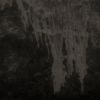
LRO-2500-Marius_Crater~0.jpgLandslides or unusual Surface-decoloration in Marius Crater? (Natural Colors; credits: Dr Paolo C. Fienga - Lunexit Team)75 visiteGrazie alla nostra Grande Amica e Partner Elisabetta Bonora, da oggi "Lunar Explorer Italia" è presente ed accessibile anche su Twitter.
Il nostro (e Vostro!) link - comunque già indicato nei "Links Suggeriti" nella Front Page di TruePlanets (sulla Dx) - è questo: http://twitter.com/lunexit .
Perchè questa "presenza" ulteriore?
Semplice, in un Mondo laddove la divulgazione della stupidità sembra costituire un trend in ascesa continua, noi (e Voi!) stiamo cercando di controbilanciare questa - orribile - tendenza mediante la Divulgazione della Ricerca, della Passione e, con tutti i nostri limiti, della Scienza.
Dalla Luna all'Infinito, naturalmente...
Dr Paolo C. Fienga - Lunar Explorer Italia
Presidente e Socio FondatoreMareKromium
|
|
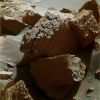
OPP-SOL2164-GB-LXTT.jpgOld "Paint"?!? - Sol 2164 (Natural Colors; credits: Dr Gianluigi Barca - Lunexit Team)75 visitenessun commentoMareKromium
|
|
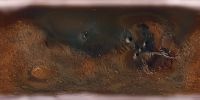
028-Mars_Colors-MF-LXTT2.jpgFull Map of Mars (Approximate Natural Colors; credits: Dr Marco Faccin - Lunexit Team)75 visite...E anche questa è ARTE...MareKromium
|
|
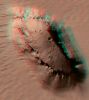
ESP_16978_1730-MF-LXTT2.jpgFalling Down... (High-Def-3D; credits: Dr Marco Faccin - Lunexit Team)75 visiteAcquisition date: 11 March 2010
Local Mars Time (m.l.t.): 15:07 (early afternoon)
Latitude (centered): 6,8° South
Longitude: 236,6° East
Range to target site: 255,4 km (159,6 miles)
Original image scale range: 25,6 cm/pixel (with 1 x 1 binning) so objects ~77 cm across are resolved
Map projected scale: 25 cm/pixel and North is up
Map projection: EQUIRECTANGULAR
Emission Angle: 1,5°
Phase Angle: 53,2 °
Solar Incidence Angle (S.I.A.): 54° - meaning that the Sun is about 36° above the Local Horizon
Solar Longitude: 62,5° (Northern Spring)MareKromium
|
|

SOL621-Home_Plate2-MF-LXTT.jpgHome Plate: Educational n. 3 - Sol 621 (an Image-Mosaic in possible Natural Colors by Dr Marco Faccin - Lunexit Team)75 visiteQuesta serie di 4 Panorami l'abbiamo chiamata "Educational", perchè si tratta di Materiale Educativo, nel senso più puro del termine.
Ore ed ore di processing, assemblaggio e calibrazione di frames, spese all'unico fine di offrire ai nostri Amici Lettori, un "Quadro VALIDO e Realistico" - certamente alternativo ai soliti lavoretti (svogliati, malfatti e ripetitivi) "Made by NASA" e comunque genuino, poichè ottenuto processando il materiale NASA-RAW in maniera Scientifically Correct - e cioè in compiuta armonia ed in stretta ottemperanza ad una serie di logiche e razionali assunzioni di base afferenti il Pianeta Rosso che, ormai, noi riteniamo dovreste conoscere più che bene (exx.: Luminosità Media, TAU, S.I.A. all'ora dello/degli scatto/i etc.).
E, già che ci siamo, un promemoria: Lunexit, tramite i propri Attori (dal Presidente, ai Soci Attivi e sino al più "fresco" dei Junior Partners), fa Cultura e Divulgazione. Da DIECI anni (SEI dei quali spesi sul www).
Ora, dato che, in questo Paese, la nostra Mission (che, ricordatelo, COSTA UN'ENORMITA', MA NON RENDE!) non è neppure apprezzata in maniera adeguata, si è deciso che alcune variazioni sostanziali alla nostra struttura verranno apportate nei prossimi mesi. Lunexit non morirà, ma cambierà. Profondamente.
Scusateci, ma era necessario dare un "segnale forte", perchè le buone intenzioni ed i complimenti (al pari degli insulti) sono il sale della Vita. Ma di solo sale, si sa, non si campa...
Dr Paolo C. Fienga (PhD) - Lunar Explorer Italia
Presidente e Socio co-FondatoreMareKromium
|
|

Japetus-MF-LXTT.jpgJapetus (an Image-Mosaic in possible Natural Colors by Drr Marco Faccin and Paolo C. Fienga - Lunexit Team)75 visitenessun commentoMareKromium
|
|
| 25353 immagini su 2113 pagina(e) |
 |
|
|
|
|
857 | |
|
|
|
|
|
|





