| Piú viste |

ESP_011277_1825_RED_abrowse.jpgUnnamed Crater with Layers in Meridiani Planum (Natural Colors; credits: Lunar Explorer Italia)75 visiteMars Local Time: 15:47 (middle afternoon)
Coord. (centered): 2,2° North Lat. and 357,5° East Long.
Spacecraft altitude: 270,8 Km (such as about 169,2 miles)
Original image scale range: 27,1 cm/pixel (with 1 x 1 binning) so objects ~81 cm across are resolved
Map projected scale: 25 cm/pixel
Map projection: EQUIRECTANGULAR
Emission Angle: 3,9°
Phase Angle: 60,7°
Solar Incidence Angle: 57° (meaning that the Sun is about 33° above the Local Horizon)
Solar Longitude: 178,0° (Northern Summer)
Credits: NASA/JPL/University of Arizona
Additional process. and coloring: Lunar Explorer ItaliaMareKromium
|
|

OPP-SOL133-xpe_pubeng_approved_061004_133_fhaz-B135R1.jpgSunrise over Endurance (by Dr Paolo C. Fienga)75 visitenessun commentoMareKromium
|
|
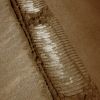
OPP-SOL1810-3-2.jpgRover Tracks - Sol 1810 (possible True Colors; credits: Dr G. Barca)75 visitenessun commentoMareKromium
|
|

PSP_010472_2590_RED_abrowse.jpgStreaks on Exposure of North Polar Layered Deposits (Natural Colors; credits: Lunar Explorer Italia)75 visiteMars Local Time: 14:47 (early afternoon)
Coord. (centered): 78,8° North Lat. and 357,2° East Long.
Spacecraft altitude: 317,4 Km (such as about 198,4 miles)
Original image scale range: 63,5 cm/pixel (with 1 x 1 binning) so objects ~ 1,91 mt across are resolved
Map projected scale: 50 cm/pixel
Map projection: EQUIRECTANGULAR
Emission Angle: 0,9°
Phase Angle: 66,9°
Solar Incidence Angle: 68° (meaning that the Sun is about 22° above the Local Horizon)
Solar Longitude: 144,7° (Northern Summer)
Credits: NASA/JPL/University of Arizona
Additional process. and coloring: Lunar Explorer ItaliaMareKromium
|
|
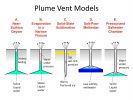
Enceladus-PIA12081.jpgEnceladus' Ice-Plume Models75 visiteCaption NASA:"These illustrations indicate possible ways in which the water vapor and ice particles in the plume of Enceladus may be formed. The Cassini spacecraft recently found a small fraction of salt-rich ice particles from the plumes, while Earth-based observations indicate gas from the plumes is very poor in sodium. These measurements are helping scientists to evaluate how the plumes form.
In model A, salty water boils explosively near the surface of Enceladus when it encounters the vacuum of space. This model can be ruled out, because such explosive activity would spread large amounts of sodium into space where it would have been seen by the Earth-based observers. If this model was correct, then nearly all the ice particles observed by Cassini would be salt-rich, instead of just a fraction of them.
In model B, salty water evaporates more slowly at some depth in a narrow fissure, creating vapor which escapes to the surface to form the plume. This model also seems unlikely because the fissure would rapidly become clogged by salt left behind as water evaporates. The water would also freeze, because not enough heat could reach the water surface up the narrow fissure to replace the heat lost by evaporation.
In model C, the warm ice evaporates directly into vapor to form the plume, in a process called sublimation. The salty particles found in the plume would have been created by liquid water in an earlier epoch and would have been stored in the near-surface layers of Enceladus until the present. These particles would now be incorporated into the plume by the escaping gases. This model cannot be ruled out, but seems unlikely because it may be difficult to dislodge old ice grains from the walls of the fracture.
In model D, the liquid water results from melting of near-surface ice rather than coming from an underlying salty ocean. The water is initially only slightly salty, but its salinity increases as evaporation removes some of the water and leaves the salt behind. Thus, in this model, the salt-rich ice particles seen by Cassini would be derived from initially salt-poor water. This model may be plausible and has not yet been evaluated in detail.
In model E, the water is originally salty, and perhaps comes from a subsurface ocean in contact with an underlying rocky core. The water evaporates slowly into a pressurized chamber, from which water vapor and ice particles, including salty particles from the salt water, escape to the surface along narrow fissures. The large area of the evaporating water surface prevents accumulated salt from clogging the vent and allows enough heat to reach the water surface from below to prevent the water from freezing. This model seems he simplest, and perhaps most likely of the models shown here, but is not the only possibility. Enceladus' plumes may involve a combination of several of these idealized models".MareKromium
|
|

PSP_006742_2050.jpgExtremely unusually-looking Surface Features in Mawrth Vallis (Natural Colors; credits: Dr M. Faccin & Lunar Explorer Italia)75 visitePer gli Appassionati di autentiche "Stranezze Marziane", un frame MRO selezionato dal Dr Faccin - e colorizzato in possibili Colori Naturali - ci mostra qualcosa di DAVVERO ESOTICO (se non altro a nostro parere...) nei pressi del probabile Collapse Pit che vedete in alto - nel ctx frame - e supermagnificato a Sx (crop dalla versione JP2000 del frame PSP_006742_2050).
Si potrebbe trattare di "orme" (o di "tracce", se volete restare pragmatici) di qualcosa che si è diretta verso il pozzo da subsidenza sul cui fondo sembra giacere una melma grigio-verdastra dalla texture assolutamente indefinibile - ma che ben potrebbe essere semi-liquida?
Forse.
O forse no.
Comunque, fantasia per fantasia, a noi piace di più osservare questo tipo di features, piuttosto che cercare "città" e "piramidi" ad ogni angolo del Pianeta...MareKromium
|
|

A_Pair_of_Small_Pit_Craters_(PSP_009488_1745)-1.jpgA Pair of Collapse Pits75 visiteThe pair of Pit Craters visible here are the smallest anomalous Pits known to exist at this time. These have either vertical or sub-vertical interior Walls (not visible from a nearly overhead viewing perspective), and each Pit is deep enough that Sunlight does not hit the floor when the Sun is at the Zenith.
Unfortunately, the only Thermal-InfraRed camera currently orbiting Mars cannot resolve features this small, so the temperature characteristics of these Pits must remain unknown for now, underscoring the need for a high-resolution thermal instrument on future missions.
Intriguingly, when Pit Craters on Earth have similar characteristics to the pair shown here, they often have Cave entrances in their bases connecting to large underground networks.
Current investigations are determining whether the anomalous Martian Pits may be shown to contain such entrances.MareKromium
|
|

PSP_009663_2635.jpgFresh Crater with Residual Ice (Natural Colors; credits: Dr M. Faccin & Lunexit)75 visitenessun commentoMareKromium
|
|
OPP-SOL373-1P161291689EFF42DIP2663L4M1.jpgPeaceful Horizon - Sol 373 (Natural Colors; credits: Lunar Explorer Italia)75 visitenessun commentoMareKromium
|
|

ISS017-E-09734_lrg2.jpgFrom Above...75 visiteLunexit Color Processing: left (Sx)
NASA Color Processing: right (Dx)MareKromium
|
|
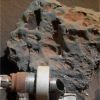
OPP-SOL1961-GB3.jpgBlock Island - Sol 1961 (Natural Colors; credits: Dr G. Barca)75 visitenessun commentoMareKromium
|
|
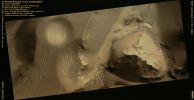
PSP_009342_1725_RED_abrowse-00.jpgPseudo-Pyramid, Dunes, Boulders and Other Misteries...75 visiteUn frame in apparenza di scarso interesse per gli Anomaly Hunters (ma ricco di suggestione per i Cultori delle Scienze Planetarie, con tutte le Surface Features da erosione eolica e da fluidi che mostra), sembra essersi rivelato - dopo un'analisi approfondita svolta usando la sua versione in JP2 - come un'autentica "Fucina di Anomalìe e Singolarità".
Fra le svariate Anomalìe individuabili nel frame, abbiamo deciso di investigarne due: la prima, suggeritaci dalla nostra Amica Elisabetta Bonora - e che ha già suscitato grandi interessi nei Forum di mezzo mondo, a cominciare da quello dei nostri Amici Americani di "AboveTopSecret") -, è rinvenibile in una Surface Feature che, ancora una volta, sembra mostrare ai nostri occhi, avidi di Mistero e di Immaginazione, un Monolito (davvero molto simile a quello di "2001 Odissea nello Spazio").
La seconda, invece, individuata dal nostro Marco Faccin, pare mostrare ai Terrestri il "volto" (si fa per dire...) di una bizzarra e, per certi versi, inquietante Forma Vitale Indigena.
Osservate e giudicate Voi stessi...MareKromium
|
|
| 25353 immagini su 2113 pagina(e) |
 |
|
|
|
|
856 | |
|
|
|
|





