| Piú viste |

Enceladus from Voyager 2.jpgEnceladus from Voyager 275 visiteImmagine Voyager 2 di Enceladus in "natural colors". Anche per questa fotografia il contrasto è stato leggermente esaltato, in maniera tale da rendere visibili i lievi dettagli e le formazioni crateriche e montuose (canali inclusi) che caratterizzano questa "Luna di Ghiaccio".
|
|

APOLLO 4 AS 04-01-603.jpgAS 04-01-603 - The "Blue Planet" in transit (6)75 visitenessun commento
|
|

Mercury - Caloris Basin from Mariner 10.jpgCaloris Basin - Mariner 1075 visiteLa storia dell'esplorazione di Mercurio poteva essere finita così, e invece, dopo 30 anni di "abbandono" ecco un fatto nuovo (e, alla data in cui scriviamo, imminente): la NASA sta per inviare un "Messaggero" verso Mercurio!
Si tratta di un gioco di parole, ovviamente: il Messaggero di cui parliamo è, infatti, una Sonda di nome "Messenger", appunto.
|
|
M-012-1.jpgM 12 - Globular Star Cluster75 visite"...Tempus facit aerumnas leves..."
(Seneca)
"...Il Tempo allevia ogni dolore..."
|
|

M-049-1.jpgM 49 - Elliptical Galaxy in Virgo75 visite"...Animus hominis quicquid sibi imperat, obtinet..."
(Plauto)
"...L'Animo Umano (l'Uomo) può conseguire qualsiasi risultato al (per il) quale esso (sinceramente) si dedichi..."
|
|

OPP-SOL201-1F146028503EFF3533P1214L0M1.jpgDistorted Vision Of Endurance75 visitenessun commento
|
|

Io-Tupan Patera-fullcolor-PIA02599_modest.jpgIo: Tupan Patera75 visiteWonderful colors in a volcanic crater named Tupan Patera on Jupiter's moon Io, as seen in this image from NASA's Galileo spacecraft, show varied results of lava interacting with sulfur-rich materials.
The colorfulness of the image is only slightly enhanced from what the human eye would see on the scene. The red in the image includes a small amount of infrared energy. Tupan Patera, named after a Brazilian thunder god, was seen as an active hot spot in earlier Galileo observations, but those low-resolution views did not show details of volcanic activity. This image taken in October 2001 at a resolution of 135 meters (443 feet) per picture element reveals the complex nature of the crater.
Tupan is now clearly shown to be a volcanic depression, about 75 kilometers (47 miles) across, surrounded by cliffs about 900 meters (3000 feet) tall. In the center is a large area that must be higher than the rest of the crater floor because it has not been covered by the dark lavas. Much of the area is coated with a diffuse red deposit that Galileo scientists believe has condensed from sulfur gas escaping from volcanic vents. The floor of Tupan is covered with a surreal pattern of dark black, green, red, and yellow materials. The black material is recent, still-warm lava. The yellow is presumed to be a mix of sulfurous compounds, and the green appears to form where red sulfur has interacted with the dark lavas. While Galileo scientists have found previous evidence for both molten sulfur and molten rock on Io, this image shows the best evidence to date of chemical reactions taking place between the two.
The intermingled patches of sulfur and lava are difficult to explain. The yellowish sulfur may be melting from within the crater walls over solidified but warm lava. The sulfur may boil away from the areas too hot for liquid sulfur to sit on, leaving patches where the dark lava is still visible.
North is to the top of the image and the Sun illuminates the surface from the upper right.
|
|

NGC-4038_and_NGC-4039_(2).jpgNGC 4039 and NGS 4038 - The "Antennae" Colliding Galaxies75 visiteThe image was taken by Spitzer's infrared array camera and is a combination of infrared light ranging from 3.6 microns (shown in blue) to 8.0 microns (shown in red). The dust emission (red) is by far the strongest feature in this image. Starlight was systematically subtracted from the longer wavelength data (red) to enhance dust features. The two nuclei, or centers, of the merging galaxies show up as white areas, one above the other. The brightest clouds of forming stars lie in the overlap region.
|
|

M-042-7.jpgM 42 and M 43 in a wide field75 visite"...Il Tempo e lo Spazio - e converrete che si tratta di un dogma comune ed accettato - si assumono indissolubilmente connessi.
Ma che dire se ci sbagliassimo?
Il fatto che una Stella sia lontana da noi 50 anni luce potrebbe non implicare affatto che la sua luce, per come noi la vediamo adesso, rappresenti l'immagine effettiva di quella Stella così come essa era 50 anni fa! E se il vero ed unico Dogma dell'Universo fosse l'Assoluta Contemporaneità?..."
P.C. Floegers - "In The Paradox"
|
|

Coronal Mass Ejection.jpgA "Coronal Mass Ejection"75 visiteCaption NASA originale:"Magnetic fields buckle releasing previously constrained hot material from the upper atmosphere of the Sun. As a result, hot gas streams out into the Solar System, impacting planets, moons, spacecraft, and making space a dangerous place for astronauts. Known as "Coronal Mass Ejections" (CMEs), billions of tons of scathing plasma can be accelerated to millions of miles per hour. CMEs are more common but less intense than solar flares".
|
|

NGC-1512.jpgNGC 151275 visite"...Lo vuoi davvero sapere qual'è il vero problema e qual'è il vero dilemma?
Ascolta, ecco il problema: pensa se tutto quello che fai nella tua Vita - di bene o di male, di giusto o di sbagliato, di importante o di non importante - non avesse comunque alcuna importanza. Zero.
Pensa che cosa sarebbe di te se tu sapessi che tutto quello che fai, che hai fatto e che farai è stato, è e sarà sempre ed in ogni caso completamente irrilevante.
Ora pensa, invece, che cosa resterebbe di te se tu sapessi che tutto quello che fai, hai fatto e farai nella tua Vita - di bene o di male, di giusto o di sbagliato, di importante o di non importante - è stato, è e sarà sempre e comunque rilevante. Decisivo.
Ogni azione od omissione che sia stata compiuta, che si compia e che si compierà, dalla più grandiosa alla più minuscola ed insignificante, è sempre fondamentale.
Questo è il problema.
E questo è il dilemma: quale delle due situazioni, secondo te, dovrebbe farci più paura?..."
P.C. Floegers - "Conversations"
|
|
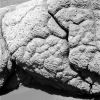
OPP-SOL251-1P150464897EFF3691P2432R1M1.jpgThe "bear-shaped" stone and thousands of berries (1) - Sol 25175 visiteDue frames che ci consentono di vedere ancora meglio il grosso macigno "incrostato" di "frutti di bosco Marziani" e circondato da - letteralmente - migliaia e migliaia di "palline" di pietra.
I "Martian Berries" sono, probabilmente, un fenomeno che merita una maggiore attenzione ed analisi da parte di tutti (ed anche nostra, come ovvio). Non crediamo - nè la NASA ci lascia pensare diversamente - che si tratti di un fenomeno generalizzato a tutto il Pianeta Rosso. Dunque esso è fenomeno "locale" e, a quanto sembra, collegato ad aree in cui l'acqua, in passato, scorreva più che abbondantemente. Si potrebbe eccepire che anche l'Area di Gusaev Crater era - a detta della NASA - ricca di acqua in passato eppure di "berries", laggiù, non ce ne sono. L'obiezione è corretta ma ad essa si può facilmente contro-eccepire (lasciando la problematica invariata ed irrisolta) che, anche sulla Terra, le acque di laghi, fiumi e mari (od oceani) variano drammaticamente, in termini di fauna e flora...
|
|
| 25353 immagini su 2113 pagina(e) |
 |
|
|
|
|
848 | |
|
|
|
|





