| Piú viste |

M-042-GB.JPGM-42: The "Great Orion Nebula" (Star-forming Region in Orion)76 visiteMareKromium
|
|

PHOE-SOL141-lg40570-40571-40575-2.jpgThe "reddish" Surface of Vastitas Borealis - Sol 141 (possible True Colors; credits: Dr G. Barca)76 visitenessun commentoMareKromium
|
|

Psp_009799_2205_red.jpgFeatures of Deuteronilus Mensae (natural colors; credits: Lunexit)76 visiteThis image shows Lineated Valley Fill and Lobate Debris Aprons in the Deuteronilus Mensae Region. Deuteronilus Mensae is located on the northern edge of Arabia Terra and borders the high-standing, heavily-cratered Southern Hemisphere and the low, uncratered plains that cover most of the Northern Hemisphere of Mars.
The Region is characterized by Hills and Mesas surrounded by debris Slopes and broad Valleys.
Many of the valley floors in the Deuteronilus Mensae Region exhibit complex alignments of small Ridges and Pits often called “Lineated Valley Fill”.
The cause of the small-scale texture is not well understood, but may result from patterns in ice-rich soils or ice loss due to sublimation (ice changing into water vapor).
The linear alignment may be caused by downhill movement of ice-rich soil or by glacial flow.
For example, flowing ice on Earth typically develops wrinkles or ridges and pits due to stresses in the ice as it moves.
The result is flow patterns, called “stream lines” that follow the valleys and curve around obstacles. In this image, stream lines are diverted or curve around the Mesas.
The mesas in this image are also surrounded by aprons of debris that appear to have flowed away from the Mesa. Recent results from the SHAllow RADar (SHARAD) instrument, another instrument onboard the Mars Reconnaissance Orbiter, indicate that lobate debris aprons in Deuteronilus Mensae, similar to those visible here, are composed of material dominated by ice [Plaut et al., 2008] and are interpreted to be potential debris-covered glaciers or rock glaciers.
The Debris Aprons in this image appear to lie on top of the Lineated Valley Fill and are therefore probably younger deposits.MareKromium
|
|
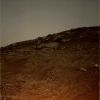
SOL578-2P177684807EFFADIHP2367L7M1.jpgRocks and Outcrops (1) - Sol 578 (natural colors; credits: Lunexit)76 visitenessun commentoMareKromium
|
|

PSP_009313_1560_RED.jpgMars 6 Landing Region (natural colors; credits: Lunar Explorer Italia)76 visiteMars Local Time: 15:30 (middle afternoon)
Coord. (centered): 23,6° South Lat. and 341,2° East Long.
Spacecraft altitude: 259,9 Km (such as about 162,5 miles)
Original image scale range: 26,0 cm/pixel (with 1 x 1 binning) so objects ~78 cm across are resolved
Map projected scale: 25 cm/pixel
Map projection: EQUIRECTANGULAR
Emission Angle: 0,2°
Phase Angle: 70,3°
Solar Incidence Angle: 70° (meaning that the Sun is about 20° above the Local Horizon)
Solar Longitude: 102,0° (Northern Summer)
Credits: NASA/JPL/University of Arizona
Additional process. and coloring: Lunar Explorer ItaliaMareKromium
|
|

OPP-SOL1716-3~0.jpgMeridiani's Horizon - Sol 1716 (natural colors; credits: Dr G. Barca & Lunexit)76 visitenessun commentoMareKromium
|
|
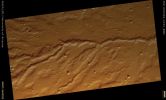
PSP_009369_2255_RED.jpgErosion on the Flank of Alba Patera (natural colors; credits: Lunar Explorer Italia)76 visiteMars Local Time: 15:15 (early afternoon)
Coord. (centered): 45,0° North Lat. and 243,2° East Long.
Spacecraft altitude: 295,0 Km (such as about 184,4 miles)
Original image scale range: 29,5 cm/pixel (with 1 x 1 binning) so objects ~89 cm across are resolved
Map projected scale: 25 cm/pixel
Map projection: EQUIRECTANGULAR
Emission Angle: 0,4°
Phase Angle: 44,3°
Solar Incidence Angle: 44° (meaning that the Sun is about 46° above the Local Horizon)
Solar Longitude: 104,0° (Northern Summer)
Credits: NASA/JPL/University of Arizona
Additional process. and coloring: Lunar Explorer ItaliaMareKromium
|
|

Psp_009389_1510_red.jpgBedrock Layers Exposed in Northern Hellas Basin (possible True Colors; credits: Lunar Explorer Italia)76 visiteMars Local Time: 15:30 (middle afternoon)
Coord. (centered): 28,9° South Lat. and 67,0° East Long.
Spacecraft altitude: 261,7 Km (such as about 163,6 miles)
Original image scale range: 52,4 cm/pixel (with 1 x 1 binning) so objects ~1,57 mt across are resolved
Map projected scale: 50 cm/pixel
Map projection: EQUIRECTANGULAR
Emission Angle: 0,3°
Phase Angle: 73,9°
Solar Incidence Angle: 74° (meaning that the Sun is about 16° above the Local Horizon)
Solar Longitude: 104,7° (Northern Summer)
Credits: NASA/JPL/University of Arizona
Additional process. and coloring: Lunar Explorer ItaliaMareKromium
|
|
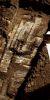
PHOE-SOL053-lg14261-14267-14268-2_copia.jpgIn the Trench - Sol 53 (True Colors; credits: Dr G. Barca & Lunexit)76 visitenessun commentoMareKromium
|
|

Saturn-N00126685.jpgSaturnian Swirls (False Colors; credits: Lunar Explorer Italia)76 visiteCaption NASA:"N00126685.jpg was taken on December 16, 2008 and received on Earth December 17, 2008. The camera was pointing toward Saturn that, at the time, was approximately 655.610 Km away; the image was taken using the CL1 and CB2 filters.
This image has not been validated or calibrated".MareKromium
|
|

SOL1672-MF.JPGThe light colors of Gusev - Sol 1672 (natural colors; credits Dr M. Faccin)76 visitenessun commentoMareKromium
|
|

OPP-SOL1683-PIA11750.jpgFarewell Victoria! - Sol 1683 (tri-chromatic version; credits: Lunar Explorer Italia)76 visiteCaption NASA:"Since leaving "Victoria Crater", Opportunity has picked up the pace of driving. In the 90 Soles since exiting the Crater, Opportunity has driven more than 1800 meters (1,1 miles), such as three times the distance that was required for the original prime mission.
Scientists expect to encounter younger rocks the farther South the Rover travels. They also expect to find small rocks ejected onto the landscape during formation of nearby craters and to reach these things, the Rover must avoid sand traps as much as possible.
Opportunity acquired this mosaic with the Navigation Camera on the Rover’s 1683rd Sol (Oct. 18, 2008), of exploration".MareKromium
|
|
| 25353 immagini su 2113 pagina(e) |
 |
|
|
|
|
840 | |
|
|
|
|





