| Piú viste |

APOLLO_15_AS_15-M-R71-2611-3.JPGAS 15-M-R71-2611 - The "Bridge" is NOT a bridge! (extra-detail mgnf - credits: Carlo Contu & Lunexit)76 visiteNe avevamo accennato durante le nostre conversazioni on-line in sede di commento ai frames pubblicati ma, dopo questo extra-detail mgnf propostoci dall'Amico Carlo Contu, i nostri dubbi si sono ridotti praticamente a zero.
Il "ponte" sul cratere ovoidale (diciamo "irregolare", che sarebbe più corretto...), in realtà, è solo una porzione di superficie relativamente piatta (usiamo l'espressione "relativamente" poichè la risoluzione del frame NASA originale è insufficiente a darci "certezze"...) che divide due Crateri Secondari (ossìa due crateri creati dall'impatto - a bassa velocità - di porzioni di suolo appartenenti al corpo impattato le quali sono state - rectius: vennero - "scagliate via" dalla loro sede originale a seguito dell'impatto).
Ma il "Mistero", anche se l'aiuto ricevuto dal Sig. Contu ci ha aiutato a dissiparlo almeno un pò, non è ancora del tutto svanito...Guardate bene il frame e poi cercate di rispondere a questo semplice quesito: che cos'è lo "sbuffo chiaro" che - simile ad un "ponte"... - sembra scavalcare il fossato (o meglio: il - probabile - "lava channel") che passa sulla Sx (ergo la Dx dell'Osservatore) della coppia di Crateri Secondari che tanto ha attratto la nostra attenzione e stimolato il nostro immaginario?...
I Misteri, in fondo, non finiscono mai...
Ed un caro saluto all'Amico Carlo Contu per l'aiuto datoci nella definizione di questa specifica indagine! MareKromium
|
|

SOL521-1.jpgLonely Boulder - Sol 521 (True Colors + MULTISPECTRUM; credits: Dr G. Barca & Lunexit)76 visitenessun commentoMareKromium
|
|

SOL557.jpgGreenish "dust-like material"... - Sol 557 (Superdefinition; credits: Dr G. Barca)76 visiteUn semplice Capolavoro del Dr Barca e della nostra Superdefinizione.MareKromium
|
|

Animazione_SOL751-2F193037229EFFAO96P1206L0M1.gifLevitation? (GIF-Movie from frames taken during Sol 751; credits: Dr Gianluigi Barca)76 visite"Levitazione"? Forse si e forse no. Ma "stranezza", SI: senza dubbi.
Guardate lo spettacolare GIF-Movie realizzato dal nostro Dr G. Barca e poi rispondete a questa semplice domanda: ma come mai, a fronte del fatto che il Rover - indubitabilmente - si muove, le due "Front Wheels" stanno ferme?
Certo, possono esserci dei casi e delle situazioni di percorso effettuato assecondando un sentiero in ascesa piuttosto ripido ed allora è/sarebbe normale che il Rover "carichi" sulle ruote posteriori e mediane e quindi resti, per qualche istante, leggermente sollevato dal terreno con le ruote anteriori (questo fenomeno lo vedrete ed apprezzerete meglio in un altro GIF-Movie).
Ma la situazione che vedete in questo frangente, a nostro avviso, non fa parte della casistica teorica a cui facevamo dianzi riferimento e quindi...
I Vostri commenti e le Vostre ipotesi riguardo questo strano fenomeno saranno MOLTO apprezzati/e (e, come sempre, GRANDI Complimenti al Dr Barca per aver "aguzzato la vista")!MareKromium
|
|
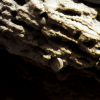
OPP-SOL015-2.jpgExtremely Unusual Surface Feature - Sol 15 (Superdefinition; credits: Dr G. Barca)76 visiteSolo "residui rocciosi di forma anomala posti all'interno di rocce e rilievi stratificati" oppure "tracce (ovvie) di Forme Vitali Indigene ora fossilizzate"?
Voi, a parte fare le Congratulazioni al bravissimo Dr barca, che dite?...MareKromium
|
|
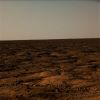
PHOE-SOL001-O-Photocomposite-lg_434-001.jpgVastitas Borealis - Sol 1 (Natural Colors + MULTISPECTRUM; credits: Dr Marco Faccin & Lunexit)76 visitenessun commentoMareKromium
|
|

Prometheus-PIA09916.jpgSpotting Prometheus (MULTISPECTRUM; credits: Lunexit)76 visiteCaption NASA:"The flattened, potato-like form of Prometheus glides silently within the Roche Division, between Saturn's A and F-Rings.
Prometheus (86 Km, or about 53 miles across at its widest point) is on the side of the Rings closest to the Cassini Spacecraft in this view. The image looks toward the sunlit side of the Rings from about 1° below the Ring-Plane.
The image was taken in visible light with the Cassini Spacecraft narrow-angle camera on May 2, 2008. The view was acquired at a distance of approx. 1,1 MKM (such as about 660.000 miles) from Prometheus.
Image scale is roughly 6 Km (about 4 miles) per pixel".MareKromium
|
|
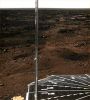
PHOE-SOL017-Panorama-2.jpgVastitas Borealis - Sol 17 (Superdefinition + MULTISPECTRUM; credits: Dr Marco Faccin & Lunexit)76 visitenessun commentoMareKromium
|
|

PSP_006268_1995_RED_abrowse.jpgThe alleged "Bridges" of Chrise Planitia (MULTISPECTRUM; credits: Lunexit)76 visiteThis image shows part of the surface of Chryse Planitia, near the mouth of several of the giant outflow channels carved by massive floods. At this location the channel is much too large to be seen within a HiRISE image, and this shows an area of level plains near the mouth.
Two geologic units are visible at this site: a relatively dark expanse in the southern part of the image (Dx) and a light, slightly higher-standing area along the northern edge. The light unit may be material that has flowed out from below the surface in a process called mud volcanism. However, many aspects of the history of the Northern Plains of Mars remain uncertain.
A few other prominent features are present. A long trough with aeolian ripples runs through the eastern part of the image. This feature likely formed by contraction of the surface layer. This must have occurred after the formation of the light material since it cuts through the light unit in the northwest part of the image.
There is also a large mound which appears to bury part of the trough, and thus is even younger. Alternatively, two troughs could both terminate at the hill.
Despite the resolution of HiRISE, the nature of this mound is still unclear. It has a rugged surface, which might mean that it has been eroded enough to remove indications of its origin.
MareKromium
|
|
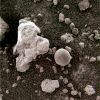
OPP-SOL244-1.jpgBerries and White/Green Dust... - Sol 186 (Superdefinition + MULTISPECTRUM; credits: Dr G. Barca)76 visitenessun commentoMareKromium
|
|

Z-The_Moon_from_Clem.jpg012 - The Global Map of the Moon, from Clementine76 visitenessun commentoMareKromium
|
|
Io-PIA02540.jpgRifting at Hi'iaka Patera (MULTISPECTRUM-2; credits: Lunexit)76 visiteCaption NASA:"NASA's Galileo Spacecraft acquired the images in this mosaic of Hi-iaka Patera (the irregularly shaped, dark depression at the center of the image) and two nearby mountains on November 25, 1999 during its 25th orbit. The sharp peak at the top of the image is about 11 Km (about 36.300 feet) high, and the two elongated plateaus to the West and South of the caldera are both about 3,5 Km (11.500 feet) high.
The ridges on the North-Western mountain are often seen on Ionian mountains and are thought to be formed as surface material slides downslope due to gravity.
At low resolution, many of the dark features, called pateras, appear to be calderas -- depressions formed by collapse into an empty magma chamber. However, higher resolution images such as this one suggest a different origin. In the case of Hi-iaka, the Northern and Southern Margins of the pateras have very similar shapes which appear to fit together. This may indicate that the crust has been pulled apart here and the resulting depression has subsequently been covered by dark lava flows. Furthermore, the two mountains bordering Hi-iaka Patera also appear to fit together. However, the similar shapes and heights of the pateras margins and mountains could be coincidental. Galileo scientists are currently investigating whether mountains and pateras are related to each other and what could cause the surface of Io to rift apart in such a manner.
North is to the top of the mosaic and the sun is illuminating the surface from the left. The resolution is 260 meters (about 280 yards) per picture element. Galileo took the images at a distance of 26.000 Km (approx. 16.000 miles) from Io".MareKromium
|
|
| 25353 immagini su 2113 pagina(e) |
 |
|
|
|
|
838 | |
|
|
|
|





