| Piú viste |

OPP-SOL778-1N197253485EFF67HGP1946R0M1.jpgUFO, Martian "birds" o photoartifacts? (2) - Sol 77876 visiteCaption originale:"Right NavCam Non-linearized Full frame EDR acquired on Sol 778 of Opportunity's mission to Meridiani Planum at approximately 12:47:33 MLT".
Cerchiatura Verde/Rossa: possibile oggetto reale.
|
|

Sunspot.jpgSunspots' Region 87576 visiteCaption NASA originale (da "NASA - Picture of the Day" del 2 Maggio 2006):"An unusually active Sunspot Region is now crossing the Sun.
The Region, numbered 875, is larger than the Earth and has produced several Solar Flares over the past week. It should take a few more days for Sunspot 875 to finish crossing the solar disk. The above image of the Sun was taken last Wednesday in a very specific color of red light to bring up detail. Sunspot 875, in the midst of erupting a large "Class C" Solar Flare, can be seen as the dark region to the upper right. In the above image, relatively cool regions appear dark while hot regions appear bright.
On the far left, solar prominences are visible hovering above the Sun's surface".
|
|

Magellan Large Cloud.jpgThe Large Cloud of Magellan76 visite"...Il Tempo e la Distanza sono concetti molto più cari (e più chiari) a Poeti e Filosofi, piuttosto che ad Astronomi e Matematici..."
Paolo C. Fienga
|
|
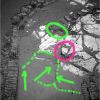
OPP-SOL832-1N202041390EFF71DPP1950L0M1~0.jpgThe "unstable" Martian Paving... - Sol 83276 visiteCerchiatura Fucsia: roccia evidentemente "disconnessa" rispetto al pavimento al quale accede (probabilmente ancora l'effetto "Clessidra" il quale si mostra al passaggio del Rover).
Cerchiatura Verde: tracce di "sinking"?
Frecce e Punteggiature Verdi: tracce evidenti di Clessidre (le polveri più sottili e superficiali paiono effettivamente "affondare", evidenziando sempre nuove porzioni di pavimentazione).
|
|
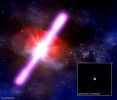
Gamma Ray Burst 050709.jpgGamma Ray Burst 05070976 visite"...Litore quot conchae, tot sunt in Amore dolores..."
(Ovidio)
"...Le sofferenze legate al (vero) Amore sono tante quante le conchiglie su una spiaggia..."
|
|

OPP-SOL870-B-1N205424304EFF73Z1P1902R0M1.jpgMore "Martian Sandglasses"? (extra detail mgnf) - Sol 87076 visitenessun commento
|
|

vo1_057a45.jpgMars: according to Viking 1 Orbiter76 visitenessun commento
|
|

ZZ-ZZ-ZZ-ZZ-ZZ-ZZ-ZZ-The Moon.jpgThe North Pole of the Moon76 visiteCaption NASA originale:"This arresting image of the third quarter Moon in the excellent skies above the Pine Crest Farm Observatory, Dell Prairie, Wisconsin, was recorded with a 24" telescope and digital camera on October 19, 2000. Marvelously detailed, especially along the terminator or shadow line between lunar night and day, this cropped version of the full mosaicked image shows the cratered North Polar Region and the broad smooth Mare Imbrium. Notable at the northern edge of the Mare Imbrium (Sea of Rains) is the 95 Km wide dark crater Plato, while the dramatic straight "cut" to the right of Plato, (toward the terminator) is the Vallis Alpes (Alpine Valley). The long, graceful arc of the lunar Montes Apenninus in the lower portion of the image sweeps Southward along the boundary of the mare toward the left and ends near the bright ray crater Copernicus at the picture's edge. In 1971, Apollo 15 landed near the gap beyond the opposite (northern) end of the Montes Apenninus arc".
|
|
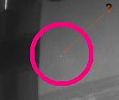
OPP-SOL893-1F207460762EFF74V1P1147R0M1-B.jpgMoving Star-Like Object (extra detail mgnf) - Sol 89376 visitenessun commento
|
|
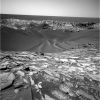
OPP-SOL898-1N207904234EFF74ZTP0650L0M1.jpgA look inside Beagle Crater (2) - Sol 89876 visitenessun commento
|
|

Hyperion-PIA08240.jpgPink Hyperion...76 visiteCaption NASA originale:"Unlike most of the dull grey moons in the Solar System, Hyperion's color is a rosy tan (---> Light Pink), as this view shows.
The origin of the moon's unusual hue is not known. Some scientists suspect the color comes from falling debris from moons further out.
A similar origin has been suggested for the dark reddish material on Saturn's moon Iapetus.
Images taken using red, green and blue spectral filters were combined to create this natural color view. The images were taken in visible light with the Cassini spacecraft narrow-angle camera on June 28, 2006 at a distance of approx. 291.000 Km (about 181.000 miles) from Hyperion. Image scale is roughly 2 Km (a little more than 1 mile) per pixel".
|
|

SOL925-2P208479101ESFAS00P2286R5M1-A.jpg"Sinking" Mars, again... - Sol 92576 visiteCaption NASA originale:"Right PanCam Non-linearized Sub-frame EDR acquired on Sol 925 of Spirit's mission to Gusev Crater at approximately 12:10:38 MLT. Camera commanded to use Filter 5 (904 nm)".
|
|
| 25353 immagini su 2113 pagina(e) |
 |
|
|
|
|
836 | |
|
|
|
|





