| Piú viste |

ZZ-New Horizon.jpgLet's go to Pluto!!!76 visiteDestination: Pluto. The New Horizons spacecraft roared off its launch pad at Cape Canaveral in Florida, USA, last week toward adventures in the distant Solar System. The craft is one of the fastest spaceships ever launched by humans, having passed the Moon only 9 hours (!) after launch and is on track to buzz Jupiter in early 2007.
Even traveling over 75.000 Km per hour, the New Horizons craft will not arrive at Pluto until 2015.
Pluto is the only remaining planet that has never been visited by a spacecraft or photographed up close. After Pluto, the robot spaceship will visit one or more Kuiper Belt Objects orbiting the Sun even further out than Pluto.
In the picture, the New Horizons craft launches into space atop a powerful Atlas V rocket.
|
|

Triesnecker-01.jpgTriesnecker (2)76 visitenessun commento
|
|

Helix_Nebula-PIA03678_modest.jpgThe "Helix Nebula"76 visite"...Libri faciunt labra..."
(anonimo)
"...Lo Studio fa l'Oratore..."
|
|
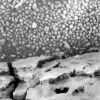
OPP-SOL727-1M192731836EFF64LOP2956M2M1.jpgMartian "Corals" (4) - Sol 72776 visiteCaption originale:"Microscopic Imager Non-linearized Full frame EDR acquired on Sol 727 of Opportunity's mission to Meridiani Planum at approximately 14:04:39 MLT.
Microscopic Imager dust cover commanded to be OPEN".
|
|

PlatoCrater-06.jpgPlato Crater (2)76 visitenessun commento
|
|

ALANBEAN-LASTMAN.jpgThe Last of the "Twelve"...76 visitenessun commento
|
|
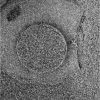
OPP-SOL727-1M192736071EFF64LOP2936M2M1.jpgThe "Mössbauer's Mark" in the sand... - Sol 72776 visiteQuesta è l'impronta (che dovreste già aver visto) dello Spettrometro Mössbauer sulle sabbie di Meridiani Planum, Area Erebus Crater.
Osservate bene i dettagli - visionando il frame in full-size - e poi provate a rispondere a questa (ormai vecchia, ma non oziosa) domanda: la sabbia Marziana è "umida"?...
|
|

Saturn-PIA08130.jpgIs that a "Vertical Relief"?!?76 visiteOccasional views like this one, showing "vertical relief" in Saturn's cloud tops, help the streamers and swirls of gas seem more like a three dimensional structure than a smooth surface. As on Saturn's solid moons, vertical relief is easiest to view near the Terminator, and makes visible the shading of deeper cloud tops by high altitude bands.
The image was taken in visible light with the Cassini spacecraft narrow-angle camera on Jan. 23, 2006, at a distance of approx. 2.7 MKM (about 1,7 MMs) from Saturn. Resolution in the original image was 16 Km (about 10 miles) per pixel. The image has been magnified by a factor of two and contrast-enhanced to aid visibility.
|
|

Saturn-N00052964.jpgVertical relief, Cosmic Ray or UFO?76 visiteCerchiatura Bianca: si tratta del solito (e banalissimo) photoartifact; di una curiosa nuvola "a colonna" (detta anche "vertical relief"), oppure di un Raggio Cosmico catturato "al volo" (uno dei tanti...), o magari di un oggetto di altra natura (un luminosissimo UFO?), colto durante un suo passaggio sulle nuvole di Saturno e ad una distanza imprecisata da Cassini?
|
|

Jupiter_s NorthPole-PIA07783.jpgThe North Pole of Jupiter76 visiteThe South Polar Regions shown here are less clearly visible because Cassini viewed them at an angle and through thicker atmospheric haze.
The round maps are polar stereographic projections that show the North or South Pole in the center of the map and the Equator at the edge.
|
|

OPP-SOL778-1N197253485EFF67HGP1946R0M1.jpgUFO, Martian "birds" o photoartifacts? (2) - Sol 77876 visiteCaption originale:"Right NavCam Non-linearized Full frame EDR acquired on Sol 778 of Opportunity's mission to Meridiani Planum at approximately 12:47:33 MLT".
Cerchiatura Verde/Rossa: possibile oggetto reale.
|
|

Sunspot.jpgSunspots' Region 87576 visiteCaption NASA originale (da "NASA - Picture of the Day" del 2 Maggio 2006):"An unusually active Sunspot Region is now crossing the Sun.
The Region, numbered 875, is larger than the Earth and has produced several Solar Flares over the past week. It should take a few more days for Sunspot 875 to finish crossing the solar disk. The above image of the Sun was taken last Wednesday in a very specific color of red light to bring up detail. Sunspot 875, in the midst of erupting a large "Class C" Solar Flare, can be seen as the dark region to the upper right. In the above image, relatively cool regions appear dark while hot regions appear bright.
On the far left, solar prominences are visible hovering above the Sun's surface".
|
|
| 25353 immagini su 2113 pagina(e) |
 |
|
|
|
|
835 | |
|
|
|
|





