| Piú viste |
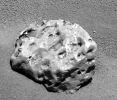
OPP-SOL346-1P158898308ESF40DIP2591R1M1.jpgSkull Rock - Sol 34676 visitevedi i commenti al frame che segue
|
|

OPP-SOL349-1P159166561ESF40DPP2595L7M1.jpgSkull Rock, the iron-nickel meteorite, from very close (Sol 349)76 visiteRipresa ravvicinata della "meteorite" Marziana costituita, secondo le prime analisi effettuate dai Tecnici NASA, da ferro e nickel. In questo close-up, tuttavia, vogliamo attirare la Vostra attenzione sopra un particolare piuttosto interessante. Guardate Skull Rock, in basso, verso la Vostra Sn. Noterete una serie di forellini e di fessure scure e, su uno di essi, si nota bene una striscia bianca perpendicolare al piano di osservazione (si tratta di un artefatto fotografico). Questo artefatto - che conosciamo molto bene... - si forma solo quando l'oggetto ripreso presenta delle porzioni della sua superficie le quali sono ad altissima riflettenza (pensate agli Scudi Termici di Bonneville e di Endurance Crater, per esempio). C'è dunque qualcosa che brilla al Sole "dentro" Skull Rock: ma si tratterà di cristalli o di frammenti di metallo?
|
|

Rhea and Titan-N00027209.jpgRhea (or Tethys?) and Titan: getting closer...76 visitenessun commento
|
|
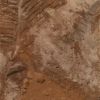
SOL400-A_P2551_True_RAD-A418R1.jpgMartian Regolith - Sol 400 (True Colors; credits: NASA/JPL-Caltech)76 visiteCaption NASA originale:"NASA's Mars Exploration Rover Spirit has been analyzing sulfur-rich rocks and surface materials in the "Columbia Hills" in Gusaev Crater on Mars. This image shows rocky debris and dust, which planetary scientists call "regolith" or "soil," that has been churned up by the rover wheels. This 40-centimeter-wide (16-inch-wide) patch of churned-up dirt, nicknamed "Paso Robles," contains brighter patches measured to be high in sulfur by Spirit's alpha particle X-ray Spectrometer. Spirit's PanCam took this image on Sol 400 (such as February 16, 2005). The image represents the PanCam team's best current attempt at generating a true color view of what this scene would look like if viewed by a human on Mars. The image was generated from a combination of six calibrated, left-eye images acquired through filters ranging from 430-nanometer to 750-nanometer wavelengths".
|
|
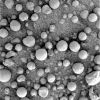
OPP-SOL401-1M163692338EFF5000P2956M2M1.jpgSpherules (4)76 visiteEd eccole qui, le "sferule", viste dal sempre più inutile Microscopic Imager.
Queste - supponiamo - sono le sferule che giacciono sulle sabbie di Meridiani Planum. La loro disposizione, nonostante qualcuno dica il contrario, sembra del tutto casuale. La loro forma, da questa distanza (imprecisata ed imprecisabile) non pare essere esattamente sferica; esse, inoltre, non sembrano essere parte del suolo (come noi invece riteniamo), bensì "mischiate" con il terriccio Marziano.
Ma andiamo a vedere le sferule che si trovano, invece, su una roccia...
|
|

Miranda-PIA00140.jpgMiranda, from approx. 31.000 Km76 visiteCaption NASA originale:"This Voyager 2 image of Miranda was taken Jan 24, 1986, from a distance of about 31.000 Km (19.000 miles), shortly before the spacecraft's closest approach to the Uranian moon. The HR of 600 meters (2.000 feet) reveals a bewildering variety of fractures, grooves and craters, as well as features of different albedos (reflectancea). This clear-filter, narrow-angle view encompasses areas of older, heavily cratered terrain with a wide variety of forms. The grooves and troughs reach depths of a few Km (or miles) and expose materials of different albedos. The great variety of directions of fractures and troughs, and the different densities of impact craters on them, signify a long, complex geologic evolution of this satellite".
|
|

Triton-clouds-PIA02203.jpgClouds on the limb of Triton76 visiteCaption NASA originale:"Limb clouds over Triton's South Polar Cap. Image is stretched to enhance the limb clouds and surface features. The image shows the cloud on the west limb that extends about 100 Km along the limb and appears detached over much of its length".
Nuvole nel cielo di Tritone: non si tratta di un'ipotesi affascinante, bensì di un fatto. Ora la domanda non può che essere questa: qual'è la composizione delle nuvole di Tritone?
|
|
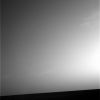
OPP-SOL101-1N137173017EFF2019P1560L0M1.jpgClouds and a lonely star-like object in the sky - Sol 10176 visiteSottili nuvole stratiformi intaccano con leggerezza il quieto cielo di Marte. In alto, quasi all'angolo superiore Dx del frame, uno star-like object (o un difetto dell'immagine?). Durante i primi mesi di esplorazioni e peregrinazioni, sono stati ripresi veramente svariati star-like objects (specie nelle belle fotografie dei tramonti e/o delle albe Marziane). Poi, improvvisi come erano arrivati, gli star-like objects sono spariti. Ed anche le immagini di albe e tramonti sono sparite.
Strano.
|
|

Claritas_Fossae-5-098-140904-0508-6-3d-01-ClaritasFossae_hires.jpgClaritas Fossae (5 - ESA/ DLR/ FU Berlin - G. Neukum)76 visitenessun commento
|
|
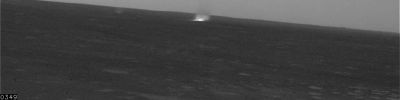
SOL461-Dust_Devil-00.jpgDust Devils near Spirit on Sol 46176 visiteCaption NASA originale:"The Sun heats the surface so that the surface is warm to the touch even though the atmosphere at 2 mt(such as approx. 6 feet) above the surface would be chilly.
That temperature contrast causes convection.
Mixing the dust, winds and convection can trigger Dust Devils".
|
|

MOON OVER VIENNA.jpgSolar eclypse over Vienna76 visiteUn'immagine bellissima: non servono altri commenti.
|
|

OPP-SOL169-mer_b_sol169_ratholes_labels-B176R1.jpgInside Endurance Crater - Sol 16976 visiteLa risposta al quesito posto dagli Amici della NASA con il precedente frame è 7, I "RAT's Holes" sono 7.
EccoVi la caption NASA originale:"NASA's MER Opportunity's RAT has nibbled 7 holes into the slope of Endurance Crater. This image from the Rover's NavCam was released previously (PIA06716) without the holes labeled so that Viewers could try to find the holes themselves. Here, the holes have been identified. Starting from the uppermost pictured (closest to the Crater's rim) to the lowest, the RAT's holes targets are:
1) Tennessee,
2) Cobblehill,
3) Virginia,
4) London,
5) Grindstone,
6) Kettlestone and
7) Drammensfjorden.
These holes were drilled on Sol 138 (June 13, 2004), 143 (June 18), 145 (June 20), 148 (June 23), 151 (June 26), 153 (June 28) and 161 (July 7), respectively. Each hole is 4,5 cm (about 1,8") in diameter".
|
|
| 25353 immagini su 2113 pagina(e) |
 |
|
|
|
|
833 | |
|
|
|
|





