| |
| Piú viste |
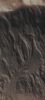
ESP_025646_1440-PCF-LXTT-00.jpgIcy Flows (Absolute Natural Colors; credits for the additional process. and color.: Dr Paolo C. Fienga - Lunexit Team)77 visiteMars Local Time: 15:06 (Early Afternoon)
Coord. (centered): 35,452° South Lat. and 112,094° East Long.
Spacecraft altitude: 253,5 Km (such as about 158,5 miles)
Original image scale range: 50,7 cm/pixel (with 2 x 2 binning) so objects ~ 1 mt and 52 cm across are resolved (with 4 x 4 binning)
Map projected scale: 50 cm/pixel
Map projection: EQUIRECTANGULAR
Emission Angle: 4,8°
Sun - Mars - MRO (or "Phase") Angle: 69,0°
Solar Incidence Angle: 72° (meaning that the Sun is about 18° above the Local Horizon)
Solar Longitude: 57,5° (Northern Spring/Southern Fall)
Credits: NASA/JPL/University of ArizonaMareKromium
|
|

Titan-MF-EB-LXTT-01.jpgNot an Aurora! (False Colors; credits for the additional process. and color.: Elisabetta Bonora and Marco Faccin - Lunar Explorer Italia/IPF)77 visiteDall'ingrandimento del dettaglio controverso (frame superiore) non è possibile ricavare alcuna certezza, se non che il Fenomeno (probabilmente) Atmosferico che interessa le estreme Regioni Sud-Polari di Titano è soggetto a rapidi cambiamenti nel tempo. La sua forma, poi (decisamente irregolare), ci spinge a preferire - diremmo in via definitiva - l'ipotesi transitoria e meteorologica per quanto attiene la natura del Fenomeno in questione (i.e.: nuvola, super-nuvola, nuvola semi-permanente o colonnare da post-impatto che sia).MareKromium
|
|

SOL0059-NLA_402729734EDR_D0050000NCAM00501M_-PCF-LXTT-00.jpgHorizon and Sky at Gale - Sol 59 (Absolute Natural Colors; credits for the additional process. and color.: Dr Paolo C. Fienga/Lunar Explorer Italia/Italian Planetary Foundation) 77 visiteFrame taken at 12:15:15 Mars Local Solar TimeMareKromium
|
|

SOL0061-ML0315000082M0_DXXX-0061ML0315000239M0_DXXX-GB-LXTT-IPF.gifGood Vibrations... - Sol 61 (a GIF-Movie by Dr Gianluigi Barca/Lunar Explorer Italia/Italian Planetary Foundation)77 visitenessun commentoMareKromium
|
|

ZZ-Mercury-Limb-PIA16429-PCF-LXTT-IPF.jpgMercurian Horizon (Absolute Natural Colors; credits for the additional process. and color.: Dr Paolo C. Fienga/Lunar Explorer Italia/Italian Planetary Foundation)77 visiteImages of Mercury's Limb provide information about the shape and topography of Mercury, but they also provide a sense of what it would be like to fly over the Innermost Planet, and to look out of the Spacecraft's window and toward the distant Horizon. See anywhere good to land?
Date acquired: July 24, 2012
Image Mission Elapsed Time (MET): 251598850
Image ID: 2258481
Instrument: Narrow Angle Camera (NAC) of the Mercury Dual Imaging System (MDIS)
Center Latitude: 18,25° South
Center Longitude: 353,70° East
Scale: the bottom of this scene is approximately 150 Km (about 93 miles) across, from left to right
Solar Incidence Angle: 58,6° (meaning that the Sun was about 31,4° above the imaged Local Horizon at the time the picture was taken)
Emission Angle: 80,0°
Sun-Mercury-MESSENGER (or "Phase") Angle: 138,6°MareKromium
|
|

Phoebe-PIA06064-PCF-LXTT-IPF-1.jpgPhoebe (Absolute Natural Colors - Credits for the additional process. and color.: Dr Paolo C. Fienga/Lunar Explorer Italia/Italian Planetary Foundation)77 visitePhoebe's possibole true nature is partly revealed in this image-mosaic of two frames taken during the NASA - CASSINI Spacecraft's Fly-By that occurred on June 11, 2004. The image shows evidence for the emerging view that Phoebe may be an ice-rich Celestial Body coated with a thin Layer of Dark Material (probably Dust). This phenomenon has been observed on other Icy Satellites, such as Ganymede, in the Jovian System: when an impactor slammed into the Surface of Phoebe, the collision excavated fresh, bright Material - probably Water Ice - underlying the Surface Layer of Dust and other rocky debris. A further evidence supporting this hypothesis can be seen on some Crater Walls where the darker Material appears to have slid downwards, so to expose more light-colored Material. However, some areas of the image that are particularly bright - especially near the lower right - are just over-exposed. Small bright Impact Craters visible in the picture are probably fairly young Surface Features.
In addition to that, a number of interesting circumstances seem to indicate that Phoebe may have originated in the Outer Solar System. In fact, Phoebe's highly irregular and Dark Surface, its retrograde orbit, the presence, on its Surface, of a huge variety of large and small Impact Craters and, last but not least, its extremely low Average Density, appear consistent with the hypothesis that Phoebe was once part of the Kuiper Belt, before being captured by Saturn's Gravity (which is, most likely, the same origin of quite a few Minor moons of the Gas-Giant Planets Uranus, Neptune, Saturn and Jupiter).
This spectacular view was obtained at a Phase, or Sun-Phoebe-Spacecraft, Angle of 84°, and from a distance of approximately 32.500 Km (such as aabout 20.200 miles). The image scale is approximately 190 meters (624 feet) per pixel.
These image-mosaic (which is made of two Original NASA - CASSINI Spacecraft b/w frames published on the NASA - Planetary Photojournal with the ID n. PIA 06064) have been additionally processed and then colorized, according to an informed speculation carried out by Dr Paolo C. Fienga (LXXT/IPF), in Absolute Natural Colors (such as the colors that a human eye would actually perceive if someone were onboard the NASA - CASSINI Spacecraft and then looked outside, towards the Saturnian Outer moon, Phoebe), by using an original technique created - and, in time, dramatically improved - by the Lunar Explorer Italia Team. Different colors, as well as different shades of the same color, mean, among other things, the existence of different Elements (Minerals) present on the Surface of Phoebe, each having a different Albedo (---> Reflectivity) and Chemical Composition.MareKromium
|
|

Channels-Dao_Vallis-PIA15215-PCF-LXTT-IPF.jpgFeatures of Dao Vallis (Absolute Natural Colors; credits for the additional process. and color.: Dr Paolo C. Fienga/Lunar Explorer Italia/Italian Planetary Foundation)77 visiteDao Vallis is a Martian Channel that, as the peculiar texture and color of its bottom and edges show us quite well, was not carved by Molten (and very fluid) Lava, but by real Water instead. Dao Vallis runs South/Westward into the Hellas Planitia Region, and it has been identified (among others, by Dr M.H. Carr) as a so-called Outflow Channel. Dao Vallis has a main Tributary Channel, known as Niger Vallis, and it extends on the Martian Southern Hemisphere's Surface for over 1200 Km. Its name, just out of curiosity, apparently comes from a Thai word meaning "star" (and God only knows why the IAU made such a bizarre and, in our opinion, pointless choice...).
However, talking again about our today's APOD Surface Feature, we can say that we know that the (possible) sources of Dao Vallis are near an extremely old Martian Volcano, called Hadriaca Patera; it is thought by many Scientists that the Water that formed it came out from the Subsurface when a huge quantity of hot Magma, erupted from Hadriaca Patera, melted, in a very short time period (in a case like this, we might be talking about minutes), huge amounts of Ice that was caught in the otherwise already frozen Ground. Anyway, much of this Water may have also been released during the occurrence of a few very large "Outburst Floods".
In addition to the above, and after a carfeul examination of Dao Vallis' now completely desiccated Riverbed, we, as IPF, strongly believe that, whatever the actual origin of the Channel might have been, Dao Vallis must have carried liquid Water for a very long time, before drying up. As a matter of fact, and as it is clearly visible in this NASA - 2001 Mars Odyssey Orbiter frame, on the bottom of the Channel can be identified several layers of dried material (Mud, likely) that, in our opinion, make the physical evidence that the desiccation process of Dao Vallis took some time before it was complete. In other words, the desiccation (or, like some Scientists say, evaporation and/or sublimation) of the Waters that ran through the Channel, was far from being semi-instantaneous or (this, of course, relatively speaking) rather fast. Furthermore, the almost complete lack of Impact Craters on the Riverbed, if seen and evaluated in direct contrast with the strong presence of Impact Craters (of various size and shape - meaning both Primary and Secondary Craters) that exist and is VERY well visible on both the edges of the Channel, proves us that, when Liquid Water ran through Dao Vallis, the strong meteoric activity which scarred most of the Surface of the Red Planet, was already ended. In other words, Dao Vallis hosted liquid and running Waters until a very (always relatively - and geologically - speaking) recent time.
Picture Data: Orbit Number: 44201; Latitude: 39,4843° South and Longitude: 86,4444° East; Instrument: VIS; Captured: December, 1st, 2011; Mars Local Time (M.L.T.): 17:39 (Late Aftrnoon)
This frame has been colorized in Absolute Natural Colors (such as the colors that a human eye would actually perceive if someone were onboard the NASA - 2001 Mars Odyssey Orbiter and then looked down towards the Surface of Mars), by using an original technique created - and, in time, dramatically improved - by the Lunar Explorer Italia Team.MareKromium
|
|

SOL0121-1-GB-LXTT-IPF.jpgProximities of Yellowknife Bay - Sol 121 (an Image-Mosaic in Calibrated Natural Colors; credits for the additional process. and color.: Dr Gianluigi Barca/Lunar Explorer Italia/Italian Planetary Foundation)77 visitenessun commentoMareKromium
|
|
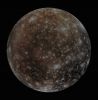
Callisto-PIA03456-PCF-LXTT-IPF.jpgApproaching Callisto (Absolute Natural Colors; credits for the additional process. and color.: Dr Paolo C. Fienga/Lunar Explorer Italia/Italian Planetary Foundation)77 visiteBright scars on a darker Surface testify to a long history of impacts on the Jovian moon Callisto, as it can be seen in this image obtained by the NASA - Galileo Spacecraft. The picture, taken in May 2001, is the only complete global Absolute Natural Color image of Callisto ever obtained by the NASA - Galileo Spacecraft, which orbited around Jupiter from December, 7, of the AD 1995 and until September 21, of the AD 2003, when the Spacecraft was destroyed during a controlled impact with Jupiter itself.
Of Jupiter's 4 (four) largest moons (also known as the "Galilean Moons"), Callisto orbits farthest from the Giant Gas Planet. Furthermore, Callisto's Surface is uniformly cratered but, as you can see for yourself, is not uniform in color or brightness at all. At present day, Planetary Scientists believe that the brighter areas are mainly Ice while the darker ones should be made of highly eroded (and Ice-poor) Rocky Materials.
This frame (which is an Original NASA - Galileo Spacecraft color frame published on the NASA - Planetary Photojournal with the ID n. PIA 03456) has been additionally processed and then re-colorized, according to an educated guess, by Dr Paolo C. Fienga (LXTT-IPF), in Absolute Natural Colors (such as the colors that a human eye would actually perceive if someone were onboard the NASA - Galileo Spacecraft and then looked outside, towards the Jovian moon Callisto), by using an original technique created - and, in time, dramatically improved - by the Lunar Explorer Italia Team. Different colors, as well as different shades of the same color, mean, among others, the existence of different Elements present on the Surface of Callisto, each having a different Albedo (---> Reflectivity) and Chemical Composition.MareKromium
|
|
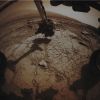
SOL0182-PIA16728-PCF-LXTT-IPF.jpgDrilling Time! - Sol 182 (Absolute Natural Colors; credits for the additional process. and color.: Dr Paolo C. Fienga/Lunar Explorer Italia/IPF)77 visitenessun commentoMareKromium
|
|

ZZ-Mercury-Limb-PIA16820-PCF-LXTT-IPF.jpgSouthern Craters (Absolute Natural Colors; credits for the additional process. and color.: Dr Paolo C. Fienga - Lunar Explorer Italia/Italian Planetary Foundation)77 visiteThe set of 3 (three) frames shown here in Absolute Natural Colors and forming this image mosaic, was acquired by the NASA - MESSENGER Spacecraft as part of a sequence intended to monitor any changes in the calibration of the Multispectral Wide Angle Camera onboard the Spacecraft over time. However, the final result of this "calibration" also gives us a simply beautiful view of a wide portion (the whole scene is approx. 1900 Km - such as a little less of 1180 miles - across) of Mercury's heavily cratered Southern Hemisphere. Furthermore, the Impact Craters Magritte, Neruda, and Sher-Gil can be easily spotted within this scene. North is towards the top-left of the image.
Date acquired: December, 17th, 2012
Images Mission Elapsed Time (MET): 264237810, 264237814, 264237830
Images ID: 3157538, 3157539, 3157543
Instrument: Wide Angle Camera (WAC) of the Mercury Dual Imaging System (MDIS)
Center Latitude: 59,16° South
Center Longitude: 149,3° East
Resolution: 1663 meters/pixel
Solar Incidence Angle: 59,2° (meaning that the Sun, at the time that the pictures were taken, was about 30,8° above the imaged Local Mercurian Horizon)
Emission Angle: 28,8°
Sun-Mercury-Messenger (or "Phase") Angle: 78,1°
This picture (which is an Original NASA - MESSENGER Spacecraft color image mosaic published on the NASA - Planetary Photojournal with the ID n. PIA 16820) has been additionally processed and then re-colorized in Absolute Natural Colors (such as the colors that a human eye would actually perceive if someone were onboard the NASA - MESSENGER Spacecraft and then looked outside, towards the Surface of Mercury), by using an original technique created - and, in time, dramatically improved - by the Lunar Explorer Italia Team. Different colors, as well as different shades of the same color, mean, among other things, the existence of different Elements (Minerals) present on the Surface of Mercury, each having a different Albedo (---> Reflectivity) and Chemical Composition.MareKromium
|
|

UMBRIEL-PIA00040-PCF-LXTT-IPF.jpgUmbriel (Absolute Natural Colors; credits for the additional process. and color.: Dr Paolo C. Fienga/Lunar Explorer Italia/Italian Planetary Foundation)77 visiteThe Southern Hemisphere of the Uranian moon Umbriel displays heavy Cratering in this NASA - Voyager 2 image, taken on January 24, 1986, at a distance of approx. 557.000 Km (such as a little less than 346.000 miles) from the Surface of the moon. This frame, taken through the Clear-Filter of Voyager's Narrow-Angle Camera, is the most detailed image of Umbriel that we have, with a resolution of about 10 Km (such as 6,21 miles) per picture element.
Umbriel is the darkest of Uranus' larger moons and the one that appears to have experienced the lowest level of Geological Activity. It has a diameter of about 1200 Km (a little more than 745 miles) and its Surface reflects only 16% of the light that receives; in the latter respect, Umbriel is similar to the Lunar Highland Areas of our own Moon. Umbriel, as we wrote herebefore, is heavily cratered, but it lacks the numerous Bright-Ray Craters that are commonly seen on the other large Uranian Natural Satellites; this fact, among other things, results in a relatively uniform Surface Albedo (---> Reflectivity).
The prominent Impact Crater visible on the Terminator (at about 11 o'clock of Umbriel's disk) is approx. 110 Km (such as 68,3 miles) across and it shows a really bright Central Peak. On the other hand, the strangest Surface Feature visible in this image (on the Limb of Umbriel, right at 12 o'clock of the disk) is a curious-looking Bright Ring which represents the most reflective area seen on Umbriel itself. The Bright Ring is about 140 Km (approx. 87 miles) in diameter and it lies near the moon's Equator. The nature of the Bright Ring is unknown, although it might be a very large Frost Deposit, perhaps associated with (located on top and near) the Rim of a huge Impact Cater. The few white spots that can be barely seen against the black background are not stars, but just just image artifacts, due to 'noise' in the data received on Earth.
This frame (which is the Original NASA - Voyager 2 b/w image published on the NASA - Planetary Photojournal with the ID n. PIA 00040) has been additionally processed and then colorized, according to an educated guess carried out by Dr Paolo C. Fienga (LXTT-IPF), in Absolute Natural Colors (such as the colors that a human eye would actually perceive if someone were onboard the NASA - Voyager 2 Spacecraft and then looked outside, towards the Neptunian moon Triton), by using an original technique created - and, in time, dramatically improved - by the Lunar Explorer Italia Team. Different colors, as well as different shades of the same color, mean, among others, the existence of different Elements present on the Surface of Triton, each having a different Albedo (---> Reflectivity) and Chemical Composition.MareKromium
|
|
| 25353 immagini su 2113 pagina(e) |
 |
|
|
|
|
830 | |
|
|
|
|
|
|





