| Piú viste |
SOL1787-2P285005955EFFAZ89P2598L5M1.jpgCrunch! - Sol 1787 (natural colors; credits: Lunar Explorer Italia)77 visitenessun commentoMareKromium
|
|

034-Methane_of_Mars.jpgMap of the "Martian Methane"77 visiteCaption NASA:"Why is there Methane on Mars? No one is sure.
An important confirmation that Methane exists in the Atmosphere of Mars occurred last week, bolstering previous controversial claims made as early as 2003. The confirmation was made spectroscopically using large ground-based telescopes by finding precise colors absorbed on Mars that match those absorbed by Methane on Earth.
Given that Methane is destroyed in the open martian air in a matter of years, the present existence of the fragile gas indicates that it is currently being released, somehow, from the Surface of Mars.
One prospect is that microbes living underground are creating it, or created in the past. If true, this opens the exciting possibility that life might be present under the Surface of Mars even today. Given the present data, however, it is also possible that a purely geologic process, potentially involving volcanism or rust and not involving any life forms, is the Methane creator.
Pictured above is an image of Mars superposed with a map of the recent Methane detection".
Nota Lunexit: se la Mappa NASA è realmente accurata ed il quantitativo di Metano presente in Atmosfera è quello "suggerito" dalla Mappa stessa, allora - sempre seguendo la "Logica NASA" - ci troveremmo davanti a due possibili scenari:
1) Scenario Geologico (Metano come prodotto di processi geologici): Marte è ancora soggetto attivo di fenomeni vulcanici tutt'altro che minori e residuali, visti i quantitativi e la distribuzione del Metano nell'Atmosfera del Pianeta Rosso, oppure
2) Scenario Biologico (Metano come sottoprodotto di attività biologiche attuali): Marte è, letteralmente, "brulicante di Vita" - altro che batteri e micro-organismi - visti, come sopra, i quantitativi e la distribuzione del Metano nell'Atmosfera del Pianeta Rosso.
SOTTOLINEIAMO che queste nostre congetture DERIVANO LOGICAMENTE DALL'ANALISI DEI DATI NASA e NON da nostre speculazioni!
Vi suggeriamo, inoltre, di notare la posizione dei maggiori quantitativi di Metano nell'Atmosfera Marziana...MareKromium
|
|

SOL1785-2N284828018ESFAZ89P1561L0M1.jpgGusev Skyline - Sol 1785 (interp. n. 2 - possible True Colors; credits: Lunar Explorer Italia)77 visitenessun commentoMareKromium
|
|
OPP-SOL1793-1N287365060EFF97A0P0715L0M1.jpgMeridiani's Horizon - Sol 1793 (natural colors; credits: Lunar Explorer Italia)77 visitenessun commentoMareKromium
|
|

ESP_011605_1170_RED_abrowse.jpgDefrosting Malea Patera (Natural Colors; credits: Lunar Explorer Italia)77 visiteMalea Patera is one of a group of ancient volcanoes that ring the Hellas Impact Basin. This HiRISE image was intended to investigate the nature of the volcanic materials at this location. However, the image was taken in early Spring for this location in the Southern Hemisphere and so the ground is covered with bright frost except for some dark splotches found in discrete patches.
This is where the sunlight has penetrated the frost and initiated defrosting around discrete spots.
Clearly something is different about the patches where this defrosting has started before any other locations. One possibility is that these are (frost covered) dark sand dunes that heat up more easily than the surrounding terrain. However, we will need to take a new image in the Summer time to really know what is happening here.
Mars Local Time: 16:11 (middle afternoon)
Coord. (centered): 62,5° South Lat. and 53,3° East Long.
Spacecraft altitude: 249,1 Km (such as about 155,7 miles)
Original image scale range: 24,9 cm/pixel (with 1 x 1 binning) so objects ~75 cm across are resolved
Map projected scale: 25 cm/pixel
Map projection: EQUIRECTANGULAR
Emission Angle: 0,9°
Phase Angle: 72,4°
Solar Incidence Angle: 73° (meaning that the Sun is about 17° above the Local Horizon)
Solar Longitude: 192,6° (Northern Autumn)
Credits: NASA/JPL/University of Arizona
Additional process. and coloring: Lunar Explorer ItaliaMareKromium
|
|

ESP_011909_1320_RED_abrowse.jpgSand Dunes and Ripples in Proctor Crater (Natural Colors; credits: Lunar Explorer Italia)77 visiteMars Local Time: 16:00 (middle afternoon)
Coord. (centered): 47,8° South Lat. and 30,7° East Long.
Spacecraft altitude: 253,2 Km (such as about 158,3 miles)
Original image scale range: 50,7 cm/pixel (with 1 x 1 binning) so objects ~ 1,52 mt across are resolved
Map projected scale: 50 cm/pixel
Map projection: EQUIRECTANGULAR
Emission Angle: 3,2°
Phase Angle: 59,1°
Solar Incidence Angle: 62° (meaning that the Sun is about 28° above the Local Horizon)
Solar Longitude: 206,7° (Northern Autumn)
Credits: NASA/JPL/University of Arizona
Additional process. and coloring: Lunar Explorer ItaliaMareKromium
|
|

PSP_010494_1790_RED_abrowse.jpgMound in Aeolis (Natural Colors; credits: Lunar Explorer Italia)77 visiteMars Local Time: 15:40 (middle afternoon)
Coord. (centered): 1,1° South Lat. and 135,7° East Long.
Spacecraft altitude: 268,1 Km (such as about 167,6 miles)
Original image scale range: 53,6 cm/pixel (with 1 x 1 binning) so objects ~ 1,61 mt across are resolved
Map projected scale: 50 cm/pixel
Map projection: EQUIRECTANGULAR
Emission Angle: 0,0°
Phase Angle: 56,6°
Solar Incidence Angle: 57° (meaning that the Sun is about 33° above the Local Horizon)
Solar Longitude: 145,6° (Northern Summer)
Credits: NASA/JPL/University of Arizona
Additional process. and coloring: Lunar Explorer ItaliaMareKromium
|
|
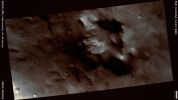
PSP_010454_1635_RED_abrowse.jpgCentral Uplift within an Unnamed Impact Crater (Natural Colors; credits: Lunar Explorer Italia)77 visiteMars Local Time: 15:45 (middle afternoon)
Coord. (centered): 16,1° South Lat. and 150,2° East Long.
Spacecraft altitude: 261,3 Km (such as about 163,3 miles)
Original image scale range: 26,1 cm/pixel (with 1 x 1 binning) so objects ~ 78 cm across are resolved
Map projected scale: 25 cm/pixel
Map projection: EQUIRECTANGULAR
Emission Angle: 8,4°
Phase Angle: 56,6°
Solar Incidence Angle: 63° (meaning that the Sun is about 27° above the Local Horizon)
Solar Longitude: 144,0° (Northern Summer)
Credits: NASA/JPL/University of Arizona
Additional process. and coloring: Lunar Explorer ItaliaMareKromium
|
|

ESP_011290_1800_RED_abrowse.jpgFresh Crater Chain in Meridiani Planum (Natural Colors; credits: Lunar Explorer Italia)77 visiteMars Local Time: 15:47 (middle afternoon)
Coord. (centered): 0,0° Lat. and 2,6° East Long.
Spacecraft altitude: 271,1 Km (such as about 169,4 miles)
Original image scale range: 27,1 cm/pixel (with 1 x 1 binning) so objects ~ 81 cm across are resolved
Map projected scale: 25 cm/pixel
Map projection: EQUIRECTANGULAR
Emission Angle: 7,3°
Phase Angle: 64,0°
Solar Incidence Angle: 57° (meaning that the Sun is about 33° above the Local Horizon)
Solar Longitude: 178,6° (Northern Summer)
Credits: NASA/JPL/University of Arizona
Additional process. and coloring: Lunar Explorer ItaliaMareKromium
|
|
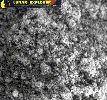
Lifeforms-011-SPIRIT-2M291757231EFF.gifMicroscopic Lifeforms in Motion? (GIF-Movie; credits: Dr G. Barca)77 visiteDal Microscopic Imager del Rover Spirit (Sol 1863), lo spettacolo che queste tre GIF (elaborate dal nostro Grande Dr Barca), oltre che affascinante, ci sembra abbastanza inequivocabile: stiamo osservando dei corpuscoli in movimento.
L'inevitabile pragmaticità che deve informare il nostro Lavoro - onde limitare il rischio di prendere degli abbagli clamorosi - ci spinge a considerare possibile l'eventualità per cui si tratti di semplici micro-granuli di sabbia o di polveri aggregate i/le quali vengono spinti/e da una corrente d'aria oppure, visto il loro moto (se ci fate caso essi sembrano muoversi "al di sopra" del terriccio che domina il campo di ripresa del MI), potrebbe anche trattarsi di un raro (ma NON impossibile) fenomeno di magnetizzazione.
Il dato più curioso della ripresa, comunque (dato su cui Vi suggeriamo di concentrarVi e riflettere un pò), mostra non solo dei movimenti incoerenti (fra loro) dei vari corpuscoli inquadrati, ma evidenzia anche la circostanza per cui i granuli più grossi (o le aggregazioni di polveri più massicce) paiono muoversi più rapidamente (rectius: sembrano coprire una distanza maggiore nella medesima Unità di Tempo considerata) dei granuli più piccoli (o delle aggregazioni meno massicce).
Supponendo quindi che il movimento dei corpuscoli sia causato dal vento - l'ipotesi di fenomeno magnetico è effettivamente la più remota - e che l'azione di spinta sia coerente (omogenea) rispetto al piano di riferimento (il che, in altre parole, sta a significare che l'azione eolica è sempre la stessa, direzionalmente e quantitativamente, per TUTTI i corpuscoli coinvolti), l'incongruenza dei risultato finale ci sembra ovvia.
La nostra ipotesi "Esotica"? Si potrebbe trattare di organismi complessi in movimento (forse "in fuga", poichè disturbati dalle luci e dai rumori - nonchè dalle vibrazioni - emesse da Spirit).
Guardate, riflettete e scrivete cosa pensate: c'è spazio per qualsiasi ipotesi!MareKromium
|
|

Terra_03.jpgTerra! (additional process. by Giorgio Picciau)77 visitenessun commentoMareKromium
|
|
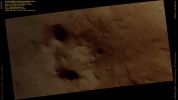
PSP_010454_1635_RED_abrowse~0.jpgCentral Uplift of Unnamed Impact Crater (Natural Colors; credits: Lunar Explorer Italia)77 visitenessun commentoMareKromium
|
|
| 25353 immagini su 2113 pagina(e) |
 |
|
|
|
|
825 | |
|
|
|
|





