| Piú viste |
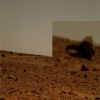
SOL060-MF1.jpgUnusually-looking "Boulder" - Sol 60 (Natural Colors; credits: Lunar Explorer Italia)77 visitenessun commentoMareKromium
|
|

OPP-SOL005-1N128624359EFF0205P1541L0M1.jpgEagle Crater Panorama (3) - Sol 5 (Natural Colors; credits: Lunar Explorer Italia)77 visitenessun commentoMareKromium
|
|

Panoramic-AS12-46-6845-6851.jpgFrom AS 12-46-6845 until 6851 (EVA-1; Middle Crescent Crater)77 visite118:18:41 MT - Pete Conrad has moved to his left several feet and starts a clockwise, left-to-right partial pan back around to the Northeastern Rim to give a stereo view of Middle Crescent Crater. The discoloration at the center of the image is due to a dust smudge on the lens that showed up first on AS 6813.
MareKromium
|
|

Saturn-PIA11518.jpgApproaching the Equinox77 visiteCaption NASA:"The shadow of the moon Mimas has just slipped off Saturn's Rings and onto the Planet in this Cassini Spacecraft image. The shadow is visible as a short dash below the Rings' shadows on the Planet. At this exposure setting, the Rings are too dim to be seen easily. As Saturn approaches its August 2009 equinox, the Planet's moons cast shadows onto the Rings.
This view looks toward the unilluminated side of the Rings from about 61° above the Ring-Plane. Images taken using red, green and blue spectral filters were combined to create this Natural Color view. The images were obtained with the Cassini Spacecraft wide-angle camera on April 30, 2009 at a distance of approx. 1,4 MKM (about 870.000 miles) from Saturn.
Image scale is roughly 80 Km (about 50 miles) per pixel".MareKromium
|
|

Counterlight.jpgCounterlight (by Roberto Tremolada)77 visitenessun commentoMareKromium
|
|
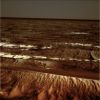
OPP-SOL569-1P178706479EFF5927P2357L2M1.jpgThe "waves" of Meridiani (5) - Sol 569 (Tri-chromatic Version; credits: Lunar Explorer Italia)77 visitenessun commentoMareKromium
|
|

PSP_008778_1685.jpgAnother "Door"?77 visiteIn questo dettaglio, estrapolato da PSP_008778_1685 (a cura del Dr Faccin), una possibile apertura similare - vagamente - alla "Porta" che abbiamo visto in PSP_002047_1890. Si tratta di una feature comune, quindi, a questi "cumuli" ("mounds", o pseudo-colline), oppure è solo una somiglianza casuale ed isolata?
Probabilmente si tratta solo di una somiglianza casuale ed isolata, ma noi...continuiamo ad osservare!MareKromium
|
|

NGC-4145.jpgNGC 4145 - Spiral Galaxy77 visite"...Irretit muscas, transmittit aranea vespas..."
(Plutarco)
"...le ragnatele catturano le mosche, ma lasciano fuggire le vespe..." (in altre parole: la giustizia umana, che è lungi dall'essere perfetta, colpisce i piccoli e risparmia i grandi)MareKromium
|
|
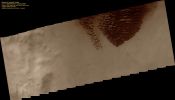
Craters-Lamont_Crater-20090908a.jpgLamont Crater (Natural Colors; credits: Lunexit)77 visitenessun commentoMareKromium
|
|

OPP-SOL165-1P142833574EFF3221P2395R1M1.jpgOn the Edge of Endurance Crater - Sol 165 (Natural Colors; credits: Lunexit)77 visitenessun commentoMareKromium
|
|
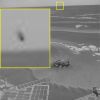
OPP-SOL2022-1N307687655EFFA7ARP1943L0M1-4.jpgImage-Artifact? - Sol 2022 (by Dr G. Barca)77 visitenessun commentoMareKromium
|
|

South_Polar_Features-02.jpgSouth Polar "River-like" Surface Features? (Absolute Natural Colors; credits for the additional process. and color.: Dr Paolo C. Fienga - Lunexit Team)77 visitenessun commentoMareKromium
|
|
| 25353 immagini su 2113 pagina(e) |
 |
|
|
|
|
824 | |
|
|
|
|





