| Piú viste |
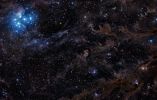
M-045-2.jpgCosmic Clouds near the Seven Sisters78 visite"...A true Great Poet, while writing himself, also writes his Time..."
T. S. Eliot
MareKromium
|
|

Dione-PIA12743.jpgErulus Crater (Absolute Natural Colors; credits for the additional process. and color.: Dr Paolo C. Fienga - Lunexit Team)78 visiteCaption NASA:"The Cassini spacecraft snapped this shot of cratered Dione as it flew by the Saturnian moon on Oct. 17, 2010. The large crater at the center of the image is Erulus, which is about 120 Km, or approx. 75 miles, across. This view looks toward the Southern Latitudes of the Leading Hemisphere of Dione.
The image was taken in Visible Light with the Cassini Spacecraft narrow-angle camera. The view was acquired at a distance of approximately 41.000 Km (such as about 25.000 miles) from Dione and at a Sun-Dione-Spacecraft, or Phase, Angle of 53°.
Image scale is roughly 240 meters (787 feet) per pixel".MareKromium
|
|
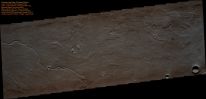
Channel-Elysium_Planitia-PIA13527.jpgChannel at the Edge of Elysium Planitia (Natural Colors; credits for the additional process. and color.: Dr Paolo C. Fienga - Lunexit Team)78 visitenessun commentoMareKromium
|
|

Dunes-PIA13733.jpgLarge Dunes (Absolute Natural Colors; credits for the additional process. and color.: Dr Paolo C. Fienga - Lunexit Team) 78 visitenessun commentoMareKromium
|
|
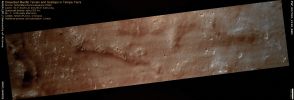
PSP_007930_2310_RED_abrowse-PCF-LXTT.jpgFeatures of Tempe Terra (Absolute Natural Colors; credits for the additional process. and color.: Dr Paolo C. Fienga - Lunexit Team)78 visitenessun commentoMareKromium
|
|
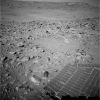
SOL399-2N161793676EFFA600P0675L0M1.jpgSee for Yourself... - Sol 39978 visiteLeft Navigation Camera Non-linearized Full frame EDR acquired on Sol 381 of Spirit's mission to Gusev Crater at approximately 15:43:49 Mars Local Solar Time.MareKromium
|
|
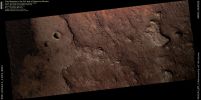
PSP_006625_1405_RED_abrowse-00-PCF-LXTT.jpgClay Minerals in the NW side of Bosporos Montes (Absolute Natural Colors; credits for the additional process. and color.: Dr Paolo C. Fienga - Lunexit Team)78 visiteThe Bosporos Montes make up part of the Rim of the giant Argyre Impact Basin on Mars. The Compact Reconnaissance Imaging Spectrometer (CRISM) identified this as a location with Clay Minerals (---> minerali a matrice argillosa). Such minerals contain water and may have formed under conditions favorable for life.
This HiRISE image was taken to support the CRISM Team’s investigation of this area. While HiRISE does not have the ability to identify minerals the way CRISM can, the enhanced colors in this image are similar to those seen in other Clay-containing parts of Mars.
The light-toned Mesas and Plains are crisscrossed with small Fractures that could have formed as a muddy Clay Deposit dried. However, this material is strong enough to form Boulders where it has been hit by Impact Craters.MareKromium
|
|
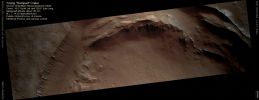
PSP_006588_1615_RED_abrowse-PCF-LXTT.jpgRelatively young "Rampart" Crater (Absolute Natural Colors; credits for the additional process. and color.: Dr Paolo C. Fienga - Lunexit Team)78 visiteThis image captures the Western Side of a relatively young “Rampart” Crater located in the Tharsis Region.
Rampart Craters are surrounded by a fluidized Ejecta Blanket (an Ejecta Blanket is the material thrown out around a Crater when the impact occured, in this case resembling the whites of a fried egg, where the crater is the yolk). Researchers speculate that these may form when an object impacts ground that contains fluid (liquid or frozen) that is released upon impact.
THEMIS images V06896002 and V10266002 provide context images for this side of the Crater and show better its Rampart.
Within the Crater we see evidence of Landslides originating at the upper edges. These Landslides have exposed individual Rocky Layers as well as Outcrops of stronger rock types which are more resistant to erosion.MareKromium
|
|

Northern_Dunes-PIA13797-2-PCF-LXTT.jpgSeasonal Changes in a Dune of the North Polar Erg (Absolute Natural Colors; credits for the Additional Process. and Color.: Dr Paolo C. Fienga - Lunexit Team)78 visitenessun commentoMareKromium
|
|

Collapse_Features-Cerberus_Fossae-20080604a-PCF-LXTT.jpgFissure in Cerberus Fossae (Absolute Natural Colors; additional process.: Dr Paolo C. Fienga - Lunexit Team)78 visitenessun commentoMareKromium
|
|
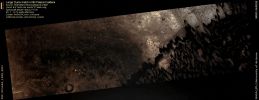
PSP_005684_1890_RED_abrowse-00-PCF-LXTT.jpgDark Dunefield in Nili Patera Caldera (CTX Frame - Enhanced Absolute Natural Colors; credits for the additional process. and color.: Dr Paolo C. Fienga - Lunexit Team)78 visitenessun commentoMareKromium
|
|
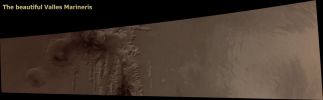
Valles_Marineris-h0442_0008_nd3.jpgPortion of the Valles Marineris Canyon System (Natural Colors; credits for the additional process. and color.: Dr Paolo C. Fienga)78 visitenessun commentoMareKromium
|
|
| 25353 immagini su 2113 pagina(e) |
 |
|
|
|
|
817 | |
|
|
|
|





