| Piú viste |
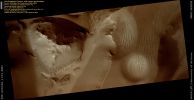
PSP_009342_1725_RED_abrowse.jpgPeri-Equatorial Canyon with Boulders and Layers (Natural Colors; credits: Lunar Explorer Italia)78 visitenessun commentoMareKromium
|
|
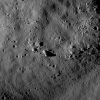
LRO-0008-376470main_tsiol438_lr_area.jpgTsiolkovskiy Crater78 visiteThe Far-Side Crater Tsiolkovskiy is one of the most spectacular and unique geologic features on the Moon.
Identified in the first image of the Far-Side, and named after visionary space pioneer Konstantin Tsiolkovskiy, Tsiolkovskiy Crater (185 Km diameter) has a an irregular (meaning: non-circular) shape, a Central Peak, and is completely filled with mare basalt.
Many geological and geomorphological features can be seen within and around the Crater, making this a particularly interesting place on the Moon to work and study.MareKromium
|
|

PSP_009342_1725_RED_JP2-00.jpgRolling, Rolling, Rolling Rocks... (1)78 visiteStiamo osservando gli effetti (uno dei tanti) di un Sisma Marziano?
O si è trattato di vibrazioni del suolo susseguenti ad un impatto (relativamente) vicino alla zona ripresa, le quali hanno agito su dei macigni instabili?
E' un fenomeno di Gravity Wasting?
Oppure è una conseguenza, su massi posti ai margini di declivi e stapiombi, di venti violentissimi?
O forse la colpa è stata di qualche "Marziano" che giocava a bocce usando dei macigni?
Ipotesi (e scherzi) a parte, questa è una splendida immagine MRO-HiRise (processata dal nostro Marco Faccin) la quale ci mostra la lunga (e QUASI COMPLETAMENTE RETTILINEA!) corsa di un macigno lungo un leggero - ma sensibile! - pendìo.
Ben visibili, accanto alla striscia principale, anche altre tracce lasciate da massi di diverse forme e dimensioni che sono rotolati a valle.
Non osiamo pensare che cosa potrebbe accadere ad un Rover - o ad un Astronauta... - il quale perdesse l'equilibrio su un terreno simile...MareKromium
|
|
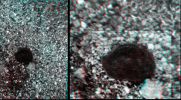
SOL1967-MI-MF6.jpgPebble? - Sol 1967 (High-Def-3D; credits: Dr M. Faccin)78 visitenessun commentoMareKromium
|
|
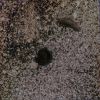
SOL1967-MF1.jpgPossible Indigenous Lifeform? - Sol 1967 (Superdefinition; credits: Dr M. Faccin)78 visitenessun commentoMareKromium
|
|

NGC-4145.jpgNGC 4145 - Spiral Galaxy78 visite"...Irretit muscas, transmittit aranea vespas..."
(Plutarco)
"...le ragnatele catturano le mosche, ma lasciano fuggire le vespe..." (in altre parole: la giustizia umana, che è lungi dall'essere perfetta, colpisce i piccoli e risparmia i grandi)MareKromium
|
|
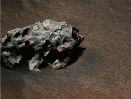
OPP-SOL2024-GB-LXT.jpgAnother Meteorite on the way to Endeavour Crater - Sol 2024 (Natural Colors; credits: Dr G. Barca & Lunexit)78 visitenessun commentoMareKromium
|
|

ESP_014380_1775_RED_abrowse-06.jpgExtremely Unusually-looking Skylight and an "in fieri" Collapse Pit (Perspective View and False Colors - credits: Dr M. Faccin)78 visitenessun commentoMareKromium
|
|

ESP_013499_1650-1.jpgSpirit near Home Plate (EDM n.1 - Natural - but enhanced - Colors; credits: Lunexit)78 visitenessun commentoMareKromium
|
|
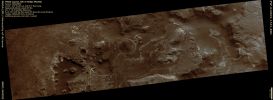
PSP_010839_1525_RED_abrowse.jpgPitted Layers, N/E of Hellas Planitia Region (Natural Colors;: credits: Lunexit)78 visitenessun commentoMareKromium
|
|

LRO-2500-Peary_Crater.jpgPeary Crater and the North Pole of the Moon78 visiteOne day in the not-too-distant future, lunar explorers may spend their winter holidays at the Lunar North Pole.
Peary, an irregularly-shaped Impact Crater centered at 88,5° North Lat. and approx. 30° East Long., could be the place to do just that.
Adjacent to the Lunar North Pole, Peary has areas along its Crater Floor cast in permanent shadow, but it also has areas along its rim that may be permanently illuminated by the Sun. The proximity to the North Pole, possible areas of permanent shadow and light, plus the potential for in-situ resources make Peary crater a challenging and enticing location for future human and robotic exploration.
Peary Crater is one of 50 specific sites being explored by lunar geologists using LROC images for NASA's Constellation Program.MareKromium
|
|

ZE-I-Viking_Lander_1-MF5.jpgSunny Day over Chrise Planitia (Natural Colors; credits: Dr M. Faccin - Lunexit Team)78 visitenessun commentoMareKromium
|
|
| 25353 immagini su 2113 pagina(e) |
 |
|
|
|
|
814 | |
|
|
|
|





