| Piú viste |
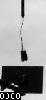
PHOE-SOL103-PIA11152-GIF.gifWinds... - Sol 103 (GIF-Movie; credits: NASA/JPL-Caltech/University of Arizona/Texas A&M University )79 visiteNASA's Phoenix Mars Lander's "Telltale" (such as the anemomether) catches a breeze as clouds move over the Landing Site on Sol 103 (such as Sept. 7, 2008), the 103rd Martian day since landing.
Phoenix's Surface Stereo Imager took this series of images during daily Telltale monitoring around 15:00 M.L.T. and captured the clouds moving over the Landing Site.
Phoenix can measure wind speed and direction by imaging the Telltale, which is about about 10 cm (approx. 4") tall. The Telltale was built by the University of Aarhus, Denmark.MareKromium
|
|

Dione-N00119794.jpgCross-Worlds! (10)79 visitenessun commentoMareKromium
|
|

OPP-SOL1693-1R278497629EFF9300P1311R0M1.jpgFarewell to Victoria! - Sol 1693 (natural colors; credits: Lunexit)79 visitenessun commentoMareKromium
|
|

Teoria_di_Schiapparelli_dei_Canali_Paralleli_di_Marte-1.jpgThe "Schiaparelli's Parallelism" (Earth-like Version, by Roberto Tremolada)79 visitenessun commentoMareKromium
|
|

Psp_010209_1855_red.jpgWhere the Waters flew... (possible True Colors; credits: Lunar Explorer Italia)79 visiteMars Local Time: 15:34 (middle afternoon)
Coord. (centered): 5,6° North Lat. and 355,5° East Long.
Spacecraft altitude: 274,8 Km (such as about 171,8 miles)
Original image scale range: 27,5 cm/pixel (with 1 x 1 binning) so objects ~55 cm across are resolved
Map projected scale: 25 cm/pixel
Map projection: EQUIRECTANGULAR
Emission Angle: 2,6°
Phase Angle: 56,1°
Solar Incidence Angle: 54° (meaning that the Sun is about 36° above the Local Horizon)
Solar Longitude: 134,5° (Northern Summer)
Credits: NASA/JPL/University of Arizona
Additional process. and coloring: Lunar Explorer ItaliaMareKromium
|
|
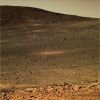
SOL311-3.jpgSkyline - Sol 311 (possible True Colors; credits: Dr G. Barca & Lunexit)79 visitenessun commentoMareKromium
|
|

SOL1477-1691-PIA11746-1.JPGThe "Bonestell' Panorama" (Full Version) - Soles 1477 until 1691 (edited and Approximate True Colors; credits: NASA/JPL/Cornell University)79 visiteCaption NASA:"This 360-degree panorama shows the vista from the location where NASA's Mars Exploration Rover Spirit has spent its 3rd Martian Southern-Hemisphere Winter inside Mars' Gusev Crater. The Rover's overwintering location is on the northern edge of a low plateau informally called "Home Plate", which is about 80 meters or 260 feet in diameter.
This view combines 246 different exposures taken with Spirit's PanCam — 82 pointings, with three filters at each pointing. Spirit took the first of these frames during the mission's 1477th Martian day, or sol, (February 28, 2008) two weeks after the Rover made its last move to reach the location where it would stop driving for the Winter. Solar energy at Gusev Crater is so limited during the Martian Winter that Spirit does not generate enough electricity to drive, nor even enough to take many images per day. The last frame for this mosaic was taken on Sol 1691 (such as October 5, 2008). Spirit began moving again on Sol 1709 (October 23, 2008), inching uphill to adjust the angle of its Solar Panels for the last portion of the Winter.
The hill on the horizon at far right is Husband Hill, to the North. Spirit acquired a 360-degree panorama (see PIA03610) from the summit of Husband Hill during August 2005). The hill dominating the left portion of the image is McCool Hill. Husband and McCool hills are two of the 7 principal hills in the Columbia Hills range within Gusev Crater. Home Plate is in the Inner Basin of the range.
The northwestern edge of Home Plate is visible in the right foreground. The blockier, more sharply shadowed texture there is layered sandstone whose layering is tilted inward toward the edge of the Home Plate platform. The northeastern edge of Home Plate is visible in the left foreground. Spirit first climbed onto Home Plate on that region, in early 2006.
Rover Tracks from driving by Spirit are visible on Home Plate in the center and right of the image. These were made during Spirit's second exploration on top of the plateau, which began when Spirit climbed onto the southern edge of Home Plate in September 2007.
In the center foreground, the turret of tools at the end of Spirit's RA (Robotic Arm) appears in duplicate because the arm was repositioned between the days when the images making up that part of the mosaic were taken. On the horizon above the turret, to the South, is a small hill capped with a light-toned outcrop. This hill is called "Von Braun", and it is a possible destination for Spirit during the upcoming Martian Southern-Hemisphere Summer.
The flat horizon in the right-hand portion of the panorama is the basaltic plain onto which Spirit landed on January 4, 2004 (Universal Time; such as January 3, 2004, Pacific Standard Time).
This is an approximate true-color, red-green-blue composite panorama generated from images taken through the Pancam's 600-nanometer, 530-nanometer and 480-nanometer filters. This "natural color" view is the Rover Team's best estimate of what the scene would look like if we were there and able to see it with our own eyes".
Nota Lunexit: se questa è la "Rover Team's best estimate of what the scene would look like if we were there and able to see it with our own eyes" allora siamo messi davvero malissimo in quanto a trasparenza dei dati e delle informazioni visive riguardo Marte.
Non ci credete? Volete una "prova" tangibile?
E allora rileggeteVi la Caption NASA dove si parla delle condizioni di illuminazione media di Gusev Crater durante l'Inverno e quindi considerate che questo panorama è stato ripreso PROPRIO durante l'Inverno di Marte: come spiegate l'illuminazione (elevata e diffusa) di tutto l'orizzonte?
Ve lo diciamo noi: potete ragionevolmente spiegarla SOLO ammettendo che l'Inverno di Gusev NON E' così buio come la NASA sostiene. Dunque, delle due l'una:
1) o la NASA mente sulle condizioni di illuminazione medie di Marte durante l'Inverno o
2) mente sulla bontà di questa immagine la quale NON E' AFFATTO (e non potrebbe neppure esserlo) realistica (ossìa, per usare le loro parole "rappresenta il paesaggio così come un umano la vedrebbe con i propri occhi se fosse lì".
Sorry quindi: la NASA è la NASA, ma noi sappiamo leggere ed interpretare i dati disponibili quanto loro, ergo...MareKromium
|
|

PSP_006262_1080_RED_abrowse-00~0.jpgExposure of Basal Section of South Polar Layered Deposits (MULTISPECTRUM; credits: Lunexit)79 visiteThis observation shows internal layering exposed in a so-called "Basal Section" of the Polar Layered Deposits.
The South Polar Layered Deposits are composed primarily of water ice with a small amount of dust.
Variations in dust content most likely controls the erosion of the layers. The layers were laid down over a large area near the South Pole, probably over the past few million years. They are believed to record recent global climate changes on Mars in much the same way that polar ice in Greenland and Antarctica provide information about varying climatic conditions on Earth.
Several layers appear to be truncated and most likely represent unconformities. Unconformities form when an episode of erosion that removes all or part of a layer, is followed by more deposition.MareKromium
|
|

SOL040-041-GIF-Movie-MF2.gifDo You See?!? - Sol 41 (GIF-Movie; credits: Dr M. Faccin)79 visitenessun commentoMareKromium
|
|

OPP-SOL1791-1P287189355EFF9700P2403L6M1.jpgPanorama (2) - Sol 1791 (Natural Colors; credits: Lunar Explorer Italia)79 visitenessun commentoMareKromium
|
|
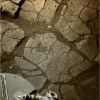
OPP-SOL1810-1P288873811EFF98J7P2543L7M1.jpgMartian Paving - Sol 1810 (Natural Colors; credits: Lunar Explorer Italia)79 visitenessun commentoMareKromium
|
|
OPP-SOL1806-1P288521353EFF98J5P2414R1M1.jpgHorizon... - Sol 1806 (Natural Colors - Medium Atmospheric Opacity; credits: Lunar Explorer Italia)79 visitenessun commentoMareKromium
|
|
| 25353 immagini su 2113 pagina(e) |
 |
|
|
|
|
802 | |
|
|
|
|





