| Piú viste |
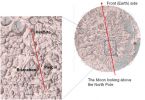
Kaguya-001-20071107.jpgThe View on Map: North Polar Region80 visiteThe area around the North Pole shot by the first image taking (encircled by a blue line) and KAGUYA's orbit (red arrow)
MareKromium
|
|

Kaguya-007-20071113.jpgThe rising "Blue Marble", from Lunar Orbit (Kaguya is near the Lunar North Pole)80 visiteCaption JAXA:"The Japan Aerospace Exploration Agency (JAXA) and NHK (Japan Broadcasting Corporation) have successfully performed the world's first high-definition image taking of an Earth-rise* by the Lunar Explorer "KAGUYA" (SELENE,) which was injected into a lunar orbit at an altitude of about 100 km on October 18, 2007 (Japan Standard Time. Following times and dates are all JST.)
The Apollo project was the first mission to take images of Earth rising over the Moon. The KAGUYA successfully shot high-definition images of the Earth-rise showing an impressive image of the blue Earth which was the only floating object in pitch-dark space.
These are the World's first high-definition earth images taken from about 380.000 Km away from the Earth in space.
The image taking was performed by the KAGUYA's onboard High Definition Television (HDTV) for space use developed by NHK. The moving image data acquired by the KAGUYA was received at the JAXA Usuda Deep Space Center, and processed by NHK.
The satellite was confirmed to be in good health through telemetry data received at the Usuda Station".
* Note: we use the expression "Earth-rise" in this press release, but the Earth-rise is a phenomenon seen only from satellites that travel around the Moon, such as the KAGUYA and the Apollo Class spaceships.
The Earth-rise cannot be observed by a person who is on the Moon as they can always see the Earth at the same position.
This still image was cut out from a moving image (wide shot) taken by the HDTV onboard the KAGUYA at 02:52 p.m. on November 7, 2007 (JST) then sent to the JAXA Usuda Deep Space Center.
In the image, the Moon's surface is near the North Pole, and the Arabian Peninsula and Indian Ocean can be observed on the Earth disc.MareKromium
|
|

OPP-SOL373-1P161307147EFF42DIP2551L6M1.jpgA "nail" in the trench?!? - Sol 373 (photomosaic; credits: Dr Marco Faccin)80 visiteDall'occhio e dalla costante attenzione del Dr Marco Faccin, una nuova (e davvero incredibile, da svariati punti di vista) possibile "scoperta": che cosa c'è dentro la trincea scavata da Opportunity, seminascosto da polvere e microgranuli (o berries)?
Un chiodo. Un chiodo ricurvo, con tanto di capocchia ben visibile ed adeguatamente enfatizzata nelle elaborazioni in falsi colori realizzate sempre dal Dr Faccin e visibili nella porzione Dx del frame.
Si tratta davvero di un "chiodo"? E, se lo fosse, da dove arriva? Lo ha "perso" il MER Opportunity e poi, mentre girellava, ci è passato sopra affossandolo, oppure il chiodo era già infossato e le ruote del Rover lo hanno riportato alla luce?
Le Vostre opinioni, idee e sensazioni sarebbero MOLTO apprezzate. Un enorme complimento - DAVVERO! - al Dr Faccin per la scoperta ed il processing dell'original NASA frame, ed un altrettanto enorme BRAVO al Dr Barca che è riuscito, in "n" ore, ad individuare il Sol durante il quale il frame controverso era stato ottenuto.
Teamwork, ancora una volta.MareKromium
|
|

Rhea-PIA09799.jpgRising Rhea (natural colors; credits: Lunexit)80 visiteCaption NASA:"The low illumination angle near the Terminator makes visible the steep topography of craters on Rhea's battered surface. This view is centered on 10° North Latitude, 128° West Longitude.
The image was taken in visible light with the Cassini spacecraft narrow-angle camera on Nov. 16, 2007. The view was obtained at a distance of approx. 313.000 Km (such as about 195.000 miles) from Rhea and at a Sun-Rhea-spacecraft, or phase, angle of 128°. Image scale is 2 Km (a little more than 1 mile) per pixel".MareKromium
|
|
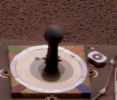
OPP-SOL363-2.jpgThe "Sundial" - Sol 363 (true-colors; credits: Dr G. Barca)80 visitenessun commentoMareKromium
|
|

as17-162-24102.jpgAS 17-162-24102 - Mc Kellar Crater80 visiteImage Collection: 35mm Nikon
Mission: 17
Magazine: 162
Magazine Letter: SS
Revolution: 15
Latitude: 14,4° South
Longitude: 171,2° West
Lens Focal Length: 55 mm
Camera Tilt: 70°
Camera Azimuth: 288
Camera Altitude: 110 Km
Sun Elevation (on Local Horizon): 5°
Description: MCKELLAR
Film Width: 35 mm
Film Color: color MareKromium
|
|
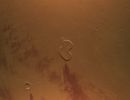
PSP-P14_006600_1881_XI_08N102W_071223sub_large.jpgUnusually-shaped Landform in Tharsis (MULTISPECTRUM; credits: Lunexit)80 visiteThis picture of a Landform (...) was acquired nearly two months ago by the CTX on 23 December 2007.
The Landform is about 1 Km (0,62 miles) across. The feature is located among lava flows South-East of the giant Tharsis volcano, Ascraeus Mons.
This picture is a sub-frame of CTX image P14_006600_1881_XI_08N102W_071223 and is located near 8,3° North Lat. and 101,9° West Long.MareKromium
|
|

OPP-SOL291-1N154005002EDN37MIP1580L0M1.jpgBig clouds over Endurance Crater (2 - True Colors; credits: Lunexit)80 visitenessun commentoMareKromium
|
|
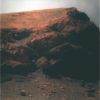
OPP-SOL1457-2.jpgLooking inside Victoria - Sol 1457 (natural colors + MULTISPECTRUM; credits: Dr Gianluigi Barca & Lunexit)80 visitenessun commentoMareKromium
|
|
SOL430-1.jpgRocks - Sol 430 (Natural Colors; credits: Dr Gianluigi Barca)80 visitenessun commentoMareKromium
|
|

OPP-SOL1489-90-NAVCAM_2opp-001.jpgVictoria's "Hues" - Sol 1484 (True Colors + MULTISPECTRUM; credits: Dr M. Faccin & Lunexit)80 visitenessun commentoMareKromium
|
|
SOL607.jpgGreenish "dust" and pebbles - Sol 607 (Superdefinition; credits: Dr G. Barca)80 visitenessun commentoMareKromium
|
|
| 25353 immagini su 2113 pagina(e) |
 |
|
|
|
|
786 | |
|
|
|
|





