| |
| Piú viste |

Titan-PIA14919.jpgTitan's South Polar Vortex (True Colors; credits: NASA/JPL-Caltech/Space Science Institute)81 visiteCaption NASA:"This frame (taken by the NASA - Cassini Spacecraft) shows us a South Polar Vortex or, in other words, a swirling Mass of Gas (and, perhaps, even other - heavier - Elements), which is located in the Upper Atmosphere, and approximately over the South Pole, of the Saturnian moon Titan. This Swirling Mass appears to complete one full rotation in about 9 (nine) hours - meaning a much faster period than the moon's 16 (sixteen)-days Rotation Period. The South Pole of Titan (which is about 3200 miles, or 5150 Km, across) is right under the Vortex.
Since the NASA - Cassini Spacecraft arrived in the Saturnian System, in 2004, Titan has shown a visible "Hood", such as an area of denser (when compared to the rest of the moon's Atmosphere) High Altitude Haze, high above the North Pole, but this is the first time that a similar phenomenon is seen above its South Pole. As a matter of fact, it was Northern Winter on Titan at the time of the arrival of the Cassini Spacecraft, and therefore much of its High Northern Latitudes was then in the darkness. But the Hood was high enough to still be illuminated by Sunlight. However, seasons have been changing since Saturn's August 2009 Equinox, which signaled the beginning of Spring in the Northern Hemisphere and the start of Fall (---> Autumn) in the Southern one, both for Saturn and for its very many moons. As a consequence of this season's changing, now the High Southern Latitudes are the ones moving into darkness, and the formation of this Vortex at Titan's South Pole may be related to the incoming Southern Winter and - maybe - the subsequent beginning of what could well be a South Polar Hood.
These new, more detailed images are only possible because of the NASA - Cassini Spacecraft newly inclined orbits, whose re-definition is part of the next phase of the Cassini Solstice Mission. Previously, Cassini was orbiting along the Equatorial Plane of Titan, and so the imaging team's pictures of the Polar Vortex (in the period between late March and mid-May), were taken from over Titan's Equator. At that time, however, the images taken by the Spacecraft only showed a brightening (or yellowing) of the detached Haze Layer located on the Limb (or Edge) of the Visible Disk of Titan, right over its South Polar Regions".MareKromium
|
|

OPP-SOL414-1N164952512EFF5200P0714R0M1-PCF-LXTT-IPF.jpgLooking around on Sol 414 (1 - Absolute Natural Colors; credits for the additional process. and color.: Dr Paolo C. Fienga/Lunar Explorer Italia/Italian Planetary Foundation) 81 visitenessun commentoMareKromium
|
|

SOL0058-EB-MF-LXTT-IPF-1.jpgDeep Rover Tracks - Sol 58 (an Image-Mosaic in Natural Colors - CTX Frame; credits for the additional process. and color.: Elisabetta Bonora and Marco Faccin/Lunar Explorer Italia/Italian Planetary Foundation)81 visitenessun commentoMareKromium
|
|
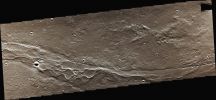
Channels-Enipeus_Vallis-PIA16332-PCF-LXTT-IPF.jpgFeatures of Enipeus Vallis (Absolute Natural Colors; credits for the additional process. and color.: Dr Paolo C. Fienga/Lunar Explorer Italia/Italian Planetary Foundation)81 visiteOrbit Number: 47340
Latitude: 36,0802° North
Longitude: 267,124° East
Instrument: VIS
Captured: August, 16, 2012MareKromium
|
|
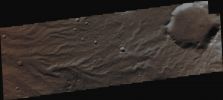
Channels-Unnamed_Channels_near_Huygens_Crater-PIA16322-PCF-LXTT-IPF.jpgUnnamed Channel near Huygens Crater (Absolute Natural Colors; credits for the additional process. and color.: Dr Paolo C. Fienga/Lunar Explorer Italia/Italian Planetary Foundation)81 visiteOrbit Number: 47248
Latitude: 16,8887° South
Longitude: 61,3382° East
Instrument: VIS
Captured: August, 8, 2012MareKromium
|
|
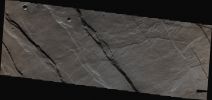
Volcanic_Features-Fractures-AM-PIA16499-PCF-LXTT-IPF.jpgFractures near and around Alba Mons (Absolute Natural Colors; credits for the additional process. and color.: Dr Paolo C. Fienga - Lunar Explorer Italia - Italian Planetary Foundation)81 visiteIn addition to its great size (consider that its Lava Flow Fields extend from over than 1400 Km from the Summit) and relatively low relief (the Summit of the Volcano reaches an elevation of "only" 6,8 Km as to the surrounding Lava Plains), Alba Mons possesses a number of other very distinguishing features. For instance, the central portion of the Volcano is surrounded by an incomplete Ring of Faults (---> Graben) and Fractures (like the ones that we see in today's APOD), called Alba Fossae (the ones located on the Volcano's Western Flank), and Tantalus Fossae (which are found on its Eastern Flank).
Alba Mons also has very long and well preserved Lava Flows that form a Radiating Pattern, starting from its Central Region. The enormous lengths of some individual Flow (something more than 300 Km - such as about 190 miles) implies that the Lavas which formed them were not only very fluid (---> meaning that they possessed very Low Viscosity) at the time of the eruption, but that they also must have been erupted in an extremely high volume (---> quantity). Many of the Flows have distinctive morphologies, consisting of long, sinuous Ridges with discontinuous Central Lava Channels. The low areas between the Ridges (and particularly along the Alba's Northern Flank) show a branching pattern of shallow Gullies and Channels (---> Valley Networks) that likely formed by water runoff. Last, but not least, Alba Mons shows, among other things, some of the oldest, and most extensively exposed Deposits that can be found in the whole Volcanic District of Tharsis.
Orbit Number: 47503
Latitude: 45,2558° North
Longitude: 248,587° East
Instrument: VIS
Captured: August, 29th, 2012
This frame (which is an Original Mars Odyssey Orbiter b/w frame published on the NASA - Planetary Photojournal with the ID n. PIA 16499) has been additionally processed and then colorized in Absolute Natural Colors (such as the colors that a human eye would actually perceive if someone were onboard the NASA - Mars Odyssey Orbiter and then looked down, towards the Surface of Mars), by using an original technique created - and, in time, dramatically improved - by the Lunar Explorer Italia Team.MareKromium
|
|

SOL0107-GB-LXTT-IPF-4.jpgClose-up on the Surface of Gale Crater - Sol 107 (An Image-Mosaic in RAW Natural Colors; credits for the additional process. and color.: Dr Gianluigi Barca/Lunar Explorer Italia/Italian Planetary Foundation) 81 visitenessun commentoMareKromium
|
|

SOL0120-PIA16550-PCF-LXTT-IPF.jpgFeatures of the Surface of Gale Crater - Sol 120 (Slightly Saturated Absolute Natural Colors; credits for the additional process. and color.: Dr Paolo C. Fienga/Lunar Explorer Italia/Italian Planetary Foundation) 81 visitenessun commentoMareKromium
|
|
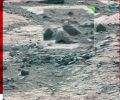
SOL0198-MR1007040000E1_DXXX-EB-MF-LXTT-IPF-3.jpg"The Horned Mars"... - Sol 198 (High-Def-3D; credits for the additional process.: Elisabetta Bonora and Marco Faccin/Lunar Explorer Italia/Italian Planetary Foundation)81 visiteEd infine, nell'anaglifo ad Alta Definizione, ecco che il Rilievo Controverso (chi dice "una specie di corno" e chi "una sorta di verme") ci appare tanto chiaro ed evidente, quanto straordinario nella sua "Singolarità". Un GRANDISSIMO Complimento ancora a Marco Faccin (Titanio44) ed Elisabetta Bonora (2di7) per la loro incredibile (eppur vera) Scoperta!
Ed ora vediamo da chi ci verrà rubata e come la NASA (o chi per essa) la smonterà, dicendoci che un "Rilievo" simile è "assolutamente normale"....MareKromium
|
|

SOL0198-MR1007040000E1_DXXX-EB-MF-LXTT-IPF-1.jpg"The Horned Mars"... - Sol 198 (Natural Colors; credits for the additional process. and color.: Elisabetta Bonora and Marco Faccin/Lunar Explorer Italia/Italian Planetary Foundation)81 visiteil dettaglio in oggetto (ossìa una sorta di minuscolo "corno"), individuato dai nostri Amici e Partner, Marco Faccin ed Elisabetta Bonora, proietta un'ombra piuttosto netta, ergo non è un image-artifact. E' situato poco più in alto di una lunga fissurazione (---> crepa) longitudinale che biseca un macigno semi-interrato di medie dimensioni e, in questa immagine (colorizzata in Colori Naturali) il dettaglio PARE non condividere completamente la colorazione del macigno dal quale si protrude (il macigno, infatti, è - o almeno ci sembra - giallastro chiaro, mentre la protuberanza "cornina", invece, è più di colore arancione/rossastra). In versione tridimensionale (ed in Alta Definizione) il dettaglio diviene incredibilmente affascinante, e difficile da ignorare...per noi! La NASA, ovviamente, non lo vedrà.
MareKromium
|
|

SOL0188-EB-MF-LXTT-IPF.jpgHorizons... - Sol 194 (an Image-Mosaic in Enhanced Natural Colors; credits for the additional process. and color.: Elisabetta Bonora and Marco Faccin/Lunar Explorer Italia/Italian Planetary Foundation)81 visitenessun commentoMareKromium
|
|

Craters-Ghost_Crater_in_Lakshmi_Region-PIA00477-PCF-LXTT-IPF.jpgPossible "Ghost Crater" in Lakshmi Region (Absolute Natural Colors; credits for the additional process. and color.: Dr Paolo C. Fienga/Lunar Explorer Italia/Italian Planetary Foundation)81 visiteThis NASA - Magellan Spacecraft image covers an area of approximately 100 by 120 Km (such as 62,1 by 74,5 miles) and is located in the Lakshmi Region of Venus, at 47° North Latitude and 334° East Longitude. Due to the extremely dense Venusian Atmosphere, primary Impact Craters of less than a 3 Km (such as 1,863 mileS) diameter are, in fact, nonexistent on the Surface of this Planet. However, the Dark Circular Region and the associated Central Bright Feature visible in this frame are reasonably thought to be the remnants of a Meteoroid that was smaller than the size necessary to create an actual Impact Crater but, anyway, that was big enough to leave some scars on the Venusian Surface.
Entering the Venusian Atmosphere at a low velocity (approximately 350 meters/second - such as about 1260 Km per hour) the Central Bright Feature appears to be a Cluster of Small Secondary Impacts, Ejecta and Debris from the original Meteor that broke up in the Atmosphere and, litterally, fell down in pieces. Even though most of the Meteorite did not hit the Surface, the Atmospheric Shock Wave/s that were generated by the Impact Event, could have been great enough to modify the surrounding Region. One explanation for this radar Dark Circular Formation - called "Dark Margin" -, could be that the Shock Wave/s was/were energetic enough to pulverize some portion of the Venusian Surface (remember that smooth surfaces generally appear radar dark).
Another explanation is that the Surface nere, could be blanketed by a fine material that was formed by the original Meteor's break up through the Atmosphere. Just out of curiosity, more than half of the Impact Craters found on Venus have associated "Dark Margins", and most of them are prominently located left of center of the Craters themselves.
This frame (which is an Original NASA - Magellan Spacecraft Radio-Image published on the NASA - Planetary Photojournal with the n. PIA 00477), since it is just a Radio-Image of the Venusian Surface and NOT a real view of it, has been colorized, according to an educated guess carried out by Dr Paolo C. Fienga (LXTT-IPF), in what they could reasonably be its possible Absolute Natural Colors (such as the colors that a human eye would perceive if someone were onboard the NASA - Magellan Spacecraft and, once the thick layer of Venusian Clouds and Fogs is completely overcome, looked down, towards the Surface of Venus itself), by using an original technique created - and, in time, dramatically improved - by the Lunar Explorer Italia Team.MareKromium
|
|
| 25353 immagini su 2113 pagina(e) |
 |
|
|
|
|
779 | |
|
|
|
|
|
|





