| Piú viste |
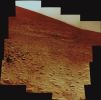
SOL219-MF-LXTT~0.jpgPanorama - Sol 219 (Enhanced Natural Colors; credits for the additional process. and color.: Dr Marco Faccin - Lunexit Team)81 visitenessun commentoMareKromium
|
|
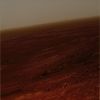
SOL498-2P170574018EFFAAFQP2285L5M1.jpgLess fog, less photo-artifacts... - Sol 498 (Absolute Natural Colors; credits for the additional process. and color.: Dr Paolo C. Fienga - Lunexit Team)81 visitenessun commentoMareKromium
|
|

SOL498-2P170573679EFFAAFQP2285L7M1.jpgFoggy panorama and MANY photo-artifacts... - Sol 498 (Absolute Natural Colors; credits for the additional process. and color.: Dr Paolo C. Fienga - Lunexit Team)81 visitenessun commentoMareKromium
|
|

Pandora-N00154611-17-23-EB-LXTT.jpgApproaching Pandora (an Image-Mosaic by Elisabetta Bonora - Lunexit Team)81 visitenessun commentoMareKromium
|
|
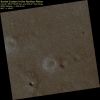
Psp_001484_2455_red.jpgThe Northern Plains (Natural Colors; credits for the additional process. and color.: Dr Paolo C. Fienga - Lunexit Team)81 visiteM.L.T.: 15:07 (early afternoon)
Latitude (centered): 65,5° North
Longitude: 235,1° East
Range to target site: 310,3 Km (about 194,8 miles)
Original image scale range: 31 cm/pixel (with 1 x 1 binning) so objects ~93 cm across are resolved
Map Projected Scale: 25 cm/pixel
Map Projection: POLAR STEREOGRAPHIC
Emission Angle: 0,3°
Phase Angle (Sun-Mars-MRO): 58,1 °
Solar Incidence Angle: 58° (meaning that the Sun is about 32° above the Local Horizon)
Solar Longitude: 138,0° (Northern Summer)MareKromium
|
|

SOL0520-2N172537963EFFABEJP0715L0M1.jpgHorizon - Sol 520 (Absolute Natural Colors; credits for the additional process. and color.: Dr Paolo C. Fienga - Lunexit Team)81 visitenessun commentoMareKromium
|
|

SOL1886-EB-PCF-LXTT3.jpgLayered and Rocky Skyline - Sol 1886 (an Image-Mosaic in Absolute Natural Colors; credits for the additional process. and color.: Elisabetta Bonora and Paolo C. Fienga - Lunexit Team)81 visitenessun commentoMareKromium
|
|

Jupiter-Impact-2010-006.jpgAnother Impact on Jupiter?81 visiteAlcune immagini ad Alta Risoluzione scattate prima e dopo l'Evento Anomalo (impatto?) che ha coinvolto il Pianeta Giove.
Così come commentano gli Osservatori (che, come potete vedere, hanno ripreso il Gigante da svariate località), non c'era nessun segno visibile sul Gigante (nè in RGB, né UV, né Metano) il quale facesse da "testimone" della verificazione di un impatto.
Infatti, a parte le ben visibili turbolenze che usualmente caratterizzano l'Alta Atmosfera Gioviana e la chiara di una macchia scura circolare (si tratta dell'ombra di uno dei Satelliti Galileiani - probabilmente Ganimede), non vi è traccia alcuna di "cicatrici atmosferiche" le quali possano far supporre l'avvenuta verificazione di un Evento d'Impatto.MareKromium
|
|

Enceladus-N0016088-114-MF-LXTT.jpgEnceladus (an Image-Mosaic in Natural Colors; credits for the additional process. and color.: Dr Marco Faccin - Lunexit Team)81 visitenessun commentoMareKromium
|
|
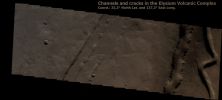
Channels_and_Cracks-Elysium_Planitia-PCF-LXTT.jpgChannels and Cracks in Elysium Planitia (Natural Colors; credits for the additional process. and color.: Dr Paolo C. Fienga - Lunexit Team)81 visitenessun commentoMareKromium
|
|
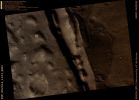
PSP_002014_1415_RED_abrowse-00.jpgTrough in Gorgonum Fossae (Absolute Natural Colors; credits for the additional process. and color.: Dr Paolo C. Fienga - Lunexit Team)81 visitePSP_002014_1415 shows Gullies in a Trough that is near Gorgonum Chaos, a Region filled with Gullies.
The Trough Gullies, like many of the Gullies on nearby Gorgonum Chaos' Mesas, appear to originate at a distinct Layer. There are Mounds within the Trough that have Layers exposed near their Peaks. The Layers in the Mound and on the Trough Walls are resistant, meaning they do not break up mostly into small particles that the wind can easily carry away.
Instead, they are breaking up into Boulders up to several meters wide that HiRISE can see (the fact that the Layers are eroding as boulders tells us that the material is not easily broken up into smaller and smaller pieces, so it is therefore termed "resistant to erosion").
However, it is not completely resistant to erosion as we can see by the Boulders rolling down the Slopes.
Gullies are thought by many to require liquid water to form and a major debate is whether this water comes from the surface (i.e., melting surface ice or melting snow) or the subsurface (i.e., from an aquifer).
Gullies are often found to originate at layers, like those seen here.
The subsurface water theory states that water travels under the surface to slope faces where it flows down the slope to form gullies. Visible layers are suggested to be impermeable, such that water cannot penetrate them, which is why the gullies originate from beneath the layers.
Often Gullies will originate between Layers, which suggests that there is a permeable Layer trapped between impermeable Layers.
It is also possible that the Layer preferentially traps ice or snow that may melt to form Gullies, thus providing a surface source of water to form the Gullies.
Please note that the stripe-like features on the lower side of the image are camera artifacts and not real features.MareKromium
|
|

ZI-Viking1-21g132-2-MF-LXTT.jpgAnother "Brick" in the Wall... (CTX Frame 2 - credits for the additional process.: Dr Marco Faccin - Lunexit Team)81 visitenessun commentoMareKromium
|
|
| 25353 immagini su 2113 pagina(e) |
 |
|
|
|
|
774 | |
|
|
|
|





