| Piú viste |

Saturn-PIA08923.jpgFrom South to North81 visiteCaption NASA:"The Cassini spacecraft gazes upward at the face of giant Saturn, seeing beyond the Equator to where ring shadows fall across the bluish Northern Latitudes.
This extreme southern view looks northward from about 58° below the Ring-Plane.
Images taken using red, green and blue spectral filters were combined to create this natural color view. The images were obtained with the Cassini spacecraft wide-angle camera on Feb. 1, 2007 at a distance of approx. 940.000 Km (abput 584.000 miles) from Saturn.
Image scale is roughly 106 Km (about 66 miles) per pixel".MareKromium
|
|

00-PhoenixLiftoff.jpgThe beginning...81 visiteCaption NASA:"Can Mars sustain life? To help answer this question, last week NASA launched the Phoenix Mission to Mars. In May 2008, Phoenix is expected to land in an unexplored North Polar Region of Mars that is rich in water-ice. Although Phoenix cannot move, it can deploy its cameras, robotic arm, and a small chemistry laboratory to inspect, dig, and chemically analyze its landing area. One hope is that Phoenix will be able to discern telling clues to the history of ice and water on Mars. Phoenix is also poised to explore the boundary between ice and soil in hopes of finding clues of a habitable zone there that could support microbial life.
Phoenix has a planned lifetime of 3 months on the Martian surface".MareKromium
|
|

ZZ-ZZ-Horizon-Columbia2.jpgApproaching the Hills (natural colors - elab. Keith Laney)81 visitenessun commentoMareKromium
|
|

ZZ-ZZ-Horizon-2P227744645EFFAS4JP2629L4Mblueskies.jpgMartian Sky over Gusev (natural colors - elab. Keith Laney)81 visitenessun commentoMareKromium
|
|

The_Void_Universe.jpgHuge Void Implicated in Distant Universe81 visite"...Quo Romae propiores, tanto Christiani tepidiores..."
(Binder)
"...Quanto più i Cristiani sono vicini a Roma, tanto più la loro Fede si raffredda..."MareKromium
|
|

LLR-Itokawa-Impacts.jpgThe Craters of Itokawa81 visiteBravissimo, come sempre anche lui, il Dr Marco Faccin il quale, attraverso questo splendido e suggestivo collage, ci mostra e dimostra che, in fondo, NON E' VERO che sul piccolo Asteroide Itokawa non ci sono crateri.
Ci sono, eccome: non molti (e difficilmente discernibili), ma ci sono.
E come mai esistono dei crateri su un mondo che, a parere della NASA, dovrebbe avere una "consistenza" (rectius: densità) bassissima; tanto bassa da farlo risultare, alla fine, come un "mucchio di detriti spaziali tenuti gravitazionalmente assieme"? Un mondo che, laddove impattato da un macigno vagante, dovrebbe - semplicemente - andare in pezzi?
Ebbene la risposta è duplice e (relativamente) facile, a nostro avviso:
1) l'impatto fra Itokawa ed un corpo vagante di dimensioni ridottissime e/o avente una densità bassissima si potrebbe risolvere tranquillamente nella creazione di un cratere poco profondo e di piccole dimensioni;
2) le stime NASA sulla densità di Itokawa sono errate e questo piccolo asteroide - al pari di innumerevoli altri - è un grande macigno errante il quale può sopportare con relativa tranquillità gli impatti con altri corpi vaganti rocciosi e compatti, purchè aventi dimensioni (comunque) modeste.
Avete altre idee? Scriveteci! ...E, per adesso, GRANDI complimenti al bravissimo Dr Faccin!MareKromium
|
|

Kaguya-003-20071107.jpgThe Western Side of the Oceanus Procellarum81 visiteCaption JAXA:"This is a still image taken out from the second moving image shooting when the KAGUYA Probe flew from the South to the North, on the Western Side of the "Oceanus Procellarum".
The dark part on the right of the above image is the Ocean and the light area on the left is called the "highland".
The moving image was taken at 05:51 a.m. on Oct. 31st, 2007 (JST) by eight-fold speed intermittent shooting (eight minutes is converged to one minute) from the KAGUYA, and the data was received at the JAXA Usuda Deep Space Center on the same day". MareKromium
|
|

Kaguya-006-20071107.jpgWhere the first two pictures were taken...81 visitenessun commentoMareKromium
|
|

Kaguya-007-20071113.jpgThe rising "Blue Marble", from Lunar Orbit (Kaguya is near the Lunar North Pole)81 visiteCaption JAXA:"The Japan Aerospace Exploration Agency (JAXA) and NHK (Japan Broadcasting Corporation) have successfully performed the world's first high-definition image taking of an Earth-rise* by the Lunar Explorer "KAGUYA" (SELENE,) which was injected into a lunar orbit at an altitude of about 100 km on October 18, 2007 (Japan Standard Time. Following times and dates are all JST.)
The Apollo project was the first mission to take images of Earth rising over the Moon. The KAGUYA successfully shot high-definition images of the Earth-rise showing an impressive image of the blue Earth which was the only floating object in pitch-dark space.
These are the World's first high-definition earth images taken from about 380.000 Km away from the Earth in space.
The image taking was performed by the KAGUYA's onboard High Definition Television (HDTV) for space use developed by NHK. The moving image data acquired by the KAGUYA was received at the JAXA Usuda Deep Space Center, and processed by NHK.
The satellite was confirmed to be in good health through telemetry data received at the Usuda Station".
* Note: we use the expression "Earth-rise" in this press release, but the Earth-rise is a phenomenon seen only from satellites that travel around the Moon, such as the KAGUYA and the Apollo Class spaceships.
The Earth-rise cannot be observed by a person who is on the Moon as they can always see the Earth at the same position.
This still image was cut out from a moving image (wide shot) taken by the HDTV onboard the KAGUYA at 02:52 p.m. on November 7, 2007 (JST) then sent to the JAXA Usuda Deep Space Center.
In the image, the Moon's surface is near the North Pole, and the Arabian Peninsula and Indian Ocean can be observed on the Earth disc.MareKromium
|
|
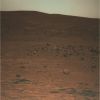
SOL1375-2P248432475EFFAWH6P2422R1M1.jpgLandscape from the PanCam, Sol 1375 (2) - natural colors; elab. Lunexit81 visitenessun commentoMareKromium
|
|

Abell_21.jpgAbell 21 - The "Medusa Nebula"81 visite"Vale. - Valete Omnes. - Vive Valeque."
"Stà bene. - State bene tutti. - Vivete e state bene."
(forme usuali di saluto, comuni in chiusura di lettere)MareKromium
|
|
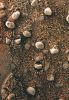
SOL1008-MIC-02.jpgPebbles in the "wet" (?) Martian Sand... - Sol 1008 (True Colors + MULTISPECTRUM; credits: Dr M. Faccin & Lunexit)81 visitenessun commentoMareKromium
|
|
| 25353 immagini su 2113 pagina(e) |
 |
|
|
|
|
772 | |
|
|
|
|





