| Piú viste |
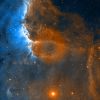
Pelican Nebula.jpgThe "Pelican Nebula" - IC 507082 visite"Dopo la Dissonanza Cognitiva, di cui abbiamo già parlato, vediamo ora il fenomeno conosciuto come "Deriva Cognitiva". Esso si verifica allorchè la percezione di un evento - di qualunque natura - viene modificata dal concorso di fattori esterni alla capacità cognitiva individuale dell'agente i quali, però, sono abbastanza potenti da modificare (o, se preferite, da far "derivare") il valore della sua effettiva percezione. Un esempio: io vedo un gatto attraversare la strada e percepisco questo evento per quello che è. Subito dopo, una moltitudine di persone (oppure pochi individui, ma autorevoli), dice che la strada, in realtà, è stata attraversata da un serpente. Io rimuovo dalla mia percezione il gatto e lo sostituisco con il serpente. Questo fenomeno viene oggi impiegato su larga scala per ottenere Derive Cognitive di massa su eventi i quali, se correttamente percepiti ed interpretati, comprometterebbero le basi dell'attuale Ordine Mondiale".
P.C. Floegers - "Conversations"
|
|

OPP-SOL242-1P149669677EFF35CYP2592R1M1.jpgA "Big Rock" inside Endurance Crater82 visiteUna roccia bianca di cospicue dimensioni giace al suolo, in parte sepolta, sul fondo di Endurance Crater. Queste rocce, a quanto ci è dato vedere e capire, rivestono un grande interesse per gli Scienziati che stanno seguendo l'evolversi della Missione. Noi, dopo averne vista qualcuna "da vicino", pensiamo che esse ricordino molto (almeno esteriormente) le rocce che troviamo, con discreta abbondanza, sul fondo del mare, a basse profondità e/o in prossimità di scogliere coralline. Alcune di queste rocce, infatti, ricordano molto le "madrepore"... Si tratta di congetture, come ovvio, ma se l'intera area di Meridiani Planum era davvero, un tempo, un "Oceano" (sebbene non molto profondo), allora - forse - potremmo anche non essere lontanissimi dalla realtà.
|
|

MyCn18-HST.jpgMyCn 18 - HST82 visite"...Dum loquor, hora fugit..."
(Ovidio)
"...Mentre parlo, il tempo fugge via..."
|
|

Atlas, Pandora and Janus-PIA06522_modest.jpgSaturn's Rings + Atlas, Pandora, Prometheus and Janus82 visiteCaption NASA originale: "Saturn hosts its own miniature solar system with an entourage of more than 30 moons. This image shows Saturn's "A" and "F" Rings, along with three of the moons that orbit close to them. From innermost to outermost, tiny Atlas (32 Km across) orbits just outside of the bright "A-Ring" and is seen above center in this view. Prometheus (102 Km across) is visible near lower right. Prometheus and its smaller cohort, Pandora, shepherd the thin, knotted F-Ring. Janus (181 Km across) can be seen near lower left. Janus shares its orbit with the moon Epimetheus. Density waves due to Janus cause some of the bright bands seen in the A-Ring in this image. Prometheus and Atlas also produce waves in the rings, but their wave regions are too narrow to be seen here. The planet's shadow stretches all the way across the main rings in this view. The shadow has an oval shape now but over the next few years it will become more rectangular as the planet orbits the Sun and the angle Sunlight-Rings decreases.
|
|

OPP-SOL311-1P155779049EFF38EVP2624L3M1.jpgUp-Sun, again...82 visiteDal Sol 311 di Opportunity ci arrivano svariate immagini del Cielo di Marte, riprese con la tecnica del "controluce" (up-Sun).
L'ipotesi più plausibile per l'effettuazione di così tanti scatti verso il cielo dovrebbe essere rinvenuta nella ricerca di nuvole, così come è già avvenuto in passato, sia per questa Missione, sia per le altre precedenti.
Certo è che, talvolta, a furia di scattare fotografie su fotografie al cielo si "rischia" di riprendere anche oggetti diversi dalle nuvole...
Talvolta.
|
|

Saturn-W00003808.jpgSaturn and Dione82 visitenessun commento
|
|

Craters-Unnamed_Crater_in_Noachis_Terra-PIA07202_modest.jpgUnnamed Crater in Noachis Terra (Original NASA/MGS/MSSS b/w Frame)82 visiteCaption NASA originale: "This Mars Global Surveyor (MGS) Mars Orbiter Camera (MOC) image shows an impact crater, a little over 2 Km (> 1,2 mi) in diameter, located in Noachis Terra near 50.4°S, 14.3°W. The crater's bouldery ejecta blanket has protected underlying material from being eroded away by wind, leaving the ejecta up on a low pedestal. This picture covers an area about 3 km (1.9 mi) across, and is illuminated by sunlight from the upper left".
|
|

B-Mercury-PIA02240.jpgThe components of the surface of Mercury82 visiteCaption NASA originale:"Updated calibration and subsequent mosaicing have led to substantial improvements in the Mariner 10 color image data. This color composite was formed to especially highlight differences in opaque minerals (such as Ilmenite), Iron content and soil maturity.
K - Crater Kuiper shows color consistent with fresh material excavated from a subsurface unit that may have an "unusual" composition;
D - relatively dark and blue unit consistent with enhanced Titanium content;
B - bright red unit that may represent primitive crustal material
F - color unit that follows plains boundaries, interpreted as lava flows".
|
|

SOL059-061-Spirit_Legacy_1-L256-A392R1_br2-03.jpgLegacy Panorama - Soles 59 to 61 (Approximate True Colors; credits: NASA/JPL-Caltech)82 visiteC'è anche un'altra possibilità e, per amore della chiarezza e dell'onestà intellettuale, la (ri)menzioniamo: può darsi che Marte CAMBI radicalmente i propri colori a seconda delle ore del giorno e che quindi, fotograficamente, il suo paesaggio si manifesti in maniera profondamente diversa (dal punto di vista del colore) a seconda che le immagini vengano scattate la mattina presto, di pomeriggio o verso sera. Se ricordate, ne avevamo già parlato di questa eventualità, ma le differenze che si vedono tra una foto e l'altra (e che vanno dal "colore di fondo", alla "consistenza" ed alla "densità cromatica" etc.) a noi appaiono troppo grandi per trovare la loro comune origine in una semplice (e tecnicamente correggibile!) "differenza di luminosità". E poi non dimentichiamo le immagini a "colori veri" e "quasi veri" dei Viking Landers e del Soujourner! Insomma: troppe contraddizioni ed incongruenze per non pensare che le idee sìano confuse (se volontariamente o di proposito lo lasciamo giudicare a Voi!)
|
|

Dying Star-PIA04277.jpgA "dying star" from HST82 visite"...Life is a great surprise. I do not see why Death should not be an even greater one..."
Vladimir Nabokov
|
|

ZZ-Sun Halo.jpgA Sun "Halo" in Tennessee82 visiteDal "NASA - Picture of the Day" del 9 Marzo 2005:"Sometimes it looks like the Sun is being viewed through a large lens. In the above case there are actually millions of lenses: ice crystals. As water freezes in the upper atmosphere, small, flat, six-sided, ice crystals might be formed. As these crystals flutter down, much time is spent with their faces flat, parallel to the ground. An observer may pass through the same plane as many of the falling ice crystals near sunrise or sunset. During this alignment, each crystal can act like a miniature lens, refracting sunlight into our view. Dramatically visible behind neighborhood houses and trees and above the cloud deck is the 22° halo created by sunlight reflecting off of atmospheric ice crystals".
L'alone è spiegato in modo preciso ed accurato, ma esso non è l'unico fenomeno visibile in questa foto: alla Vostra Sx si vedono - e bene! - 2 scie chimiche. E quelle come le spieghiamo? Vapori e cristalli?!?
|
|

CygnusX1.jpgCygnus X-1 and Cygnus OB382 visiteDa "NASA - Picture of the Day" del 2 Aprile 2005:"The formation of a Black Hole from the collapsing core of a massive star is thought to be heralded by a spectacular supernova explosion. Such an extremely energetic collapse is also a leading explanation for the mysterious cosmic Gamma-Ray bursts. But Researchers now suggest that the Milky Way's most famous black hole, Cyg X-1, was born when a massive star collapsed without any supernova explosion at all. Their dynamical evidence is summarized in this color image of a region in Cygnus, showing Cyg X-1 and a cluster of massive stars (yellow circles) known as Cygnus OB3. Arrows compare the measured direction and speed of Cyg X-1 and the average direction and speed of the massive stars of Cyg OB3. The similar motions indicate that Cyg X-1's progenitor star was itself a cluster member and that its path was not altered at all when it became a Black Hole. In contrast, if Cyg X-1 were born in a violent supernova it would have likely received a fierce kick, changing its course. If not a supernova, could the formation of the Cyg X-1 black hole have produced a dark gamma-ray burst in the Milky Way? ".
|
|
| 25353 immagini su 2113 pagina(e) |
 |
|
|
|
|
758 | |
|
|
|
|





