| Piú viste |

M-062-1.jpgM 62 (NGC 6266) - Globular Star Cluster82 visite"...Tempus edax rerum..."
(Ovidio)
"...Il Tempo consuma ogni cosa..."
|
|

M-040-1.jpgM 40 - Double Star System in Ursa Major82 visite"...E ti vengo a cercare,
anche solo, per vederti o parlare,
perchè ho bisogno, della tua presenza,
per capire meglio la mia essenza..."
(F. Battiato)
|
|

AE-The Sky of Saturn after the £rd Streak-N00014483.jpgSaturn's Sky right after the 3rd "Streak" - N0001448382 visite...dovremmo almeno tentare di avanzare un'ipotesi in ordine alla possibile origine del fenomeno. Di certo si può dire che non si tratta di una traccia lasciata dai raggi cosmici e non sembra proprio trattarsi di una meteora. In realtà un elemento che potrebbe essere decisivo per capire c'è. Quale? Ma è proprio il "tipo" di traccia lasciata sull'immagine (una traccia "a scalini") che ci aiuta! Noi ci fermiamo qui. Voi, se volete, potete provare ad elaborare l'immagine e poi farci sapere che cosa ne pensate.
|
|
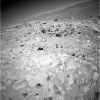
SOL228-2N146606200EFF8600P0770R0M1.jpgColumbia Hills' landscape and a possible Anomaly (2)82 visite...dell'immagine ma, sulla base di quella che è la nostra specifica conoscenza ed esperienza al riguardo, diremmo di no. Diremmo che si tratta, piuttosto, di un riflesso dei raggi del Sole su qualcosa che non è certamente pietra. Purtroppo il bagliore scompare subito e quindi gli elementi in nostro possesso ci permettono solo di esprimere (ancora una volta) dei dubbi.
Certo è che si tratta di un fenomeno strano, almeno a nostro parere...
|
|

Io-Zal Patera-PIA02553.jpgThe "Zal" Patera82 visiteThis stereo image of Jupiter's moon Io shows the topography of a region on Io that includes the Zal Patera feature and a mountain or plateau that borders it to the west. It was created by combining two different views taken by NASA's Galileo spacecraft on November 25, 1999 (shown in red) and February 22, 2000 (shown in blue).
A mountain 120 kilometers (75 miles) wide rises to the west of the patera, a dark volcanic depression. By measuring the shadow, scientists were able to determine that the eastern margin of this mountain is about 1.5 kilometers (5000 feet) high. To the west and northwest, the mountain's margins are scalloped, which may indicate that a process called sapping is eroding them. Sapping occurs when fluid escapes from the base of a cliff, causing the material above it to collapse. Along the northwestern margin, the rough material at the base of the cliff maybe debris left over from the sapping process. Dark lava flows can be seen coming from a fissure to the east of the mountain.
Galileo scientists are in the process of generating topographic maps from these images. Such maps will reveal the heights and slopes of different landforms in this region, which will help scientists determine the strength and other properties of Io's surface materials. They will also be useful in understanding the processes of uplift and erosion on Io.
The picture is centered at 42.3 degrees north latitude and 76.9 degrees west longitude. North is to the top of the picture. The observations used to make the stereo image were made at ranges of 26,000 and 33,500 kilometers (16,200 and 20,900 miles) from Io. The resolution of the stereo image is about 335 meters (370 yards) per picture element.
|
|
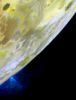
Io-Masubi plume-GAL-PIA02502_modest.jpgThe "Masubi" plume82 visiteA plume of gas and particles is ejected some 100 kilometers (about 60 miles) above the surface of Jupiter's volcanic moon Io in this color image, recently taken by NASA¹s Galileo spacecraft.
The plume is erupting from near the location of a plume first observed by the Voyager spacecraft in 1979 and named Masubi. However, during the course of the Galileo tour of Jupiter and its moons, a plume has appeared at different locations within the Masubi region.
This color image is the same as the previously released false color mosaic of Io, but with special processing to enhance the visibility of the plume. The plume appears blue because of the way small particles in the plume scatter light.
North is to the top of the picture, and the Sun illuminates the surface from almost directly behind the spacecraft. The resolution is 1.3 kilometers (0.8 miles) per picture element. The images were taken on July 3, 1999 at a distance of about 130,000 kilometers (81,000 miles) by the Galileo¹s camera.
|
|
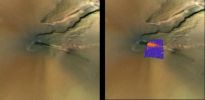
Io-Pele Volcano-PIA02560_modest.jpgThe "Pele" Volcano82 visitePele, one of Io's best-known volcanoes, was observed by the infrared spectrometer, an instrument onboard NASA's Galileo spacecraft, during the flyby of Jupiter's moon Io on February 22, 2000. The temperature map is shown here on the left in false color, superimposed on a visible color image of the Pele region obtained by the Voyager spacecraft in 1979. The red color represents the hottest lava flows. The purple colors are cooler materials. Preliminary results show that the temperatures of the hottest lava flows are at least 1,400 Kelvin (about 2,000 Fahrenheit), consistent with the temperatures of basaltic lava seen on the Kilauea volcano in Hawaii. It is possible that the eruption temperatures at Pele are even higher, as lava cools quickly once it starts to spread over the surface. The Voyager context image is 200 kilometers (124 miles) across.
|
|

Eta Carinae.jpgEta Carinae82 visite"...Black Hole: una stella collassata, per alcuni; un'anomalia del Cosmo, per altri. Una simpatica definizione diceva che il Buco Nero è una sorta di "Aspirapolvere Cosmico", capace di risucchiare ogni genere di corpo fisico al suo interno, incluso ciò che noi chiamiamo "Tempo". Nel complesso di definizioni, comunque - e nella loro diversità - è sempre emerso un punto comune, che è questo: NULLA, una volta afferrato, può sfuggire al Black Hole.
Ebbene io credo, con ciò creando un paradosso, che se un uomo venisse catturato da uno di questi oggetti, qualcosa potrebbe comunque riuscire a scappare all'immensa attrazione di un siffatto "Aspirapolvere Cosmico".
Cosa?
Ma è semplicissimo: esso non potrebbe mai trattenere un qualsiasi "pensiero" proveniente da questo ipotetico uomo, prigioniero del suo eterno ed invincibile abbraccio gravitazionale..."
P.C. Floegers - "In the Paradox"
|
|

M-070-1.jpgM 70 - Globular Star Cluster82 visite"...Dubita pur che gli astri sian di foco,
Dubita pur che il sol si sposti in giro,
Che Verità, di noi, si prenda gioco,
Ma non ch'io ver' te, amante, ognor sospiro..."
(W. Shakesperare - "Hamlet" Atto II, scena II)
|
|
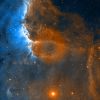
Pelican Nebula.jpgThe "Pelican Nebula" - IC 507082 visite"Dopo la Dissonanza Cognitiva, di cui abbiamo già parlato, vediamo ora il fenomeno conosciuto come "Deriva Cognitiva". Esso si verifica allorchè la percezione di un evento - di qualunque natura - viene modificata dal concorso di fattori esterni alla capacità cognitiva individuale dell'agente i quali, però, sono abbastanza potenti da modificare (o, se preferite, da far "derivare") il valore della sua effettiva percezione. Un esempio: io vedo un gatto attraversare la strada e percepisco questo evento per quello che è. Subito dopo, una moltitudine di persone (oppure pochi individui, ma autorevoli), dice che la strada, in realtà, è stata attraversata da un serpente. Io rimuovo dalla mia percezione il gatto e lo sostituisco con il serpente. Questo fenomeno viene oggi impiegato su larga scala per ottenere Derive Cognitive di massa su eventi i quali, se correttamente percepiti ed interpretati, comprometterebbero le basi dell'attuale Ordine Mondiale".
P.C. Floegers - "Conversations"
|
|

OPP-SOL242-1P149669677EFF35CYP2592R1M1.jpgA "Big Rock" inside Endurance Crater82 visiteUna roccia bianca di cospicue dimensioni giace al suolo, in parte sepolta, sul fondo di Endurance Crater. Queste rocce, a quanto ci è dato vedere e capire, rivestono un grande interesse per gli Scienziati che stanno seguendo l'evolversi della Missione. Noi, dopo averne vista qualcuna "da vicino", pensiamo che esse ricordino molto (almeno esteriormente) le rocce che troviamo, con discreta abbondanza, sul fondo del mare, a basse profondità e/o in prossimità di scogliere coralline. Alcune di queste rocce, infatti, ricordano molto le "madrepore"... Si tratta di congetture, come ovvio, ma se l'intera area di Meridiani Planum era davvero, un tempo, un "Oceano" (sebbene non molto profondo), allora - forse - potremmo anche non essere lontanissimi dalla realtà.
|
|

MyCn18-HST.jpgMyCn 18 - HST82 visite"...Dum loquor, hora fugit..."
(Ovidio)
"...Mentre parlo, il tempo fugge via..."
|
|
| 25353 immagini su 2113 pagina(e) |
 |
|
|
|
|
757 | |
|
|
|
|





