| Piú viste |

ZZ-Mercury-Craters-To_Ngoc_Van_Crater-PIA15201-PCF-LXTT-IPF-00.jpgTo Ngoc Van (CTX Frame - Absolute Natural Colors; credits for the additional process. and color.: Dr Paolo C. Fienga/Lunar Explorer Italia/Italian Planetary Foundation)84 visiteIn this beautiful view obtained by the NASA - MESSENGER Spacecraft on November, 8, 2011, we can see, once again, prominent, near the center of the degraded Impact Crater To Ngoc Van, an interesting (and really irregularly shaped) Collapse Pit (approx. 20 Km - such as about 12,42 miles - across). As a matter of fact, many samples of Impact Craters with one (or more) Collapse Pit/s located on their Floors, have already been identified across the Mercurian Surface and - most likely - they all formed as a consequence of (extremely ancient) phenomena of Explosive Volcanism.
Date acquired: November, 8th, 2011
Image Mission Elapsed Time (MET): 229277972
Image ID: 988708
Instrument: Wide Angle Camera (WAC) of the Mercury Dual Imaging System (MDIS)
Center Latitude: 52,89° North
Center Longitude: 248,60° East
Solar Incidence Angle: 60,3° (meaning that the Sun, at the time that the picture was taken, was about 29,7° above the imaged Local Mercurian Horizon)
Emission Angle: 23,0°
Sun-Mercury-Messenger (or "Phase") Angle: 83,4°
This picture (which is an Original NASA - MESSENGER Spacecraft's b/w and Map-Projected image published on the NASA - Planetary Photojournal with the ID n. PIA 15201) has been additionally processed, contrast enhanced, Gamma corrected, magnified to aid the visibility of the details and then colorized in Absolute Natural Colors (such as the colors that a human eye would actually perceive if someone were onboard the NASA - MESSENGER Spacecraft and then looked outside, towards the Surface of Mercury), by using an original technique created - and, in time, dramatically improved - by the Lunar Explorer Italia Team. Different colors, as well as different shades of the same color, mean, among other things, the existence of different Elements (Minerals) present on the Surface of Mercury, each having a different Albedo (---> Reflectivity) and Chemical Composition.MareKromium
|
|

101955-Bennu-005.jpg101955 Bennu - What a World!!! (image-mosaic)84 visiteCaption NASA:"This mosaic image of Asteroid 101955 Bennu is composed of 12 PolyCam images collected on Dec. 2, 2018, by the OSIRIS-REx Spacecraft from a range of about 15 miles (such as a little more than 24 Km).
The image was obtained at a 50° Phase Angle (i.e.: the Angle formed by the Spacecraft, the Asteroid and the Sun) and 101955 Bennu spans approximately 1500 pixels in the camera’s field of view".MareKromium
|
|

Luna17_Lander.jpgLuna 17 Lander from atop (small)84 visiteAn amazing spacecraft gently settled to the lunar surface on 17 November 1970. It carried the first successful robotic lunar rover -- Lunokhod 1. For the next ten months the rover was driven by operators in the Soviet Union, with the total distance traveled exceeding 10 km. For comparison, in six years of operation the Mars Exploration Rover Opportunity has traveled about 12 km.
After landing, the rover drove down a ramp onto the lunar surface and tested its eight wheels. The rover was driven by solar power during the day; at night it parked and relied on thermal energy from a polonium-210 radioisotope heater to survive the cold (-150°C).
The intrepid rover sent back valuable data concerning the composition of the regolith (soil), close up views of the local topography, and important engineering measurements of the regolith.
Note: Soviet Robotic Lander Luna 17 still sitting on Mare Imbrium where it delivered the Lunokhod 1 Rover in November 1970. MareKromium
|
|

Horizon.jpgMaybe the "Horizon" is the Future!84 visiteErano anni che aspettavamo di avere i mezzi tecnologici adatti a rilevare oggetti interstellari lontanissimi e oggi, finalmente, ci siamo arrivati. Le prove, peraltro, sono sotto gli occhi di tutti: di recente abbiamo individuato ben due grandi oggetti spaziali, cioè "Oumuamua" e "2I/Borisov". Ma questo è solo l'inizio.
Secondo gli scienziati - come racconta un lungo articolo apparso di recente su Science Alert - sono sempre più focalizzati sul trovare modi per visitarli, questi oggetti spaziali. Sì, potremmo presto sbarcare su oggetti diversissimi e molto lontani da noi, e sta già succedendo su scala ridotta.
La particolarità di queste missioni è che saranno molto diverse tra loro. Visitare una cometa è un obbiettivo che la specie umana ha già raggiunto di recente, anche se non tutti si rendono davvero conto di quanto incredibile sia quest'impresa. E le prossime volte? La particolarità suddetta sta nel fatto che Borisov, per esempio, si è comportato proprio come una cometa una volta entrato nel nostro sistema solare. Mentre Oumuamua no, tutt'altro.
A trovare nuovi incredibili oggetti spaziali sarà molto presto il Vera C Rubin Observatory Legacy Survey of Space and Time (LSST). L'osservatorio si stima che potrà catturare con le sue immense lenti fino a dieci oggetti interstellari di dimensioni importanti, quanto Oumuamua, per intenderci.
Parliamo di oggetti che arrivano da distanze enormi, decisamente inimmaginabili per noi umani, ed è proprio per questo loro essere oggetti alieni che sono importanti. I materiali di cui sono composti, la loro traiettoria, la velocità e molte altre caratteristiche possono raccontarci come sono fatti gli angoli più remoti dell'universo. Un'opportunità incredibile.MareKromium
|
|

SOL0606-Perseverance.pngNice afternoon on Mars - Sol 60684 visite...Ma, mettersi d'accordo sui "colori"?!? Mai, vero?!?
Caption NASA Originale:"NASA's Mars Perseverance rover acquired this image of the area in back of it using its onboard Rear Right Hazard Avoidance Camera. This image was acquired on Nov. 3, 2022 (Sol 606) at the local mean solar time of 15:19:06".MareKromium
|
|

W-Martian_Clouds-02.gifClouds...84 visiteJust beautiful, what else to say?MareKromium
|
|

Jupiter-Juno-Lightning_Green.jpgGreen Light on Jupiter84 visiteIf that "Green Thing" is a true Lightning, then it is a VERY funny-looking one. But we are on Jupiter and so, everything is possible! At least, so the Scientists said, swearing on the Third Newton's Law.MareKromium
|
|
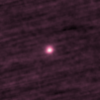
3I-ATLAS_02.gif3I/ATLAS84 visiteThis image shows the 3I/ATLAS interstellar comet as a bright, fuzzy orb in the center. Traveling through our solar system at 130,000 miles (209,000 kilometers) per hour, 3I/ATLAS was made visible by using a series of colorized stacked images from Sept. 11-25, using the Heliocentric Imager-1 (H1) instrument, a visible-light imager on the STEREO-A (Solar Terrestrial Relations Observatory) spacecraft. The colorization was applied to differentiate the image from other observing spacecraft images.MareKromium
|
|

M-031-1.jpgM 31 - The "Andromeda" Galaxy83 visite"...Dixi omnia, cum hominem nominavi..."
(Plinio)
"...Ho detto tutto, quando ho detto "Uomo"..."
|
|

NGC-0300-SCULPTOR.jpgNGC 300 - Spiral Galaxy (European Southern Obs.)83 visite"...Ogni prova è un tentativo di divenire. Una prova è valida solo per sè, e non implica alcunchè, salvo la sua certa esistenza e quella, possibile, di altre prove. Il che non prova niente..."
Zé Kraggash - "dalla Raccolta di Memorie di Marvyn Flynn"
|
|

NGC-4414.jpgNGC 4414 - Spiral Galaxy (Inside the Vortex)83 visite"...Hominum natura, novitatis ac peregrinationibus avida est..."
(Plinio)
"...E' nella Natura Umana il desiderio di viaggiare e di conoscere..."
|
|

M-074-2.jpgM 74 - Spiral Galaxy83 visite"...Certe ignoratio futurorum malorum utilior est, quam scientia..."
(Cicerone)
"...E' indubitabile che il fatto di ignorare un futuro (ed inevitabile) male è molto meglio che l'averne conoscenza in anticipo (laddove detta conoscenza non possa comunque essere di aiuto per evitarlo)..."
|
|
| 25353 immagini su 2113 pagina(e) |
 |
|
|
|
|
744 | |
|
|
|
|





