| Piú viste |

Enceladus-N00165320-21-22-23-cl1-cl2-MF-LXTT.jpgThe "Snow-Moon" (an Image-Mosaic in True Colors by Dr Marco Faccin - Lunexit Team)84 visitenessun commentoMareKromium
|
|

OPP-SOL133-15-PCF-LXTT.jpgOn the Inner Slope of Endurance Crater - Sol 133 (Absolute Natural Colors; credits for the additional process. and color.: Dr Paolo C. Fienga - Lunexit Team)84 visitenessun commentoMareKromium
|
|

Craters-Bacolor_Crater-PIA13664-PCF-LXTT.jpgBacolor Crater (Absolute Natural Colors; additional process. and color.: Dr Paolo C. Fienga - Lunexit Team)84 visiteCaption NASA:"Bacolor Crater is a magnificent Impact Surface Feature about 20 Km (approx. 12 miles) wide. The lines on the Ejecta Blanket surrounding the Crater rim come from a surge of superheated gas and debris flying outward in the wake of the Meteorite impact that created the Crater.
This view combines images taken during the period from September 2002 to October 2005 by the Thermal Emission Imaging System instrument on NASA's Mars Odyssey orbiter. It is part of a special set of images marking the occasion of Odyssey becoming the longest-working Mars Spacecraft in history.
The pictured location on Mars is 33° North Lat. and 118,6° East Long.".MareKromium
|
|

Tethys-PIA12802.jpgThe "Face" of Tethys (Absolute Natural Colors; credits for the additional process. and color.: Dr Paolo C. Fienga - Lunexit Team)84 visiteCaption NASA:"Geologic faults among craters on Saturn's moon Tethys are depicted in this image captured during a Fly-By of the moon by NASA's Cassini Spacecraft on Aug. 14, 2010.
The brightly illuminated, prominent Impact Crater near the bottom middle of this image has been dissected by numerous parallel Faults that run diagonally across the image. The presence of the Faults that cut through the Crater and the movement of Surface Materials have made the Crater outline somewhat non-circular.
Near the center of the image, running diagonally from the left to right, is an old Graben, such as a "Linear Depression of the Terrain between two Faults".
Below these Faults and near the middle top of the image is a large ancient Impact Crater that is so highly overprinted by more recent Craters that it can barely be recognized.
On the left of the image, there are some horizontal lines that can be seen very faintly cutting across Craters. These lines are artifacts of missing data in the raw image that could not be eliminated through processing the image.
This view looks toward the Leading Hemisphere of Tethys. The view is centered on terrain at 59° North Latitude and 79° West Longitude.
The image was taken in Visible Light with the Cassini Spacecraft narrow-angle camera. The view was acquired at a distance of approx. 40.000 Km (such as about 25.000 miles) from Tethys and at a Phase Angle of 103°. Image scale is roughly 234 meters (767 feet) per pixel".MareKromium
|
|

ZZ-ZZ-ZZ-ZZ-20100727_LORRINeptune_lg.jpgOn the Way to Pluto: Neptune's on sight!84 visiteCaption NASA:"The New Horizons Long Range Reconnaissance Imager (LORRI) observed Neptune on June 23, 2010, as part of a test of the critical Optical Navigation Annual Checkout (ACO).
In this 100-millisecond exposure, taken when the Spacecraft was 23,2 Astronomical Units (about 2,15 Billion Miles) from Neptune, the Planet appears slightly larger than a star. At the time of this observation, the Solar Phase Angle was 34° and the Solar Elongation Angle (Planet-Spacecraft-Sun) was 95°.
Only New Horizons can observe Neptune at such large Solar Phase Angles, which can be used to study the light-scattering properties of Neptune's Atmosphere".MareKromium
|
|

ZZ-ZZ-ZZ-ZZ-20100727_LORRIM_lg.jpgOn the Way to Pluto: Messier 784 visiteCaption NASA:"The New Horizons team calibrates the Long Range Reconnaissance Imager (LORRI) by taking pictures of the Open Star Cluster Messier 7 (M 7). This is the first LORRI image of M 7 taken during Annual Checkout (ACO); the 100-millisecond manual exposure was taken on June 25, 2010. A preliminary comparison of this image to a 2008 LORRI picture of M7 indicated no degradation or change in LORRI's performance".MareKromium
|
|
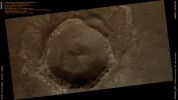
ESP_020086_2020_RED_abrowse-00.jpgUnnamed Crater with Light-toned Layered Bedrock (Absolute Natural Colors; credits for the additional process. and color.: Dr Paolo C. Fienga - Lunexit Team)84 visitenessun commentoMareKromium
|
|
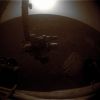
OPP-SOL2450-1F345694746EFFB0EJP1211L0M1.jpgUp-Sun - Sol 2450 (Absolute Natural Colors; credits for the additional process. and color.: Dr Paolo C. Fienga - Lunexit Team)84 visitenessun commentoMareKromium
|
|
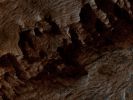
PSP_003830_1740_RED_abrowse-02.jpgLayered Bedrock in Candor Chasma (EDM n.2 - Absolute Natural Colors; credits for the additional process. and color.: Dr Paolo C. Fienga - Lunexit Team)84 visitenessun commentoMareKromium
|
|
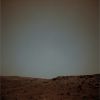
SOL1897-2N294770864EFFB1CNP0354R0M1.jpgRocky Horizon - Sol 1897 (Absolute Natural Colors; credits for the additional process. and color.: Elisabetta Bonora and Paolo C. Fienga - Lunexit Team)84 visitenessun commentoMareKromium
|
|

SOL304-2N153362576EFF89BCP0615L0M1.jpgHorizon - Sol 304 (Natural Colors; credits for the additional process. and color.: Dr Paolo C. Fienga - Lunexit Team)84 visitenessun commentoMareKromium
|
|

PSP_005370_1845_RED_abrowse-00.jpgExtremely unusually-looking Surface Feature in Sinus Meridiani (CTX Frame - Absolute Natural Colors; credits for the additional process. and color.: Dr Paolo C. Fienga - Lunexit Team)84 visitenessun commentoMareKromium
|
|
| 25353 immagini su 2113 pagina(e) |
 |
|
|
|
|
742 | |
|
|
|
|





