| Piú viste |

AU Microscopii-02.jpgAU Microscopii and Circumstellar Debris Disk84 visite"...Real books should be the offspring not of daylight and casual talk, but of Darkness and Silence..."
Marcel Proust (1871-1922) - Le Temps Retrouvé
|
|

SOL477-3.jpgLies on lies: the "Miracle of Jibsheet", the "mutant outcrop" - Sol 47784 visiteUn frame che, nella sua chiarezza, a noi - poveri mortali, ancora capaci di usare la testa e di meravigliarci... - sembra sconcertante: i casi, infatti, possono essere solo due:
1) le immagini (questa, come tante/tantissime altre) sono (come da tanto tempo subodoriamo, sospettiamo, deduciamo etc.) TUTTE contraffatte in maniera spaventosa (e spaventosamente dozzinale...), oppure
2) le "rocce" Marziane si evolvono, in qualche modo, e lo fanno anche in maniera rapida. E se questa seconda ipotesi, per quanto incredibile e, per alcuni, certamente "fantascientifica", si rivelasse verosimile o vera, allora dovremmo concludere - in attesa di recarci su Marte "in carne ed ossa" - che le rocce in oggetto potrebbero anche NON essere rocce nel senso comune (e terrestre) della parola.
Guardate e giudicate Voi: noi possiamo solo provare a darVi degli elementi di giudizio. Il resto...E' compito di chi guarda, legge e capisce.
|
|

Cydonia_Mensae-The_Face-012.jpgTo "Face" or not to "Face"?84 visiteHigh-pass-filtered “Face” image released by JPL to the world media.
Photographs of actual human faces and of face sculptures taken under similar viewing perspective and lighting conditions as prevailed for Figure 2 are commonly no longer recognizable as faces. The image in Figure 2 initially leaves the question of the degree to which the mesa resembles a face unresolved. Various features of Figure 2 can be cited on both sides of the issue.
Unfortunately for the objectivity that scientists are supposed to maintain, the Jet Propulsion Laboratory (JPL) apparently was unhappy that the high-resolution image received by its spacecraft did not immediately settle the artificiality controversy. Strong public statements ridiculing the “Face” and the serious scientific investigation thereof had previously been issued by certain scientists working for JPL, Caltech (which owns JPL), and JPL contractors, and by other supporters of robotic space exploration (managed and controlled almost exclusively by JPL) over manned space exploration (for which little science or funding goes to JPL). Indeed, the laboratory and MSSS, its contractor for the MGS imaging mission, initially refused to take the high-resolution images of the “Face” on the stated grounds that it would be a waste of public funds and a slap at the integrity of the scientists in the program. They were ordered to take them anyway by NASA Headquarters.
When the first picture arrived at JPL, its Mission Image Processing Laboratory (MIPL) passed the image through two filters, a low-pass filter and a high-pass filter. It is difficult to see how usage of these filters on this image before release to the media could be scientifically justified. Indeed, usage of the high-pass filter gave an especially damaging impression. From Adobe’s Photoshop software, we find the following description of the function and purpose of this filter:
“High Pass Filter: Retains edge details … and suppresses the rest of the image. … The filter removes low-frequency detail in an image … The filter is useful for extracting line art and large black-and-white areas from scanned images.”
The usage of these filters on the “Face” image is documented on the JPL web site <http://mpfwww.jpl.nasa. gov/mgs/target/CYD1/index.html>. The same day that the raw spacecraft image data was received at MSSS and posted to the Internet, the JPL Public Information Office (PIO) released the MIPL-created, filtered image shown in Figure 3 to the world media.
|
|

OPP-SOL688-1P189260646EFF64KCP2273R3M1.jpgDeep dunes, outcrops and mini-craters - Sol 68884 visiteOriginal caption:"Right Pan-Cam Non-linearized Full frame EDR acquired on Sol 688 of Opportunity's mission to Meridiani Planum at approximately 11:28:11 MLT. Camera commanded to use Filter 3 (803 nm)".
Cerchiature Rosse: altri due (gli ennesimi...) mini-crateri. La NASA non li commenta nemmeno più.
Forse perchè hanno esaurito le spiegazioni razionali e convenzionali...
|
|
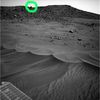
SOL713-2N189670436EFFALHQP0695R0M1.jpgThe ripples and dunes of El Dorado (12) - Sol 71384 visiteCerchiatura Verde: equilibrio stabile, instabile o apparente?
|
|

M-042-2.jpgM 42 - Thousands of Stars inside the Great Orion Nebula84 visite"...Voluptates commendat rarior usus..."
(Giovenale)
"...I piaceri della Vita ci risultano ancora più intensi allorchè li incontriamo raramente..."
|
|

FadingMoon-03.gifFading Sun-Lights... (3)84 visitenessun commento
|
|

Rhea-N00048319.jpgFull Rhea84 visiteCaption originale:"N00048319.jpg was taken on January 17, 2006 and received on Earth January 18, 2006. The camera was pointing toward Rhea that, at the time, was approximately 245.031 Km away, and the image was taken using the CL1 and UV3 filters.
This image has not been validated or calibrated".
|
|

OPP-SOL707-1N190954573EFF64KSP1740R0M1.jpgFreedom of Information or Freedom of Cancellation?!? - Sol 70784 visiteCerchiature Rosse: piallature digitali ed abbassamento della risoluzione e definizione delle immagini sino a nuovi limiti "storici"; manipolazioni così evidenti e spaventose da far perdere la pazienza anche ai Ricercatori più prudenti e misurati.
Se alla NASA ritengono che "non siamo pronti" per vedere quello che c'è su Marte (o sulla Luna, o altrove), forse sarebbe meglio che dichiarassero la Missione chiusa o top-secret.
Sarebbe un comportamento odioso, certo, ma altrettanto certamente si tratterebbe di un comportamento più coerente ed onesto verso coloro che spendono migliaia di ore a studiare, cercando di capire che cosa stiamo guardando e che cosa - forse - abbiamo trovato.
Per rispettare (almeno un pò) l'Opinione Pubblica ed i Liberi Ricercatori basterebbe non pubblicare queste brutture, le quali non solo profumano di cover-up, ma ci fanno anche sentire "presi in giro".
|
|
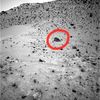
SOL731-2N191257274EFFAN00P1922L0M1.jpgDéjà vu?!?... - Sol 73184 visiteForse è colpa nostra se soffriamo di questa Sindrome del "Già Visto" ma, a nostro avviso, sono svariate (o forse innumerevoli) le immagini in arrivo da Spirit le quali ci presentano impressionanti rapporti di somiglianza tra i diversi rilievi ripresi. Come dire? Sembra che, nella bizzarrìa delle rocce e delle pseudo-rocce di Marte vi sia, comunque, una "costante di fondo" la quale fa si che, a ben vedere, tutte le "bizzarrìe" sono - in ampia misura - ripetitive.
Certo, sono tutte coincidenze: nessuno di noi, infatti, sta maliziosamente pensando che, certo non tutti, ma forse una buona parte dei frames che ci mandano Spirit ed Opportunity (e che vengono pubblicati, specie negli ultimi 8/10 mesi) non sìano altro che dei collage digitali - "cut and paste", insomma... - ricreati in laboratorio, a Pasadena o altrove, da qualche Tecnico della Fotografia il cui unico compito è rivedere, correggere, riutilizzare e, soprattutto, nascondere e confondere.
No: nessuno di noi sta pensando questo.
Forse...
|
|

Hyginus-Ariadaeus-Manilius.jpgHyginus and Ariadaeus rilles and Manilius Crater84 visitenessun commento
|
|

04-C_Mars03_Mountains.jpgMars Mountains84 visiteContrary to some reports, the phototelevision cameras on Mars-3 were functional after the dust storm subsided, in December. At least four photographic surveys have been reported (December 12 and 14, February 28 and March 12). Images were returned by pulse-code modulation over the decimeter-band telemetry channel, after the centimeter-band pulse-position modulation system failed.
The decimeter transmitter suffered from intermittant failures and was used very cautiously. Only after important science data was gathered, a small number of images at LR were transmitted (using a 256-line mode). The color image of Mars (picture n. 1) is a composite from the 52 mm camera, using its program of cycling red, green and blue glass filters.
|
|
| 25353 immagini su 2113 pagina(e) |
 |
|
|
|
|
736 | |
|
|
|
|





