| Piú viste |
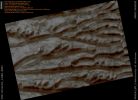
PSP_004230_1080_RED_abrowse.jpgDefrosting Dunefield inside Richardson Crater (Absolute Natural Colors; credits for the additional process. and color.: Dr Paolo C. Fienga - Lunexit Team)86 visiteCovered by Seasonal CO2 Frost, the Dunefield here in Richardson Crater has only partially defrosted, although the image was acquired late in Mars' Southern Spring.
Large patches of Carbon Dioxide Frost can be observed, linked in some places by Channels possibly carved into the ground by the erosion of CO2 gas, as blocks dry ice slide down slope and sublimate.
Numerous Dust Devil Tracks (or DDT for short) have left their mark.
MareKromium
|
|
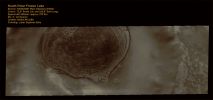
Craters-Unnamed_Crater-V13506008.jpgUnnamed Crater with Frozen Dunefield (Absolute Natural Colors; credits for the additional process. and color.: Dr Paolo C. Fienga - Lunexit Team)86 visitenessun commentoMareKromium
|
|

Landslides-Jus_Chasma-PIA13778.jpgLarge Landslide in Jus Chasma (Absolute Natural Colors; credits for the additional process. and color.: Dr Paolo C. Fienga - Lunexit Team) 86 visitenessun commentoMareKromium
|
|

ZZ-Mercury-Rupes-PIA13748-0.jpgBeagle Rupes and Impact Craters Sveinsdottir, Izquierdo and Kunisada (Context Frame)86 visiteWhen MESSENGER first flew by Mercury on January, 14th, 2008, MDIS acquired images of a large portion of Mercury's Surface that had never previously been seen by Spacecraft. This mosaic of NAC images shows some of the Geologic Features discovered during that first fly-by that have been subsequently named: the curving cliff face of Beagle Rupes, the elongated crater Sveinsdottir and the craters Izquierdo and Kunisada flooded with Lava.
This year, the MESSENGER spacecraft is positioned once again to visit the Solar System's Innermost Planet. However, this time, the Spacecraft won't just pass by. On March 18, 2011, a 15-minute maneuver will place MESSENGER in orbit around Mercury, making it the first Spacecraft ever to do so. The MESSENGER Mission will then begin an extensive year-long science campaign to unravel Mercury's mysteries.
Date Acquired: January, 14th, 2008
Instrument: Narrow Angle Camera (NAC) of the Mercury Dual Imaging System (MDIS)
Scale: Izquierdo Crater is approx. 170 Km (105,57 miles) in diameterMareKromium
|
|
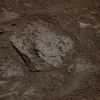
OPP-SOL2482-1-GB-LXTT.jpgBerries and Rocks - Sol 2482 (Absolute Natural Colors; credits for the additional process. and color.: Drr Gianluigi Barca and Paolo C. Fienga - Lunexit Team)86 visitenessun commentoMareKromium
|
|

Ganges_Chasma-20080318a.jpgFeatures of Ganges Chasma (Absolute Natural Colors; credits for the additional process. and color.: Dr Paolo C. Fienga - Lunexit Team)86 visitenessun commentoMareKromium
|
|
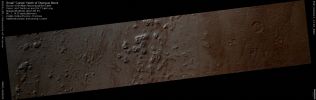
PSP_006667_2150_RED_abrowse-00-PCF-LXTT.jpgSmall "Cones", North of Olympus Mons (Absolute Natural Colors; credits for the additional process. and color.: Dr Paolo C. Fienga - Lunexit) 86 visiteOlympus Mons is the largest Volcano in the Solar System and is thought to have been active in the relatively recent past (which on Mars means many millions of years ago). While this towering giant gets a lot of the attention, it is surrounded by a vast field of other Volcanic Features. This HiRISE image takes a close look at one set of intriguing landforms: small Cones.
Cones similar to these are found atop the freshest Lava Flows on Mars in Athabasca Valles. In that location, HiRISE found proof that they formed by steam exploding through the Lava Flow. The steam was produced by boiling water (or ice) in the ground underneath the Lava Flow. Could the same thing have happened here?
Unfortunately, HiRISE finds that this area north of Olympus Mons is covered in a thick layer of Dust. While the wonderful resolution of HiRISE reveals details of the Ripples in the Dust, it cannot show us what is underneath the Dust. Therefore we cannot prove that these Cones formed the same was as the Athabasca Valles ones.
They could be small Volcanic Vents, but it is unlikely that so many small eruptions would have taken place so close together.
However, since we cannot show that the ground under the Dust is actually Lava, we cannot rule out non-volcanic processes. Still, the similarity in the shapes and sizes of these Cones to the ones in Athabasca Valles leaves open the possibility that Water and Lava interacted explosively here.MareKromium
|
|

Collapse_features-Pits-East_Tharsis-PCF-LXTT.jpgCollapse Pits, East of Tharsis Region (Absolute Natural Colors; additional process.: Dr Paolo C. Fienga - Lunexit Team)86 visitenessun commentoMareKromium
|
|

Landslide_Deposits-20080423a-PCF-LXTT.jpgLandslide Deposits in Aeolis Planum (Natural Colors; credits: Dr Paolo C. Fienga - Lunexit Team)86 visitenessun commentoMareKromium
|
|

ESP_020842_2030_RED_abrowse-00-PCF-LXTT.jpgFresh Primary Crater on a Secondary Craters' Cluster (Absolute Natural Colors; credits for the additional process. and color.: Dr Paolo C. Fienga - Lunexit Team:)86 visitenessun commentoMareKromium
|
|

OPP-SOL1045-MI-MF-LXTT-3.jpgOn the Surface of Meridiani Planum... - Sol 1045 (Superdefinition; credits for the additional process. and color.: Dr Marco Faccin - Lunexit Team)86 visitenessun commentoMareKromium
|
|
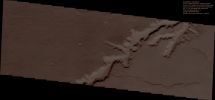
Channel-20090619a-PCF-LXTT.jpgSouthern Drainage Channel (Absolute Natural Colors; credits: Dr Paolo C. Fienga - Lunexit Team)86 visitenessun commentoMareKromium
|
|
| 25353 immagini su 2113 pagina(e) |
 |
|
|
|
|
719 | |
|
|
|
|





