| Piú viste |

APOLLO 12 AS 12-46-6745 HR-1.jpgAS 12-46-6745 - Horizon and strange stones (2) - HR279 visiteCerchiatura Verde (Sx): la roccia appuntita che Vi avevamo già fatto notare nel frame precedente;
Cerchiatura Verde (Dx): un boulder a forma tronco-colonnare di modeste dimensioni (stimiamo tra i 40 ed i 50 cm);
Cerchiatura Rossa: apparentemente si tratta di una roccia (sempre dalla forma curiosa - diremmo a "tettoia spiovente") con "foro" che ci ricorda tantissimo un'altra roccia bucata rinvenuta su Marte, nei primissimi Soles di Spirit (vedere le immagini ed i detail mgnf proposti da Fabio Italiano nella Sezione "Mars in Colors").
Potrebbe anche trattarsi, tuttavia, di una illusione ottica determinata dall'immagine sfuocata (come Conrad stesso ammette, a causa di un suo errore) oppure di un'altra piccola pietra la quale, rispetto all'angolo di ripresa, si superimpone alla roccia a tettoia e, sempre grazie alla sfuocatura, ci appare come non come oggetto indipendente, bensì come dettaglio (curioso) del corpo maggiore più lontano.
Forse quest'ultima interpretazione è da preferirsi.
|
|

Craters-Huygens_Crater-PIA13800-PCF-LXTT.jpgFractures and Layers in Carbonate-bearing Rocks at Mars' Huygens Basin (Absolute Natural Colors; credits: Dr Paolo C. Fienga - Lunexit Team)279 visiteCaption NASA:This image from orbit covers an area about 460 meters (approx. 1500 feet) across, in which Carbonate Minerals have been identified from spectrometer observations. Fractures and possible Layers are visible in the light-toned Rock exposure containing the Carbonates.
The location is inside an Unnamed Crater about 35 Km (approx. 21,73 miles) in diameter that lays on the Uplifted Rim of the extremely wide Huygens Crater, which is about 467 Km (approx. 290 miles) in diameter. The excavations by the impacts that dug first Huygens and then the smaller crater have exposed material in this image that had been buried an estimated 5 Km (3,1 miles) deep.
The Carbonates may be from part of an extensive Buried Layer that could hold much of the Carbon that was once in a thick Martian Atmosphere of Carbon Dioxide, some researchers propose.
Mars now has a thin Atmosphere that is mostly Carbon Dioxide, but evidence that liquid water was once widespread on the Surface suggests the Atmosphere was much thicker billions of years ago. The High Resolution Imaging Science Experiment (HiRISE) camera on NASA's Mars Reconnaissance Orbiter provided this image.
Identification of Iron or Calcium Carbonates at this site, and also of Clay Minerals indicating a formerly wet environment, comes from an observation by the Compact Reconnaissance Imaging Spectrometer for Mars (CRISM) on the same Orbiter.
The point is that in the presence of water and other (favourable) conditions, the CO2 (Carbon Dioxide) that is present in the Martian Atmosphere can be captured into Carbonate Minerals.
The image is from HiRISE observation ESP_012897_168, made on April 27, 2009, and centered at 11,6° South Lat. and 51,9° East Long.".MareKromium
|
|

OPP-SOL209-1N146735718EFF35BGP0835R0M1-PCF-LXTT.jpgSun over Endurance Crater's Rim - Sol 209 (Absolute Natural Colors; credits: Dr Paolo C. Fienga - Lunexit Team)279 visitenessun commentoMareKromium
|
|
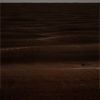
OPP-SOL512-1P173635645EFF55XKP2429L2M1-PCF-LXTT.jpgDune after Dune... - Sol 512 (Absolute Natural Colors; credits: Dr Paolo C. Fienga - Lunexit Team)279 visitenessun commentoMareKromium
|
|
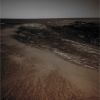
OPP-SOL952-1N212701027EFF76EVP0657L0M1-PCF-LXTT.jpgThe features of Victoria Crater, from Duck Bay (2) - Sol 952 (Absolute Natural Colors; credits for the additional process. and color.: Dr Paolo C. Fienga - Lunexit Team)279 visitenessun commentoMareKromium
|
|

Aeolian_Features-Windstreaks-Terra_Sabaea-PIA14182-PCF-LXTT.jpgWindstreaks in Terra Sabaea (Natural Colors; credits for the additional process. and color.: Dr Paolo C. Fienga - Lunexit Team)279 visiteOrbit Number: 41717
Latitude: 0,444208° South
Longitude: 68,7349° East
Instrument: VIS
Captured: May, 11th, 2011MareKromium
|
|

ZZ-Falling_on_Saturn.jpgEnd of Mission (Artistic View)279 visitenessun commentoMareKromium
|
|
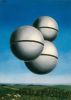
Voices.jpgBe careful, Man...279 visite"...This Society has no centers of power and possesses no type of organization in the terrestrial sense of the term, because, although individuals do exist in some physical, yet exotic, form, there is no such thing as "individual consciousness."
Each individual "participant" (it's an ugly expression, but it's the most appropriate in this context) of this Civilization exists only as a "part of a whole"; as a portion — necessary, but not indispensable — of a "greater body" to which he or she accedes and with which he or she merges and vanishes.
I do not know whether this type of psychological and social architecture is original or whether it — somehow — derived from a series of previous "organizational experiments."
I do not know whether it is a "choice" or a "necessity."
What I do know is that this Civilization has existed for at least twenty billion Earth years, and its "consciousness," if I may call it that, extends to the edges of this Universe.
Maybe even others."
Dr. Paolo C. FiengaMareKromium
|
|

SOL082-2N133645832EFF2232P1767L0M1.jpgMartian Horizon and Sky (3)278 visite...sulle quali si trova una sorta di "fine terriccio" che disegna stranissime "onde", simili a quelle che vediamo sulle spiagge o sul greto sabbioso dei fiumi ("onde" che, in quei casi, sono il frutto dell'azione congiunta del vento e dell'acqua).
Le colline in lontananza sono perennemente avvolte in una sorta di nebbia che gli Scienziati dicono essere "polvere in sospensione" e NON umidità, come saremmo portati (sia pure solo istintivamente) a credere.
La temperatura al suolo, infine, oscillerebbe tra i -40/- 60° C (di notte) e gli 0°/ +2° C (di giorno e solo in alcune - le più "calde"!... - ore del giorno).
|
|
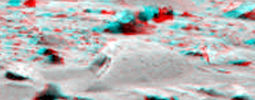
VA-T-Overground1.jpgOverground Tunnels 3D (1)278 visiteMolte volte, osservando le pseudo-rocce Marziane (sia in Area Gusev, sia in Area Meridiani), abbiamo avuto la sensazione di avere davanti a noi delle "vie d'accesso", delle "porte".
Tunnels e condotti, di varia forma e dimensione, che portano verso un Regno Sotterraneo il quale, come ovvio, solletica l'immaginazione e l'immaginario. Se fate una "passeggiata" con Spirit ed Opportunity nella Sezione dedicata al "Walking on Mars", potrete identificare un notevole campionario di queste configurazioni. Il Dr Feltri, nei due frames 3D che ci ha messo a disposizione, ha battezzato queste "via d'accesso" come Overground Tunnels: una definizione buona ed azzeccata, la quale ci rimanda, in un certo senso, alle Singolarità Lunari di Erathostenes "A" & "B". Due "Crateri Gemelli"? Due "Hangars"? Due semplici crateri che si assomigliano e che non hanno nulla di speciale se non un'albedo piuttosto alta?
|
|

0051.jpgSteps... (edm - High-Def-3D; credits: Dr M. Faccin & Lunar Explorer Italia)278 visiteDifficile spiegare rilievi come questo conservando intatte Razionalità e Pragmatismo...La nostra opinione? Ci sono dei "gradoni" (una sorta di "gradoni"...), effettivamente, sul margine inferiore del cratere più prossimo al punto di osservazione i quali ci lasciano perplessi.
Ci lasciano perplessi a causa della loro linearità e regolarità; ci lasciano perplessi a causa delle loro fattezze; ci lasciano perplessi - infine - anche in sede di contestualizzazione (non siamo lontani, infatti, dal rilievo a "V" di cui si è già detto).
Sarà stata, questa, una Regione Mineraria (in un remoto passato)?
O forse questi rilievi sono le evidenze di processi biomagnetici ancora in atto (come suggerisce il Dr Feltri)?
Oppure si tratta solo di illusioni ottiche e sviste?
Secondo noi la realtà è solo una: in questo frame ci sono (e si vedono - BENE) dei rilievi a forma di gradoni.
Essi esistono.
Ma quale sia il loro significato, la loro natura ed il loro scopo...nessuno, ad oggi, lo può dire.
Nessuno.MareKromium
|
|

South_Polar_Surface-PIA13906-PCF-LXTT.jpgSurface Textures in a South Polar Trough (Absolute Natural Colors; credits: Dr Paolo C. Fienga - Lunexit Team)278 visiteOrbit Number: 40282
Latitude: 86,6993° South
Longitude: 20,2088° East
Instrument: VIS
Captured: january, 13th, 2011
Mars Local Time: 02:37 (Nightime)MareKromium
|
|
| 25353 immagini su 2113 pagina(e) |
 |
|
|
|
|
71 | |
|
|
|
|





