| |
| Piú viste |
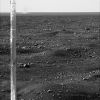
PHOE-SOL104-PIA11153.jpgVastitas' Dust Devil - Sol 10487 visiteThe vertical post near the left edge of this image is the "Mast" of the Meteorological Station on Phoenix.
The DD visible at the horizon just to the right of the mast is estimated to be 600 to 700 meters (about 2000 to 2300 feet) from Phoenix, and 4 to 5 meters (10 to 13 feet) in diameter.
It is much smaller than DDs that have been observed by NASA's Mars Exploration Rover Spirit much closer to the Equator and it is closer in size to Dust Devils seen from orbit in the Phoenix Landing Region, though still smaller than those.
The image has been enhanced to make the Dust Devil easier to see. MareKromium
|
|

Enceladus-PIA11108.jpgBaghdad Sulcus87 visiteCaption NASA:"This Cassini image was the 4th 'skeet shoot' narrow-angle image captured during the Oct. 31, 2008, flyby of Saturn's moon Enceladus.
The source region for jet VI (see PIA08385) has been identified. The image was taken with the Cassini Spacecraft narrow-angle camera on Oct. 31, 2008, at a distance of approximately 3417 Km (about 2135 miles) from Enceladus and at a Sun-Enceladus-Spacecraft, or Phase, Angle of 75°.
Image scale is roughly 38 meters (125 feet) per pixel".MareKromium
|
|
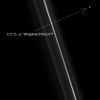
The_Rings-N00124205.jpgAnother UFO in the Space of Saturn?87 visiteCaption NASA:"N00124205.jpg was taken on November 16, 2008 and received on Earth November 17, 2008. The camera was pointing toward SATURN-RINGS which, at the time, were approximately 382.907 Km away, and the image was taken using the CL1 and CL2 filters. This image has not been validated or calibrated".MareKromium
|
|

SOL1356-2.jpgBright Spots - Sol 1356 (false colors; credits: Dr G. Barca)87 visiteCuriose scintille di luce caratterizzano i punti della roccia posta ai piedi di Spirit laddove il Rover (probabilmente usando le sue ruote o il RA) ha intaccato lo strato superficiale - ed opaco - di sabbia e polveri che ne "nasconde" le reali fattezze.
Si tratterà di un "impolverato" e "semi-insabbiato" mega-cristallo di Quarzo? Difficile: il Quarzo non è un minerale comune su Marte...
Solo una certezza: l'effetto "Goccia di Luce" che si vede contraddistinguere alcune zone della roccia in questione - sulla base di quanto constatato in qualche annetto di osservazioni - si verifica SOLO in due casi (almeno per quanto ne sappiamo):
1) luce del Sole che colpisce una superficie Cristallina (o ricoperta di Ghiaccio d'Acqua)
2) luce del Sole che colpisce una superficie Metallica
Cosa stiamo osservando in questo caso?!?MareKromium
|
|

OPPORTUNITY-STAR-1P136550562EFF1900P2679L2M1.jpgUs, in the Sunset... (possible True Colors; credits: Dr Paolo C. Fienga)87 visiteFrame numero 20000 per Lunar Explorer Italia: un piccolo omaggio al Pianeta Rosso (il più "gettonato" nell'Immaginario Collettivo), alla Terra (sempre inquieta e bistrattata, che vedete indicata dalla freccia), ai Colori dell'Universo (forse, ed a dispetto dei grandi Temi Scientifici - ! -, uno dei più curiosi enigmi dello Spazio) ed alla intrinseca Bellezza, Fascino e Mistero che avvolgono, sempre e comunque, le immagini in arrivo da "strani e nuovi mondi, laddove nessun Essere Umano ha ancora messo piede"...
Congratulazioni a Lunar Explorer Italia, ai Soci Fondatori, agli Amici ed a tutti i Colleghi che, da qualche anno, contribuiscono a far crescere questa piccola, grande, Realtà della Divulgazione e della Ricerca Libera e di Frontiera.
Legnano (MI), lì 7 Dicembre 2008
Dr Paolo C. Fienga - Lunar Explorer Italia
Presidente e Socio FondatoreMareKromium
|
|

Psp_009820_1510_red.jpgOutcrops in Eridania Basin (possible True Colors; credits: Lunar Explorer Italia)87 visiteMars Local Time: 15:37 (middle afternoon)
Coord. (centered): 28,7° South Lat. and 180,0° East Long.
Spacecraft altitude: 254,2 Km (such as about 158,9 miles)
Original image scale range: 50,9 cm/pixel (with 1 x 1 binning) so objects ~1,53 mt across are resolved
Map projected scale: 50 cm/pixel
Map projection: EQUIRECTANGULAR
Emission Angle: 0,3°
Phase Angle: 72,7°
Solar Incidence Angle: 73° (meaning that the Sun is about 17° above the Local Horizon)
Solar Longitude: 120,1° (Northern Summer)
Credits: NASA/JPL/University of Arizona
Additional process. and coloring: Lunar Explorer ItaliaMareKromium
|
|

L-Original_Lunar_Orbiter_Frames-LO1-1098-03_med.jpgOriginal Lunar Orbiter - Frame LO1-1098 (edm: the Volcanic Vent, the Sail Tower and the Bridge)87 visiteIncommentabile, nella sua straordinaria chiarezza...MareKromium
|
|

OPP-SOL1716-1719-PIA11754-C.jpgColor Comparison - Sol 1716 - 171987 visiteUna - speriamo eloquente - comparazione fra lo "stile" di colorizzazione NASA rispetto a quello Lunar Explorer.
Sinceramente, oramai non è più (o, forse, non è mai stata) una questione di "più bello/più brutto"; quello che si può evincere con inequivocabile chiarezza dalle elaborazioni NASA è che una "patina" di color giallo è sovraimposta a tutte le loro "colorizzazioni". Una "patina" opaca, la quale esalta ancora di più l'evidente sovrasaturazione a cui sono stati sottoposti tutti i frames Marziani, sia Spirit, sia Opportunity.
Come sapete bene, Lunar Explorer Italia - per quanto attiene le colorizzazioni - si è evoluta nel tempo: e questo è un fatto, riteniamo, normale e meritorio.
E la NASA? Si, anche la NASA si è evoluta (guardate le prime elaborazioni in approximate true colors di Meridiani Planum - sono nella Sez. "Mars in Colors" - per rendervene conto). Ma lo ha fatto, a nostro umile parere, involvendosi e stabilendo una Linea Insuperabile per il processing (una "linea" tanto ovvia, quanto discutibile): Marte, dice la NASA, è opaco, piuttosto luminoso e con Dominante giallognola.
Tutte le loro elaborazioni, da almeno tre anni a questa parte, risentono di questo gruppo di premesse le quali - e qui viene il "bello" - sono più volte state smentite/modificate sostanzialmente dalla NASA stessa (la quale ha detto che Marte è piuttosto buio, che la visibilità al suolo è tersa e che la dominante cromatica è arancio/rossastra).
Insomma, chi ci capisce qualcosa nei ragionamenti NASA non è solo bravo: è un Fenomeno! Noi, comunque, andiamo avanti per la nostra strada...
Caption NASA:"This 360-degree panorama shows the vista from the location where NASA's Mars Exploration Rover Opportunity spent five weeks in November and December 2008 while the Sun was nearly directly in between Mars and Earth, limiting communications.
Opportunity is approaching the 5th Earth-year anniversary of its landing on Mars, continuing a surface mission that was initially scheduled to last 3 months. The Rover landed on Jan. 24, 2004 (Pacific Standard Time; Jan. 25, 2004 Universal Time). When it reached the location from which its PanCam captured this view, it had driven a total of 13.616 meters (8,46 miles) since its landing.
The view combines 276 different exposures taken with Opportunity's PanCam — 92 pointings, with three filters at each pointing. The component images were taken during the period from the Rover's 1716th Martian Day, or Sol, to the mission's Sol 1719 (Nov. 21 to 24, 2008).
Opportunity has driven 1,83 Km (1,14 miles) since it exited Victoria Crater on Sol 1634 (Aug. 28, 2008). It skirted the West Rim of Victoria and, at the point from which this panorama was taken, had reached a position about a kilometer (six-tenths of a mile) South-West of the South Rim of the Crater.
North is in the center of the panorama. Rover tracks are visible from the drive to the location from which the Pancam captured this view. For scale, the distance between the parallel wheel tracks is about one meter (3 feet).
Opportunity is on a 12-Km (7-miles) trek toward Endeavour Crater: a crater more than 20 times the size of Victoria Crater, which Opportunity studied for about two years.
On the way toward Endeavour the rover is pausing to examine selected loose rocks on the Surface. At the location from which this panorama was taken, the rover used the spectrometers on its Robotic Arm to examine a cobble informally called "Santorini", a dark rock about 8 cm (3") long, which the inspection indicates is probably a meteorite. The rock is too close to the Rover to be visible in this panorama.
The lighter-toned patches of ground in this view are sulfate-rich bedrock. Darker patches are dark, windblown sand. The metal post in the foreground is the top of Opportunity's Low-Gain Antenna.
Opportunity began driving again on Sol 1748 (Dec. 23, 2008).
This is an approximate true-color, red-green-blue composite panorama generated from images taken through the Pancam's 750-nanometer, 530-nanometer and 430-nanometer filters. This "natural color" view is the Rover Team's best estimate of what the scene would look like if we were there and able to see it with our own eyes".
Nota Lunexit: la roccia battezzata "Santorini" (ivi non visibile) è quella su cui noi stessi ci siamo soffermati per qualche elaborazione e commento e che, come la NASA stessa ora conferma, potrebbe essere il frammento di un bolide (andate a vedere, se volete, il frame "Interesting Rock-fragment - Sol 1748 (True Colors; credits: Dr G. Barca).
Che dire? Siamo contenti, perchè ci eravamo arrivati anche noi (che non siamo Scienziati e che i mezzi della NASA ce li possiamo solo sognare...)!MareKromium
|
|
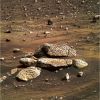
SOL508-GB.jpgColourful Outcrop and Sands - Sol 508 (possible True Colors; credits: Dr G. Barca)87 visitenessun commentoMareKromium
|
|
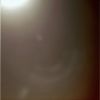
SOL483-2N169231966EDNAAB2P1584L0M1.jpgMartian Sky - Sol 483 (Natural Colors; credits: Lunar Explorer Italia)87 visiteCaption NASA:"Left Navigation Camera Non-linearized Downsampled EDR acquired on Sol 483 of Spirit's Mission to Gusev Crater at approximately 10:15:21 MLT".
Nota Lunexit: purtroppo non possiamo verificare di persona ma, a nostro parere, QUESTO è il colore naturale (e cioè il colore che percepirebbero i nostri occhi umani) del Cielo di Marte (non il giallo ocra o il verde oliva delle riscostruzioni NASA...). Ed ai Posteri l'ardua sentenza!MareKromium
|
|
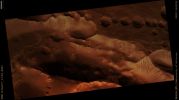
PSP_010477_1720_RED_abrowse.jpgPit Chain and other Collapse Features in Arsia Chasma (Natural Colors; credits: Lunar Explorer Italia)87 visiteMars Local Time: 15:41 (middle afternoon)
Coord. (centered): 7,8° South Lat. and 240,7° East Long.
Spacecraft altitude: 256,1 Km (such as about 153,8 miles)
Original image scale range: 49,2 cm/pixel (with 1 x 1 binning) so objects ~ 1,48 mt across are resolved
Map projected scale: 50 cm/pixel
Map projection: EQUIRECTANGULAR
Emission Angle: 0,1°
Phase Angle: 59,2°
Solar Incidence Angle: 59° (meaning that the Sun is about 31° above the Local Horizon)
Solar Longitude: 144,9° (Northern Summer)
Credits: NASA/JPL/University of Arizona
Additional process. and coloring: Lunar Explorer ItaliaMareKromium
|
|
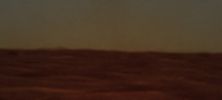
OPP-SOL1821-PIA11836.jpgWestern Rim of Endeavour Crater and farther Iazu Crater's Rim on sight! - Sol 1821 (Natural Colors; credits: Lunar Explorer Italia)87 visiteIn the left half of this view from the Panoramic Camera (PanCam) of NASA's Mars Exploration Rover Opportunity, a western portion of the rim of Endeavour Crater is visible on the horizon. In the right half, the rim of a smaller crater, farther away, appears faintly on the horizon.
Opportunity's Pancam took this image on March 8, 2009, during the 1821st Martian Day, or Sol, of the Rover's Mission on Mars. The width of the image covers approx. 1° of the horizon.
The part of Endeavour's rim visible here is about 16 kilometers (10 miles) from where Opportunity was when the image was taken. The Rover was at the same location as when its Pancam took images after a drive on Sol 1820. Opportunity remained at that location until a drive on Sol 1823.
The more-distant rim to the right, part of Iazu Crater, is about 38 Km (approx. 24 miles) away. Iazu is South of Endeavour and about 7 Km (approx. 4 miles) in diameter.MareKromium
|
|
| 25353 immagini su 2113 pagina(e) |
 |
|
|
|
|
704 | |
|
|
|
|
|
|





