| Piú viste |

Crescent_Moon.jpgMineral Diversity on a beautiful Crescent Moon302 visitenessun commentoMareKromium
|
|
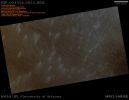
ESP_021454_0925_RED_abrowse-00-PCF-LXTT.jpgPolar Streaks (Absolute Natural Colors; credits: Dr Paolo C. Fienga - Lunexit Team)302 visiteThis is the first HiRISE image taken after Solar Conjunction (2010), when Mars passes behind the Sun as seen from Earth. The Solar Corona interferes with radio communication with MRO for a few weeks during conjunction, so no HiRISE imaging was planned until reliable communication resumed.
This image is one of a set of images taken to monitor the evolution of the South Polar Seasonal Cap. The Seasonal Caps on Mars are mostly composed of Carbon Dioxide, the major component of the Martian Atmosphere. It is currently Spring in the Southern Hemisphere of Mars, so the Cap is warming and evaporating into the Atmosphere by way of Sublimation.
The Dark Streaks visible in this image are thought to be sand ejected onto the Surface of the Cap by "Jets" of CO2. It is thought that Sunlight penetrates to the base of the Seasonal Cap, warming the soil at its base. This in turn warms the Cap from below, causing Carbon Dioxide to evaporate and build pressure until the gas escapes through Vents to the Surface. Sand grains are apparently entrained in this flow and deposited in Fans on the Surface.
The White Streaks may be formed by recondensation of ice on the Surface of the Cap.MareKromium
|
|
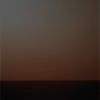
OPP-SOL2568-1P356181063EDNB400P2694L7M1.jpgHorizon - Sol 2568 (Enhanced Natural Colors; credits for the additional process. and color.: Dr Paolo C. Fienga - Lunexit Team)302 visitenessun commentoMareKromium
|
|

PSP_003249_1510_RED_abrowse-01.jpgMineral Diversity inside Ritchey Crater (EDM - Absolute Natural Colors; credits for the additional process. and color.: Dr Paolo C. Fienga - Lunexit Team)302 visitenessun commentoMareKromium
|
|

PSP_003249_1510_RED_abrowse-00.jpgMineral Diversity inside Ritchey Crater (CTX Frame - Absolute Natural Colors; credits for the additional process. and color.: Dr Paolo C. Fienga - Lunexit Team)302 visitenessun commentoMareKromium
|
|
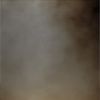
OPP-SOL2585-1M357681114EFFB6Q4P2903M2M2-PCF-LXTT.jpgClouds in the Sky over Meridiani Planum - Sol 2585 (Absolute Natural Colors; credits for the additional process. and color.: Dr Paolo C. Fienga - Lunexit Team)302 visitenessun commentoMareKromium
|
|

APOLLO 13 AS 13-60-8627.jpgAS 13-60-8627 - Moon from orbit301 visiteForse questa è pura fantascienza o forse è la semplicissima realtà, ma noi crediamo che l'interruzione repentina dello Human Space Programme sia stata provocata, in qualche modo, anche dal timore di giungere totalmente impreparati (scientificamente, tecnologicamente, culturalmente ed umanamente) ad un "faccia a faccia" con Creature più evolute rispetto a noi di secoli, millenni o, forse, addirittura di milioni di anni (terrestri).
|
|

APOLLO 15 AS 15 88-12009.jpgAS 15-88-12009 - What is that???301 visiteLe due luci si sono spostate, decisamente, rispetto alla posizione che occupavano nel frame precedente. Anche in questa immagine la nostra sensazione istintiva è che si tratti di un semplice, ancorchè curioso, riflesso di qualcosa che si trova all'interno dell'Apollo 15.
Il problema - lo ribadiamo - è che non sapremmo proprio dire cosa...
|
|

IMAGE059-ORIGINAL NASA - APOLLO 17 AS 17-145-22202-detail mgnf.jpgBloody Moon... (1)301 visiteQuesto detail mgnf è stato ottenuto dal NASA - Original Apollo 17 frame AS 17-145-22202 (pubblicato integralmente in Reserved Area). Indicato dal n. 7, un dettaglio segnalatoci dall'Amico (e Socio) Dr Gianluigi Barca il quale, come noi d'altronde, non è riuscito a spiegarsi che cosa possa essere quella specie di macchia rossa che si vede in basso, a pochi metri dal LM. Si tratta di un semplice effetto di distorsione cromatica forse? O è qualcosa di reale (tipo della vernice o, se vogliamo essere macabri, del sangue)?
Per la risposta, diamo la parola al Dr Alessio Feltri il quale, come sempre, ci propone una intrigantissima - e, sicuramente per molti versi anche un pò sconcertante - spiegazione...
|
|

X-STS-119_EVA-2_20090321_192411.jpgUFO near the ISS?301 visiteLa NASA è fatta così: nega, abbozza, sorride ed ammicca. E, quando ammicca, rilascia immagini come questa. Immagini che dicono e non dicono.
Immagini che mostrano poco. Pochissimo. Quasi nulla.
Ma quel "poco", "pochissimo" o "quasi nulla" è sempre e comunque ABBASTANZA per rendersi conto che qualcosa non va.
Che c'è qualcosa, nel frame, che non dovrebbe esserci.
Lo abbiamo visto in tanti filmati "NASA - Apollo Original" (alcuni dei quali sono stati riuniti in uno splendido collage da parte del nostro Amico e Lettore Canadese "Luna Cognita") e lo abbiamo visto in tantissimi frames NASA - CASSINI e NASA MER Spirit ed Opportunity Original (guardate le nostre GIF e gli stills che abbiamo nelle nostre Collezioni per renderVi conto di quello di cui stiamo parlando).
Morale? C'è "Qualcosa", là fuori, che osserva. Da vicino. Talvolta anche da vicinissimo. E per non vedere questo "Qualcosa" o si è ciechi (e allora non è colpa di nessuno) o si è (si DEVE essere) in malafede.
E la malafede a noi non piace.
Perchè noi non siamo Ufologi. Ma non siamo neppure ubriachi (non abbiamo le traveggole) e non operiamo in malafede (così come fanno, invece, tantissimi Scienziati, Ricecatori e Studiosi del Cosmo, Italiani e non).
***
Caption NASA, da "NASA - Picture of the Day" del giorno 10 Aprile 2009:"These two frames, taken with a video camera and a telescope, reveal remarkable details of the International Space Station (ISS) orbiting some 350 Km above the Earth.
Recorded during last month's visit by the crew of shuttle orbiter Discovery on mission STS-119, the pictures show extended solar arrays glinting in bright sunlight against a dark sky. They also likely capture the blurred image of a spacewalking astronaut during the mission's EVA-2 (Extravehicular Activity-2)!
The astronaut is installing equipment along one of the station's truss assemblies. Astronomer Ralf Vandebergh, who often images the ISS during its favorable passes through Dutch skies, comments that no other bright ISS structures occupy the position indicated in the inset, and that a reflective, white-suited astronaut would be visible against the truss and correspond to the bright blur.
Vandebergh notes that the timing and location further suggest the spacewalker is STS-119 astronaut Joseph Acaba".
Già, tutto interessante, come no...Ma sul fatto che vicino alla ISS c'è "Qualcosa", nemmeno una parola. Solo l'immagine: chiara, eppure indecifrabile.
In "Stile NASA"...MareKromium
|
|
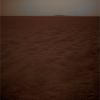
OPP-SOL2572-1N356517985EFFB4X2P0663L0M1-PCF-LXTT.jpgEndeavour's Rim - Sol 2572 (Natural Colors; credits for the additional process. and color.: Dr Paolo C. Fienga - Lunexit Team)301 visitenessun commentoMareKromium
|
|

Nili_Fossae-PCF-LXTT-03.jpgFeatures of Nili Fossae (Natural Colors; credits: Dr Paolo C. Fienga - Lunexit Team)301 visitenessun commentoMareKromium
|
|
| 25353 immagini su 2113 pagina(e) |
 |
|
|
|
|
59 | |
|
|
|
|





