| |
| Piú viste |

SOL562-2R176268698EFFAD92P1311L0M1.jpgNew strange rocks (7) - Sol 56253 visiteIn secondo luogo (ed infine), la Scienza e la Storia non la fanno soltanto la NASA e la Propaganda Americana: la Scienza e la Storia l'hanno fatta e la fanno anche gli Scienziati ed i Ricercatori che - prima - guardano, leggono, studiano e si documentano a 360° e - poi - provano, rischiando sempre la faccia (e, qualche volta, anche la Vita...), ad esporre le proprie Ragioni e Teorie con autonomia e con coraggio.
E se ci sbagliassimo? E se avessimo davvero buttato via Vita, Lavoro e denaro inseguendo una leggenda?
Ebbene, se così fosse, sarà ancora una volta la Storia ad esprimere il Suo - inappellabile - Giudizio.
Ma noi siamo molto fiduciosi anche se, purtroppo, questo Giudizio - che, insieme a tanti altri, attendiamo con trepidazione... -, rischia di arrivare solo fra qualche secolo...
|
|
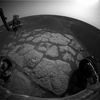
OPP-SOL545-1F176575841EFF5847P1148R0M1-1.jpgThe "Mark", on the Martian Paving... - Sol 54553 visiteOriginal caption:"Right Front HazCam Non-linearized Full frame EDR acquired on Sol 545 of Opportunity's mission to Meridiani Planum at approximately 14:52:21 MLT".
|
|

SOL564-2N176424113EDNAD92P1585L0M1.jpgIn the silence of the morning... (1) - Sol 56453 visiteOriginal caption:"Left NavCam Non-linearized Downsampled EDR acquired on Sol 564 of Spirit's mission to Gusev Crater at approximately 09:56:05 MLT".
Sono quasi le 10 del mattino su Marte e siamo ormai abituati a questo tipo di visione: Spirit, durante la sua (eterna...) ascesa verso il summit di Husband Hill, ogni tanto si volge verso la distesa dalla quale è arrivato e scatta qualche istantanea. Il paesaggio, nonostante il continuo passare di Dust Devils, non mostra palesi cambiamenti. Siamo comunque troppo lontani per vederli, anche se ci fossero, e la definizione del frame non ci aiuta.
Inoltre, se ci fate caso, anche le condizioni (apparenti) di luminosità del paesaggio non sembrano distinguersi molto da quanto vediamo allorchè le immagini si riferiscono alle 13 od anche al tardo pomeriggio (diciamo sino alle 18/18:30). Come mai?
Marte, sebbene non possa essere considerato un "pianeta esterno", è sensibilmente lontano dal nostro Sole...
|
|

SOL564-2N176424151EDNAD92P1585L0M1.jpgIn the silence of the morning... (2) - Sol 56453 visite...e, visivamente parlando, esso appare notevolmente più piccolo di quanto non appaia dalla Terra. Ora questa lontananza, a nostro parere, non può non produrre anche una sostanziale differenza di "luminosità dell'atmosfera".
Avevamo già accennato, in passato, all'eventualità che il giorno pieno di Marte potrebbe assomigliare, in fondo, ad un (assai) luminoso crepuscolo terrestre.
Comunque sia, le immagini che ci arrivano dal Pianeta Rosso, sia che si riferiscano alle ore del suo mattino, sia che si riferiscano al pomeriggio (iniziale o tardo) o anche alle primissime ore della sera, sembrano dimostrare una sostanziale uniformità - nel tempo - delle condizioni di luce del Pianeta.
A noi questo rilievo sembra, in fondo, abbastanza strano. Pensate che la NASA abbia detto qualcosa al riguardo? Non che ci consti.
E le foto a colori, che sarebbero potute essere di un qualche aiuto, sono ormai rarissime e sono - SEMPRE - il prodotto di "collages" che coprono decine di Soles.
|
|

SOL565-2N176524434EFFADAEP0645L0M1.jpgOn the way to the summit: the Paradise of Geologists... (2) - Sol 56553 visiteLa moltitudine di elementi (quantomeno) curiosi, presente in questi pochi frames relativi al Sol 565 di Spirit che Vi proponiamo, è davvero tale da lasciare sbalordito qualsiasi Ricercatore, anche il più pragmatico e più legato ai Principii Immutabili della nostra (sic!) Scienza Positiva.
In effetti, come forse abbiamo già provato a dirVi in passato, non è "la singola" Anomalìa (o roccia anomala, se preferite) che ci lascia attoniti (anche se alcune di queste Anomalìe sono davvero incredibili...): è la QUANTITA' di rocce anomale che rende lo scenario totalmente incredibile!
E' pur vero - e ne siamo consapevoli - che la singolarità, spesso (o forse quasi sempre...), non è nell'oggetto osservato, ma nella testa e negli occhi di chi osserva: riflessione giustissima e da noi stessi usata per dire ai Ricercatori di Enterprise Mission che le loro "visioni" di manufatti e reliquie sparse un pò ovunque sulla superficie del Pianeta Rosso era - è proprio il caso di dirlo... - una "visione" (anzi: un'illusione).
|
|

SOL565-2N176524485EFFADAEP0645L0M1.jpgOn the way to the summit: the Paradise of Geologists... (3) - Sol 56553 visiteUno dei punti cruciali che dividono gli Anomaly Hunters di Enterprise Mission e di altri Istituti e Fondazioni di Ricerca - Americani e non - dai Ricercatori di Lunar Explorer è, almeno a nostro avviso, nel fatto che quello che noi cerchiamo di portare alla Vostra attenzione non attiene la presunta (ed assolutamente improbabile) origine artificiale degli oggetti curiosi che vediamo intorno a Spirit!
Gli oggetti (corpi, pietre, ventifacts o artifacts, chimateli come volete) che circondano Spirit sono ANOMALI in sè stessi e non perchè ASSOMIGLIANO ad altri oggetti di uso familiare e da noi riconoscibili per associazione.
Insomma: una roccia semisferica, con un'apertura sulla sommità (come ne vedemmo una qualche mese fa), è senza dubbio una "roccia anomala" (anzi: MOLTO anomala!), MA NON E' - necessariamente - una "pentola" dimenticata da qualche Marziano distratto o a dir poco miracolosamente sopravvissuta attraverso le ere e le catastrofi che hanno pesantemente segnato il Pianeta Rosso!
|
|
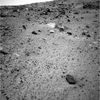
SOL565-2N176524536EFFADAEP0645L0M1.jpgOn the way to the summit: the Paradise of Geologists... (4) - Sol 56553 visiteQuando guardiamo le immagini in arrivo da Marte cerchiamo - è un nostro consiglio - di tenere ben presente che ci sono alcuni milioni di Km che dividono questi due Mondi e, se vogliamo essere pragmatici, dobbiamo anche ritenere fortemente improbabile (se non addirittura azzardata) l'eventualità che questi due Mondi, sebbene simili, da certi punti di vista, possano aver dato origine, in tempi diversi, alla stessa Specie Vivente Dominante (ci riferiamo a quella che attualmente popola il Pianeta Terra) ovvero a Specie Viventi Dominanti incredibilmente affini, anche dal punto di vista della loro crescita e dello sviluppo dei loro processi sensoriali, intellettuali, associativi, culturali etc.
Il Rasoio di Okkam ci sarà ancora una volta di aiuto: è più probabile che quanto vediamo circondare il Rover Spirit sia un residuo - ormai divorato (a dir poco) dal Tempo - di una Civiltà affine alla nostra, oppure che si tratti di oggetti/corpi/artifacts/ventifacts assolutamente indigeni, propri ed esclusivi di Marte?
|
|

SOL565-2N176524623EFFADAEP0645R0M1.jpgOn the way to the summit: the Paradise of Geologists... (5) - Sol 56553 visitenessun commento
|
|

Voyager_1A.jpgFarewell...25 visiteOn April 17, 2'26, engineers at NASA’s Jet Propulsion Laboratory (JPL) in Southern California sent commands to shut down an instrument aboard Voyager 1 called the Low-energy Charged Particles experiment, or LECP. The nuclear-powered spacecraft is running low on power, and turning off the LECP is considered the best way to keep humanity’s first interstellar explorer going.
The LECP has been operating almost without interruption since Voyager 1 launched in 1977 — almost 49 years. It measures low-energy charged particles, including ions, electrons, and cosmic rays originating from our solar system and galaxy. The instrument has provided critical data about the structure of the interstellar medium, detecting pressure fronts and regions of varying particle density in the space beyond our heliosphere. The twin Voyagers are the only spacecraft that are far enough from Earth to provide this information.
Like Voyager 2, Voyager 1 relies on a radioisotope thermoelectric generator, a device that converts heat from decaying plutonium into electricity. Both probes lose about 4 watts of power each year. After almost a half-century in space, power margins have grown razor thin, requiring the team to conserve energy by shutting off heaters and instruments while making sure the spacecraft don’t get so cold that their fuel lines freeze.
During a routine, planned roll maneuver on Feb. 27, Voyager 1’s power levels fell unexpectedly. Mission engineers knew any additional drop in power could trigger the spacecraft’s undervoltage fault protection system, which would shut down components on its own to safeguard the probe, requiring recovery by the flight team — a lengthy process that carries its own risks.
The Voyager team needed to act first.
“While shutting down a science instrument is not anybody’s preference, it is the best option available,” said Kareem Badaruddin, Voyager mission manager at JPL. “Voyager 1 still has two remaining operating science instruments — one that listens to plasma waves and one that measures magnetic fields. They are still working great, sending back data from a region of space no other human-made craft has ever explored. The team remains focused on keeping both Voyagers going for as long as possible.”
Far-out plan
The choice of which instrument to turn off next wasn’t made in the heat of the moment. Years ago, the Voyager science and engineering teams sat down together and agreed on the order in which they would shut off parts of the spacecraft while ensuring the mission can continue to conduct its unique science. Of the 10 identical sets of instruments that each spacecraft carries, seven have been shut off so far. For Voyager 1, the LECP was next on that list. The team shut off the LECP on Voyager 2 in March 2025.
Because Voyager 1 is more than 15 billion miles (25 billion kilometers) from Earth, the sequence of commands to shut down the instrument will take 23 or so hours to reach the spacecraft, and the shutdown process itself will take about three hours and 15 minutes to complete. One part of the LECP — a small motor that spins the sensor in a circle to scan in all directions — will remain on. It uses little power (0.5 watts), and keeping it running gives the team the best chance of being able to turn the instrument back on someday if they find extra power.
What comes next
Engineers are confident that shutting down the LECP will give Voyager 1 about a year of breathing room. They are using the time to finalize a more ambitious energy-saving fix for both Voyagers they call “the Big Bang,” which is designed to further extend Voyager operations. The idea is to swap out a group of powered devices all at once — hence the nickname — turning some things off and replacing them with lower-power alternatives to keep the spacecraft warm enough to continue gathering science data.
The team will implement the Big Bang on Voyager 2 first, which has a little more power to spare and is closer to Earth, making it the safer test subject. Tests are planned for May and June 2026. If they go well, the team will attempt the same fix on Voyager 1 no sooner than July. If it works, there is even a chance that Voyager 1’s LECP could be switched back on.MareKromium
|
|

SOL4887-NLB_831328705EDR_S1220000NCAM00593M_.jpgNevado Sajama - Horizon (Sol 4887)20 visiteThis image was taken by the Left Navigation Camera onboard NASA's Mars Rover Curiosity on Sol 4887 (2026-05-06 - 09:48:49 UTC).MareKromium
|
|

SOL1717-PIA26699_figA.jpgCrocodile Bridge19 visiteNASA’s Perseverance Mars rover used its Mastcam-Z camera system to capture this 360-degree panorama of a region nicknamed “Crocodile Bridge” on Jezero Crater’s rim. The panorama is made up of 980 images, 971 of which were taken on Dec. 18, 2025, the 1,717th Martian day, or sol, of the mission. An additional nine were taken on Jan. 25, 2026, Sol 1,754. This natural-color view has been processed to show the landscape as the human eye would see it.
Jezero Crater’s rim and the regions around it hold some of the oldest rocks anywhere in the solar system; they serve as time capsules of the Red Planet’s early history, when its crust and atmosphere were still forming. No terrain this ancient exists on Earth, where tectonic plates constantly recycle the surface. (Mars lacks tectonic plates, allowing some of this very old material to be preserved.)
“Crocodile Bridge” represents a transition into an area nicknamed “Lac de Charmes,” which Perseverance will explore for several months later this year.MareKromium
|
|
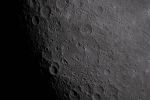
0018-Hertzprung_Basin_Rim.jpgVavilov Crater Along the Hertzsprung Basin Rim15 visiteart002e012093 (April 6, 2026) - Hertzsprung Basin comes into view with its distinctive two concentric rings of mountains, revealing the scale of this ancient impact structure.
Near the lower left, Vavilov crater — identified by its Central Peak — stands out, a feature often described by the Artemis II crew during their Lunar Fly-by.MareKromium
|
|
| 25353 immagini su 2113 pagina(e) |
 |
|
|
|
|
|
|
|
|
2112 |
|
|
|





