| Piú viste |
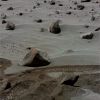
SOL342-MF-right.jpgMorning Frost - Sol 342 (Natural Colors; credits: Dr M. Faccin & Lunexit)54 visitenessun commentoMareKromium
|
|

Venusian_Clouds_Altimetry-2008-04-03438_Figure_3_H.jpgAltimetry of Venus Clouds' Top54 visiteCaption ESA:"A Venus Monitoring Camera UltraViolet image with a superimposed colour mosaic, showing the altitude of the cloud tops.
The colour mosaic was derived from simultaneous pressure measurements by the Visible and Infrared Thermal Imaging Spectrometer".MareKromium
|
|

Venus_in_UV-2008-04-03438_Figure_1_H.jpgVenus in UV54 visiteCaption ESA:"Venus Monitoring Camera image taken in the UltraViolet (0.365 micrometres), from a distance of about 30.000 Km. This picture shows numerous high-contrast features, caused by an unknown chemical in the clouds that absorbs UltraViolet light, creating the bright and dark zones.
With data from Venus Express, scientists have learnt that the Equatorial Areas on Venus that appear dark in UV Light are Regions of relatively high temperature, where intense convection brings up dark material from below. In contrast, the bright regions at Mid-Latitudes are areas where the temperature in the Atmosphere decreases with depth. The temperature reaches a minimum at the cloud tops suppressing vertical mixing.
This annulus of cold air, nicknamed the ‘cold collar’, appears as a bright band in the UV images".MareKromium
|
|
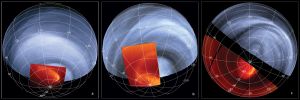
South_Polar_Regions-2008-04-03438_Composite_H.jpgThe Southern Hemisphere of Venus54 visiteCaption ESA:In this mosaic, InfraRed images taken at a wavelength of 5 micrometres (in red) are overlaid on UltraViolet images, taken at 0.365 micrometres.
The bright areas in the IR Images represent the temperatures at the cloud tops (dark regions denote lower temperatures). The oval feature that stands out in these images is the giant eye of a hurricane, or the Polar Vortex, at the Planet’s South Pole. Its centre is displaced from the South Pole and the structure measures about 2000 Km across, rotating around the Pole in about 2.5 days.
The Atmosphere rotates counterclockwise in this figure".MareKromium
|
|

Janus-N00141745to56.gifIn the shadow of Saturn... (GIF-Movie; credits: Dr M. Faccin)54 visitenessun commentoMareKromium
|
|

OPP-SOL2000-PanCam-MF-ALL_FILTERS-3.jpgTwo Views of Block Island - Sol 2000 (ALL Filters Comparison - RAW Natural Colors and MULTISPECTRUM Natural Colors; credits: Dr M. Faccin & Lunexit)54 visitenessun commentoMareKromium
|
|

Rhea-PIA11550.jpgRhea (Natural Colors; credits: Lunexit)54 visiteCaption NASA:"The battered features of the moon Rhea, seen at low phase, appear washed out by the Sun.
This view looks toward the Saturn-facing side of Rhea at a Sun-Rhea-Spacecraft, or Phase, Angle of 15°. To see Rhea at an even lower phase angle -- near opposition -- see PIA10542.
North on Rhea is up and rotated 7° to the left.
The image was taken in Visible Light with the Cassini spacecraft narrow-angle camera on May 26, 2009. The view was obtained from a distance of approx. 1,4 MKM (such as about 870.000 miles) from Rhea.
Image scale is roughly 9 Km (approx. 5,5 miles) per pixel".MareKromium
|
|

TheRings-GIF-W00059891.gifSaturn's "Moons-Carousel" (GIF-Movie; credits: Dr G. Barca)54 visitenessun commentoMareKromium
|
|

OPP-SOL2001-MF-LXT-2.jpgBlock Island in possible True Colors - Sol 2001 (credits: Dr M. Faccin)54 visitenessun commentoMareKromium
|
|
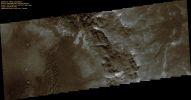
Dunes-TerraCimmeria-20090914a.jpgDunefield in Terra Cimmeria (Natural Colors; credits: Lunar Explorer Italia)54 visitenessun commentoMareKromium
|
|
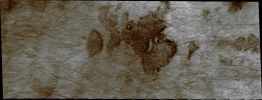
DustDevilTracks-Aonia_Terra-20090916a.jpgDust Devil Tracks in Aonia Terra (Natural Colors; credits: Lunar Explorer Italia)54 visiteCoord.: 62,7° South Lat. and 253,3° East Long.MareKromium
|
|

Propeller-PIA11672-b.jpgGiant "Propeller" in the A-Ring (EDM)54 visiteIt has since become a growing realization resulting from Cassini’s exploration of Saturn that the objects forming Saturn’s Rings very likely span the full spectrum of sizes, from the smallest dust-sized ring particles to the ring-moons like Daphnis and 29-Km-wide (18-mile-wide) Pan - a significant advance in divining the origin of Saturn’s Rings.
The novel illumination geometry that accompanies equinox lowers the Sun’s angle to the Ring-Plane, significantly darkens the Rings and causes out-of-plane structures to cast long shadows across the Rings. (The Rings have been brightened in this image to enhance visibility)
These scenes are possible only during the few months before and after Saturn’s Equinox which occurs only once in about 15 Earth years.
This view looks toward the Northern Side of the Rings from about 20° above the Ring-Plane.
The image was taken in Visible Light with the Cassini Spacecraft narrow-angle camera on Aug. 13, 2009.
This view was acquired at a distance of approx. 1,2 MKM (about 746.000 miles) from Saturn and at a Sun-Saturn-Spacecraft, or Phase, Angle of 87°.
Image scale is roughly 7 Km (about 4,5 miles) per pixel.MareKromium
|
|
| 25353 immagini su 2113 pagina(e) |
 |
|
|
|
|
2087 | |
|
|
|
|





