| Piú viste |
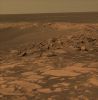
OPP-SOL901-PIA08753-011.jpgBeagle Crater and 360° Panorama from Sol 901 through 904 (10)54 visitenessun commento
|
|

OPP-SOL901-PIA08753-012.jpgBeagle Crater and 360° Panorama from Sol 901 through 904 (11)54 visitenessun commento
|
|
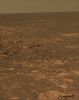
OPP-SOL901-PIA08753-013.jpgBeagle Crater and 360° Panorama from Sol 901 through 904 (12)54 visitenessun commento
|
|
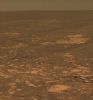
OPP-SOL901-PIA08753-014.jpgBeagle Crater and 360° Panorama from Sol 901 through 904 (13)54 visitenessun commento
|
|
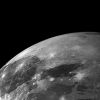
500-PIA02233.jpgGanymede (HR)54 visiteCaption NASA originale:"This picture of Ganymede was taken from a range of about 272.000 Km. The center of the picture lies at 13° Latitude and 359° Longitude. Many bright impact craters are shown that have radial ejecta patterns. These rays lie across and therefore are younger than the bright and dark background material. Many older impact craters are shown that have lost their rays probably by impact erosion. The bright background areas contain grooves and ridges that may be caused by faulting of the surface materials".
|
|
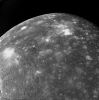
501-vg1_1641854.jpgGanymede (HR)54 visitenessun commento
|
|

504-PIA01516.jpgGanymede (natural colors and HR)54 visiteCaption NASA originale:"This color picture as acquired by Voyager 1 during its approach to Ganymede, at ranges between about 230 to 250.000 Km. The image shows detail on the surface with a resolution of 4,5 Km/px.
This picture shows the two distinctive types of terrain found by Voyager: the darker ungrooved regions and the lighter areas which show the grooves or fractures in abundance. The most striking features are the bright ray craters which have a distinctly "bluer" color appearing white against the redder background. Ganymede's surface is known to contain large amounts of surface ice and it appears that these relatively young craters have spread bright fresh ice materials over the surface. Likewise, the lighter color and reflectivity of the grooved areas suggests that here too, there is cleaner ice. We see ray craters with all sizes of ray patterns, ranging from extensive systems of the crater in the northern part of this picture, which has rays at least 300-500 kilometers long, down to craters which have only faint remnants of bright ejecta patterns".
|
|

505-PIA00357.jpgGanymede (Enhanced Natural Colors and HR; credits: NASA/JPL)54 visiteCaption NASA originale:"This color picture of Ganymede is relevant to a Region located at 30° South Lat. and 180° West Long. It shows features as small as 6 Km (about 3,7 miles) across. Notice here a bright halo impact crater that shows the fresh material thrown out of the crater. In the background it can be seen a bright grooved terrain that may be the result of the shearing of the surface materials along fault planes.
The dark background material is the ancient heavily cratered terrain -- probably the oldest material preserved on the surface of Ganymede".
|
|

507-PIA01517.jpgThe equatorial Region of Ganymede54 visiteCaption NASA originale:"This picture is relevant to a Regione near the Equator of Ganymede, and has relatively subdued colors in the visible part of the spectrum. The most striking features are the bright ray craters which have a distinctly bluer color, appearing white against the redder background.
Ganymede's surface is known to contain large amounts of surface ice and it appears that these relatively young craters have spread bright fresh ice materials over the surface.
Likewise, the lighter color and reflectivity of the grooved areas suggest that here, too, there is cleaner ice. We see ray craters with all sizes of ray patterns, ranging from extensive systems, down to craters which have only faint remnants of bright ejecta patterns.
This variation suggests that, as on the Moon, there are processes which act to darken ray material - probably the so-called "gardening", by micrometeoroid impacts".
|
|

OPP-SOL943-1N211904011EFF7600P1968R0M1.jpgThe "Rim" of Victoria Crater (1) - Sol 94354 visitenessun commento
|
|

OPP-SOL943-1F211903757EFF7600P1151L0M1.jpgStraight forward to Victoria (2) - Sol 94354 visitenessun commento
|
|

OPP-SOL943-1P211905036EFF7600P2382R2M1.jpgApproaching the "rim" of Victoria (1) - Sol 94354 visiteQuattro immagini PanCam, ottenute fra le 14:24 e le 14:31 MLT, le quali ci mostrano il bordo ("rim") del Cratere Victoria, ora distante solo poco più di 100 metri.
Per correttezza e completezza, informiamo i Lettori che tutti e quattro i frames in oggetto sono stati "digitalmente" ripuliti, in modo da rendere l'immagine meno sgradevole (il prodotto "NASA-raw" era davvero pessimo).
|
|
| 25353 immagini su 2113 pagina(e) |
 |
|
|
|
|
2062 | |
|
|
|
|





