| Piú viste |
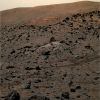
SOL1174-1.jpgGusev's Landscape - Sol 1174 (natural colors; credits: Dr G. Barca)55 visitenessun commentoMareKromium
|
|
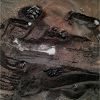
SOL1181-1.jpgRover Tracks, Colourful Dust and White Sulphates - Sol 1181 (True Colors; credits: Dr G. Barca)55 visitenessun commentoMareKromium
|
|
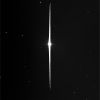
Enceladus-W00048456.jpgJust like a "Star"!55 visiteUno strabiliante "effetto goccia" (da over-saturation) per l'oggetto celeste la cui albedo è la più alta nell'intero Sistema Solare: Encelado, la "Luna di Neve".
Caption NASA:"W00048456.jpg was taken on August 11, 2008 and received on Earth August 11, 2008. The camera was pointing toward ENCELADUS that, at the time, was approx. 444.673 Km away.
The image was taken using the CL1 and CL2 filters and it has not been validated or calibrated".MareKromium
|
|
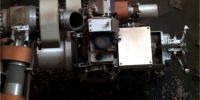
SOL1280-1.jpgSpirit's Gears - Sol 1280 (natural colors; credits: Dr G. Barca)55 visitenessun commentoMareKromium
|
|
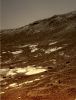
OPP-SOL1615-1P271554548ESF90DXP2447R5M1.jpgFrom inside Victoria - Sol 1615 (trichromatic version; credits: Lunexit)55 visitenessun commentoMareKromium
|
|

OPP-SOL749-1.jpgLayered Rocks in Meridiani Planum - Sol 749 (natural colors; credits: Dr G. Barca)55 visitenessun commentoMareKromium
|
|

OPP-SOL288-1.jpgEndurance Paving and Inner Rim - Sol 288 (natural colors; credits: Dr G. Barca)55 visitenessun commentoMareKromium
|
|
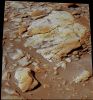
SOL284-MF.jpgHoles, holes and more holes! - Sol 284 (natural colors; credits: Dr M. Faccin)55 visitenessun commentoMareKromium
|
|
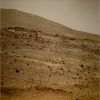
SOL1477-1.jpgDark Sky over Gusev Crater - Sol 1477 (natural colors; credits: Dr G. Barca)55 visitenessun commentoMareKromium
|
|

SOL590-PIA06340.gifMartian Night - Sol 340 (GIF-Movie)55 visiteTaking advantage of extra solar energy collected during the day, NASA's Mars Exploration Rover Spirit recently settled in for an evening of stargazing, photographing the two moons of Mars as they crossed the night sky. In this view, the Pleiades, a star cluster also known as the "Seven Sisters," is visible in the lower left corner. The bright star Aldebaran and some of the stars in the constellation Taurus are visible on the right. Spirit acquired this image the evening of Sol 590 (such as August, 30th, 2005).
The image on the right provides an enhanced-contrast view with annotation. Within the enhanced halo of light is an insert of an unsaturated view of Phobos taken a few images later in the same sequence.
"It is incredibly cool to be running an observatory on another planet" said planetary scientist Jim Bell of Cornell University, Ithaca, N.Y., lead scientist for the panoramic cameras on Spirit and Opportunity. In this annotated animation, both martian moons, Deimos on the left and Phobos on the right, travel across the night sky in front of the constellation Sagittarius. Part of Sagittarius resembles an upside-down teapot. In this view, Phobos moves toward the handle and Deimos moves toward the lid. Phobos is the brighter object on the right; Deimos is on the left. Each of the stars in Sagittarius is labeled with its formal name. The inset shows an enlarged, enhanced view of Phobos, shaped rather like a potato with a hole near one end. The hole is the large impact creater Stickney, visible on the moon's upper right limb.
On Mars, Phobos would be easily visible to the naked eye at night, but would be only about one-third as large as the full Moon appears from Earth. Astronauts staring at Phobos from the surface of Mars would notice its oblong, potato-like shape and that it moves quickly against the background stars. Phobos takes only 7 hours, 39 minutes to complete one orbit of Mars. That is so fast, relative to the 24-hour-and-39-minute sol on Mars (the length of time it takes for Mars to complete one rotation), that Phobos rises in the West and sets in the East. Earth's moon, by comparison, rises in the East and sets in the West. The smaller martian moon, Deimos, takes 30 hours, 12 minutes to complete one orbit of Mars.
That orbital period is longer than a martian Sol, and so Deimos rises, like most Solar System moons, in the East and sets in the West.
Scientists will use images of the two moons to better map their orbital positions, learn more about their composition and monitor the presence of nighttime clouds or haze. Spirit took the five images that make up this composite with the panoramic camera, using the camera's broadband filter, which was designed specifically for acquiring images under low-light conditions. MareKromium
|
|

OPP-SOL1621-1_copia2.jpgVictoria's Paving - Sol 1621 (natural colors; credits: Dr G. Barca)55 visitenessun commentoMareKromium
|
|
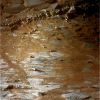
OPP-SOL1487-1.jpgColours' Variety... - Sol 1487 (True Colors; credits: Dr G. Barca)55 visitenessun commentoMareKromium
|
|
| 25353 immagini su 2113 pagina(e) |
 |
|
|
|
|
2049 | |
|
|
|
|





