| Piú viste |
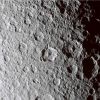
Rhea-W00034593.jpgCraters with Peak near Rhea's Terminator (natural colors; elab. Lunexit)55 visiteCaption NASA:"W00034593.jpg was taken on August 30, 2007 and received on Earth August 30, 2007. The camera was pointing toward RHEA that, at the time, was approx. 8.263 Km away, and the image was taken using the CL1 and CL2 filters.
This image has not been validated or calibrated".MareKromium
|
|

Tethys-N00090942.jpgTethys (natural colors; elab. Lunexit)55 visiteCaption NASA:"N00090942.jpg was taken on August 29, 2007 and received on Earth August 30, 2007.
The camera was pointing toward TETHYS that, at the time, was approx. 50.411 Km away, and the image was taken using the CL1 and CL2 filters. This image has not been validated or calibrated".MareKromium
|
|

Japetus-N00092066.jpgJapetus' Northern Limb (1) - possible natural colors; elab. Lunexit55 visiteCaption NASA:"N00092066.jpg was taken on September 10, 2007 and received on Earth September 12, 2007. The camera was pointing toward Japetus that, at the time, was approximately 72.717 Km away, and the image was taken using the CL1 and CL2 filters. This image has not been validated or calibrated".MareKromium
|
|
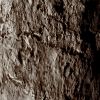
Japetus-N00092239.jpgRough Terrain and Canyons of Japetus (possible natural colors - elab. Lunexit)55 visiteCaption NASA:"N00092239.jpg was taken on September 10, 2007 and received on Earth September 12, 2007. The camera was pointing toward Japetus that, at the time, was approximately 22.984 Km away, and the image was taken using the CL1 and CL2 filters. This image has not been validated or calibrated".MareKromium
|
|

as04-01-131.JPGAS 04-01-0131 - A "Slice" of Earth (6)55 visitenessun commentoMareKromium
|
|
SOL1338-2P245143179EFFAVFUP2514L7M1.jpgSo bright and clean... (1) - Sol 133855 visitenessun commentoMareKromium
|
|

Tethys-PIA08401.jpgThe Edge of Tethys55 visiteThe cold, cratered landscape of Saturn's moon Tethys shines in stark relief in this crescent view. Aside from its obvious aesthetic beauty, this particular Cassini mosaic was obtained mainly to understand important details about how the surface of Tethys reflects light at high phase angles (the Sun-Tethys-Spacecraft viewing angle). The beautiful interplay of light with surface topographic features is an important factor in this regard. The surface is heavily cratered, and at this oblique angle the craters give the surface a highly scalloped appearance.
Unlike some HR crescent views of Saturn's moons, this image truly gives Tethys the appearance of being composed of ice and frost. There appear to be numerous sun glints sparkling across the surface. Some of these might be specular (or mirror-like) reflections off of exposed walls of solid ice inside craters, or they might be uniformly large, frosty or icy-particle covered facets of topography that are so oriented as to give exceptionally bright but diffuse reflections.
The shadows cast by most craters in the scene are not dark, but rather, they are illuminated by light bouncing off of their sunlit walls and those of other craters. This light, which has been scattered multiple times, makes visible some details along the shadowed walls and floors of craters that would not otherwise be visible in this viewing geometry.
This mosaic was assembled from four clear filter, narrow-angle camera images, with low resolution, wide-angle camera data filling a small gap in coverage. The view is an orthographic projection and has a resolution of 211 meters (692 feet) per pixel. An orthographic view is most like the view seen by a distant observer looking through a telescope. North is up.
The view was obtained by the Cassini spacecraft on June 29, 2007, from a distance of approximately 38.000 Km (about 24.000 miles) and at a Sun-Tethys-Spacecraft, or phase, angle of 152°.
MareKromium
|
|

The_Rings-PIA08389_fig1.jpgThe Rings55 visiteA scan across Saturn's incredible halo of ice rings yields a study in precision and order. This natural color mosaic was acquired by the Cassini spacecraft as it soared 39 degrees above the unilluminated side of the Rings.
Major named gaps are labeled at the top. The main rings themselves, along with the F-Ring, are labeled at the bottom, along with their inner and outer boundaries.
The view combines 45 images -- 15 separate sets of red, green and blue images -- taken over the course of about 2,5 hours, as Cassini scanned across the Rings.
The images in this view were obtained on May 9, 2007, at a distance of approx. 1,1 MKM (about 700,000 miles) from Saturn. Image scale in the radial (horizontal) direction is about 6 Km (approx. 4 miles) per pixel.MareKromium
|
|
SOL1346-2P245863465EFFAVHPP2402L7M1.jpgLate in the Day (1) - Sol 1346 (natural colors - elab. Lunexit)55 visitenessun commentoMareKromium
|
|

ISD_highres_AS13_AS13-62-8901.jpgAS 13-62-8901 - Reflections?55 visiteCaption L&PI:"Very distant Earth crescent".MareKromium
|
|
OPP-SOL1351-1P248118060EFF8788P2267R1M1-2.jpgVictoria's Paving (Light-Orange Filter OFF - natural colors; elab. Lunexit) - Sol 135155 visitenessun commentoMareKromium
|
|
OPP-SOL1351-1P248118060EFF8788P2267R1M1-1.jpgVictoria's Paving (Light-Orange Filter ON - natural colors; elab. Lunexit) - Sol 135155 visitenessun commentoMareKromium
|
|
| 25353 immagini su 2113 pagina(e) |
 |
|
|
|
|
2046 | |
|
|
|
|





