| Piú viste |
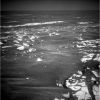
OPP-SOL891-1N207287630EFF74V1P1825R0M1.jpgRolling on the "Paving" of Beagle Crater (1) - Sol 89155 visitenessun commento
|
|

IDA&DACTYL-gal_p44131.jpgAsteroid Ida and Dactyl (context image - natural colors)55 visitenessun commento
|
|

Proteus-vg2_1138920.jpgProteus (HR)55 visitenessun commento
|
|

Triton-vg2_1138639.jpgTriton (HR)55 visitenessun commento
|
|
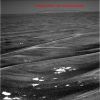
OPP-SOL907-1P208706643EFF746AP2360L2M1.jpgThe "rim" of Victoria Crater, in the distance (2) - Sol 90755 visitenessun commento
|
|
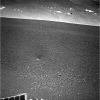
OPP-SOL907-1N208705917EFF746AP1962L0M1-A.jpgMini-crater or Martian Sandglass? (context image) - Sol 90755 visitenessun commento
|
|

97-SMART_1_impact_sites_mineralcolours.jpgThe "Impact Site" of SMART-1 (mineralogy)55 visitenessun commento
|
|
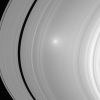
The Rings-PIA08247.jpgOpposition "Surge" on the A-Ring55 visiteThe Opposition Effect exists because of two contributing factors: one is due to the fact that the shadows of Ring particles directly opposite the Sun from Cassini - the Region of Opposition - fall completely behind the particles as seen from the spacecraft. These shadows are thus not visible to the spacecraft: all ring particle surfaces visible to the spacecraft in this image are in Sunlight and therefore bright. Much farther away from the Region of Opposition, the Ring particle shadows become more visible and the scene becomes less bright. The brightness falls off in a circular fashion around the Opposition Point. The main factor to the Opposition Surge in this image is an optical phenomenon called "coherent backscatter": here, the electromagnetic signal from the rays of scattered Sunlight making its way back to the spacecraft is enhanced near the Region of Opposition because, instead of canceling, the electric and magnetic fields comprising the scattered radiation fluctuate in unison.
|
|

Tethys-PIA08254-1.jpgMelanthius Crater (detail mgnf)55 visiteCaption NASA:"Cassini looks into the 245-Km (150-mile) wide crater Melanthius in this view of the Southern Terrain on Tethys. The crater possesses a prominent cluster of peaks in its center which are relics of its formation.
Notable here is a distinct boundary in crater abundance -- the cratering density is much higher in the farthest Western Terrain (left side of the image) than elsewhere.
North on Tethys is up and rotated 45° to the left.
The image was taken in visible light with the Cassini spacecraft narrow-angle camera on July 23, 2006 at a distance of approx. 120.000 Km (such as about 75.000 miles) from Tethys and at a Sun-Tethys-spacecraft, or phase, angle of 29°.
Image scale is roughly 715 mt (such as about 2,345 feet) per pixel".
|
|
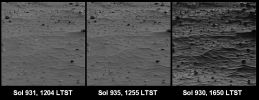
SOL930-935-P2763_L4_montage-A945R1.jpgMeaningful Shadows... (2) - Soles 930/93555 visiteSpirit acquired the single-frame images of sand ripples with the PanCam turned to an azimuth of 290° (West-NorthWest).
|
|

The Rings-PIA08257.jpgThe Music of Pan...The Waves in the Rings...55 visiteCaption NASA:"The Encke Gap displays gentle waves in its inner and outer edges that are caused by gravitational tugs from the small moon Pan. These scalloped edges were captured in a dramatic image taken by Cassini during its insertion into Saturn orbit in 2004.
The Encke Gap is a 325-Km (about 200-mile) wide division in Saturn's outer A-Ring.
Pan (26 Km, or approx. 16 miles across) orbits squarely in the center of this gap.
The original image was stretched in the horizontal direction by a factor of four to exaggerate the amplitude of the waves, then reduced to half size and cropped to focus on the gap.
The image was taken in visible light with the Cassini spacecraft narrow-angle camera on July 23, 2006 at a distance of approx. 290.000 Km(such as about 180.000 miles) from Saturn.
Scale in the original image was roughly 1 Km (about 0,6 mile) per pixel".
|
|

The Rings-PIA08259.jpgGravitational Disturbances55 visiteCaption NASA originale:"The clumpy disturbed appearance of the brilliant F-Ring constantly changes. The irregular structure of the Ring is due, in large part, to the gravitational perturbations on the ring material by one of Saturn's moons, Prometheus (about 102 Km, or 63 miles across).
Interior to the F-Ring, the A-Ring bears a striking resemblance to a classic grooved, vinyl record. Visible here are the Keeler Gap (about 42 Km, or 26 miles wide) and the Encke Gap (about 325 Km, or 200 miles wide).
The image was taken using a spectral filter sensitive to wavelengths of infrared light centered at 862 nnmts. The view was acquired with the Cassini spacecraft narrow-angle camera on July 26, 2006 at a distance of approx. 1,5 MKM (about 900.000 miles) from Saturn and at a Sun-Saturn-spacecraft, or phase, angle of 141°. Image scale is roughly 8 Km (such as about 5 miles) per pixel".
|
|
| 25353 immagini su 2113 pagina(e) |
 |
|
|
|
|
1990 | |
|
|
|
|





