| Piú viste |
MarteARTE-00.jpgUnusual Cracks55 visiteUn piccolo tributo di Lunar Explorer Italia al nostro Caro Amico e Socio "Roby", che ci scrive dalla vicina Svizzera.
Si tratta di una serie di frames che ci porteranno a vedere MOLTO da vicino alcuni rilievi superficiali che noi abbiamo battezzato, a causa della loro incredibile (talvolta) stranezza, come "Pseudo Rocce".
Secondo alcuni, si tratta di "artifacts" (ovvero "manufatti": opere artificiali lasciate - rectius: rimaste abbandonate - sulla Superficie del Pianeta Rosso da coloro che, un tempo, lo abitavano. In accordo a questa "visione" (propria della Scuola del Prof. R. Hoagland), l'intero Marte viene equiparato ad una sorta di (gigantesca) "Pompei": e cioè un mondo morto da indagare e da riscoprire, al fine di accertare quali fossero le caratteristiche ed i livelli evolutivi raggiunti dalla Civiltà che lo abitava.
Secondo altri, invece, si tratta di semplici rilievi bizzarri.
E secondo altri ancora, infine, la maggior parte dei rilievi che osserviamo sarebbero naturali ma qualcosa, effettivamente, potrebbe avere origini diverse (pensate alla Silver Sphere, ad esempio)...
Noi, nella consapevolezza che la Materia trattata è difficile ed ambigua, ringraziamo Roby di cuore (per la fiducia e la passione dimostrate) e pubblichiamo i suoi findings commentandoli, ove possibile, e lasciando a Voi il giudizio finale.MareKromium
|
|
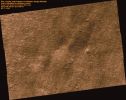
PSP_002202_2250_RED_browse-00.jpgPits, Cracks, and Polygons in Western Utopia Planitia (context image) - Elab. Lunexit55 visiteUtopia Planitia is part of the Great Northern Lowlands of Mars, where there may have been an ancient ocean.
The pits, cracks and polygons in Utopia have been interpreted as due to some combination of temperature variations in ice-rich ground, sublimation of ground ice, and collapse into subsurface voids.
This HiRISE image reveals many new details, including an abundance of boulders about 1 mt in diameter over the entire region (see the extr-detail mgnf).
The infrared color of HiRISE reveals two types of materials: the brighter and yellowish areas are probably dusty and the darker and bluer areas are probably coarser particles--sand and rocks.MareKromium
|
|

Tethys-N00085058.jpgConjunction (3)55 visitenessun commentoMareKromium
|
|

Tethys-N00085054.jpgConjunction (1)55 visitenessun commentoMareKromium
|
|

021-Vesta-3.jpgMoments of 4-Vesta55 visiteTo prepare for the Dawn spacecraft's visit to Vesta, astronomers used Hubble's Wide Field Planetary Camera 2 to snap new images of the asteroid. These images were taken on May 14 and 16, 2007. Each frame shows time in hours and minutes based on Vesta's 5,34-hour rotation period. Using Hubble, astronomers mapped Vesta's Southern Hemisphere, a Region dominated by a giant impact crater formed by a collision billions of years ago. The crater is 285 miles (456 Km) across, which is nearly equal to Vesta's 330-mile (530-Km) diameter.
Hubble's sharp "eye" can see features as small as about 37 miles (60 Km) across. The images show the difference in brightness and color on the asteroid's surface. These characteristics hint at the large-scale features that the Dawn spacecraft will see when it arrives at Vesta in 2011.
Hubble's view reveals extensive global features stretching longitudinally from the Northern Hemisphere to the Southern Hemisphere.
The images also show widespread differences in brightness in the east and west, which probably reflects compositional changes. Both of these characteristics could reveal volcanic activity throughout Vesta. The size of these different regions varies. Some are hundreds of miles across.
The brightness differences could be similar to the effect seen on the Moon, where smooth, dark regions are more iron-rich than the brighter highlands that contain minerals richer in calcium and aluminum. When Vesta was forming 4.5 billion years ago, it was heated to the melting temperatures of rock. This heating allowed heavier material to sink to Vesta's center and lighter minerals to rise to the surface.
Astronomers combined images of Vesta in two colors to study the variations in iron-bearing minerals. From these minerals, they hope to learn more about Vesta's surface structure and composition. Astronomers expect that Dawn will provide rich details about the asteroid's surface and interior structure.
MareKromium
|
|
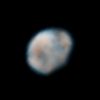
021-Vesta-2.jpg4-Vesta, from HST55 visiteHubble observation of Vesta: picture taken with the Wide Field Planetary Camera 2 on May 14 and 16, 2007.
MareKromium
|
|

Enceladus-N00085267.jpgEnceladus (2) - (natural colors - elab. Lunexit)55 visiteCaption NASA:"N00085267.jpg was taken on June 28, 2007 and received on Earth June 29, 2007. The camera was pointing toward Enceladus that, at the time, was approx. 293.113 Km away. The image was taken using the CL1 and IR1 filters.
This image has not been validated or calibrated".MareKromium
|
|

as12-46-6830.JPGAS 12-46-6830 - The "Small" Mound55 visite118:06:36 MT - Pete (Conrad) moves farther to his right to take this view to the South.
MareKromium
|
|

as17-147-22509.JPGAS 17-147-22509 - Up-Sun55 visiteEVA-1 at the LM. 4 o'clock pan. Up-Sun with the crater that Gene (Cernan) thought it might be "Poppie".
Note the footprints he made when he walked out to it during the first few minutes of the EVA.MareKromium
|
|

as17-147-22601.JPGAS 17-147-22601 - ALSEP Panorama (1)55 visiteALSEP pan. Up-Sun.MareKromium
|
|

as17-148-22652.JPGAS 17-148-22652 - The Blue Planet is there... (1)55 visitenessun commentoMareKromium
|
|

as17-148-22655.JPGAS 17-148-22655 - The Blue Planet is there... (4)55 visitenessun commentoMareKromium
|
|
| 25353 immagini su 2113 pagina(e) |
 |
|
|
|
|
1965 | |
|
|
|
|





