| Piú viste |

OPP-SOL122.jpgBerries near the Martian Sandglass - Sol 122 (natural colors and MULTISPECTRUM; credits: Dr Gianluigi Barca & Lunexit)55 visitenessun commentoMareKromium
|
|

OPP-SOL344-2.jpgWater Droplets INSIDE the Heat-Shield? - Sol 344 (context frame + extra-detail mgnf; credits: Dr M. Faccin)55 visitenessun commentoMareKromium
|
|

The_Rings-PIA10082.jpgMittens55 visiteCaption NASA:"This is an artist concept of the view from Cassini during the star occultation that detected "Mittens," the small object to the right of the star. As Cassini watched the star pass behind Saturn's F-Ring (foreground), the star blinked out when Mittens blocked it, indicating it may be a solid moonlet".MareKromium
|
|
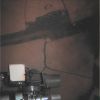
OPP-SOL1377-5.jpgMI and Victoria's Paving (natural colors e MULTISPECTRUM; credits: Dr Gianluigi Barca & Lunexit)55 visitenessun commentoMareKromium
|
|

as16-107-17473.JPGAS 16-107-17473 - The "Sample Container"55 visiteThis picture is showing the Rover in the background, while the SCB that John Young brought to hold individual sample bags is in the foreground. Charlie is at the back of the Rover. Note the footprints that John made as he made his way up to the Station 4 Crater.
MareKromium
|
|
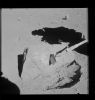
as16-107-17579.JPGAS 16-107-17579 - After the sampling...55 visite148:18:45 MT - In this "after" photograph of the sample John Young chipped off the tipped boulder, Charlie Duke is pointing to the place from which John removed the chip.
MareKromium
|
|
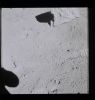
as16-107-17570.JPGAS 16-107-17570 - Station 9 Boulder55 visiteJohn Young has moved around to the East Side of the Station 9 Boulder.
MareKromium
|
|

MarteARTE-25.JPGBoard-Rock55 visitenessun commentoMareKromium
|
|

SOL1402-2P250824985EFFAW9DP2432R7M1.jpgThe colors around Spirit (MULTISPECTRUM; credits: Lunexit)55 visitenessun commentoMareKromium
|
|

SOL1402-2N250828905EFFAW__P1925R0M1.jpgSpirit's on the rocks... - Sol 1402 (MULTISPECTRUM; credits: Lunexit)55 visitenessun commentoMareKromium
|
|

Neptune-PIA09927.jpgThe "Hot" South Pole of Neptune55 visiteCaption NASA:"These thermal images show a "hot" South Pole on the Planet Neptune. These warmer temperatures provide an avenue for Methane to escape out of the deep atmosphere.
The images were obtained with the Very Large Telescope in Chile, using an imager/spectrometer for mid-infrared wavelengths on Sept. 1 and 2, 2006.
The telescope is operated by the European Organization for Astronomical Research in the Southern Hemisphere (known as ESO).
Scientists say Neptune's South Pole is "hotter" than anywhere else on the Planet by about 10° Celsius (50 degrees Fahrenheit). The average temperature on Neptune is about -200° Celsius (-392 degrees Fahrenheit).
The upper left image samples temperatures near the top of Neptune's troposphere (near 100 millibar pressure, which is 1/10th the Earth atmospheric pressure at sea level). The hottest temperatures are indicated at the lower part of the image, at Neptune's south pole (see the graphic at the upper right).
The lower two images, taken 6.3 hours apart, sample temperatures at higher altitudes in Neptune's stratosphere. They do show generally warmer temperatures near, but not at, the south pole. They also show a distinct warm area which can be seen in the lower left image and rotated completely around the back of the planet and returned to the earth-facing hemisphere in the lower right image".MareKromium
|
|
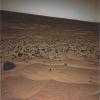
SOL335-2N156104056EFF9946P0757R0M1.jpgSand dunes near Spirit, on Sol 335 (2 - MULTISPECTRUM; credits: Lunexit)55 visitenessun commentoMareKromium
|
|
| 25353 immagini su 2113 pagina(e) |
 |
|
|
|
|
1958 | |
|
|
|
|





