| Piú viste |

ZZ-ZZ-Nhsv3-060808_NHpassSaturn.jpgWhere's New Horizons? June 2008 - Full Trajectory: Overhead View55 visiteNew Horizons crossed the orbit of Saturn on June 8, passing yet another interplanetary milepost on its voyage to Pluto and the icy environs of the Kuiper Belt.
Spinning in healthy, electronic hibernation, New Horizons reached a distance of 10.06 AU (Astronomical Units; such as about 935 MMs or about 1,5 BKM) from the Sun at 10:00 UT (Universal Time), becoming the first spacecraft to journey beyond Saturn’s orbit since Voyager 2 passed the ringed planet nearly 27 years ago. In fact, Voyager 1 and 2, at the edge of the Sun’s Heliosphere some 100 AU away, are the only Spacecrafts operating farther out than New Horizons.
New Horizons reached Saturn's distance just two years and four months after launch - by far a faster transit to Saturn than any previous spacecraft. (Voyager 1, the previous record holder, made the trip in approximately three years and two months)
New Horizons has crossed the orbits of three planets since its launch in January 2006, though only one – Jupiter, in February 2007 – was close enough for a gravity boost and for the Spacecraft to study. Saturn is more than 1,4 BMs (about 2,3 BKM) from New Horizons at present.
After a productive two-week series of system checks, maintenance activities, and software and command uploads,the Spacecraft is humming through the Outer Solar System at a speed of 40.850 miles (65.740 Km) per hour. The New Horizons Team expects to keep the Spacecraft in hibernation until Sept. 2, 2008. MareKromium
|
|

OPP-SOL421-2.jpgMarks on the Berries - Sol 421 (natural colors + MULTISPECTRUM; credits: Dr G. Barca & Lunexit)55 visitenessun commentoMareKromium
|
|

PHOE-SOL022-lg5762-5764-5771.jpgSnow-White - Sol 22 (Superdefinition; credits: Dr G. Barca)55 visitenessun commentoMareKromium
|
|
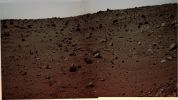
SOL1398-Panoramic.jpgRocky Panorama - Sol 1398 (credits: Dr G. Barca & Lunexit)55 visitenessun commentoMareKromium
|
|
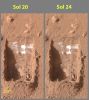
PHOE-SOL020-024-Changes_v3.jpgEvaporation or Sublimation? Water or CO2? (approximate colors; credits: NASA)55 visiteCaption NASA:" Compare these two close-up pictures taken on Sol 20 (left) and Sol 24 of a trench dug in the Martian surface by NASA's Phoenix Lander. Those Soles of the Phoenix Mission, correspond to June 15 and 18, 2008, on planet Earth. Light-colored, dice-sized chunks, visible in the lower left shadow region of the trench in the Sol 20 image have vanished by Sol 24 -- a strong indication that the chunks were ice uncovered by digging the shallow trench. The vanishing act likely demonstrates the sublimation of ice in the trench, a process similar to evaporation, in which the ice went directly from solid to gas after it was exposed to sunlight and the thin, dry Martian atmosphere". MareKromium
|
|

OPP-SOL029-1P130764367RAD0454P2575L234567C1.jpgMonochrome Mars - Sol 29 (Multispectral Color Imagery; credits: Lyle.org)55 visitenessun commentoMareKromium
|
|
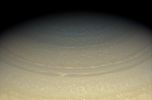
Saturn-PIA10414.jpgNorthern Blue (natural colors; credits: NASA/JPL/Space Science Institute)55 visiteCaption NASA:"Golden hues continue to creep Northward on Saturn, subduing the blues and grays the Cassini Spacecraft witnessed upon arrival in mid-2004. This view was acquired from about 27° above the Ring-Plane.
Images taken using red, green and blue spectral filters were combined to create this natural color view. The images were acquired with the Cassini Spacecraft wide-angle camera on May 23, 2008 at a distance of approx. 1,3 MKM (such as about 780.000 miles) from Saturn.
Image scale is roughly 71 Km (about 44 miles) per pixel".MareKromium
|
|
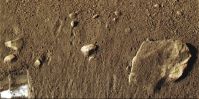
PHOE-SOL037-lg9235-9236-9241.jpgSmall Rocks, Pebbles and Ice - Sol 37 (credits: Dr G. Barca)55 visitenessun commentoMareKromium
|
|
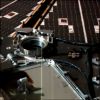
PHOE-SOL039-lg9931-9932-9933.jpgSolar Panels, Color Wheel, Cables and various Circuits - Sol 39 (natural colors; credits: Dr G. Barca)55 visitenessun commentoMareKromium
|
|
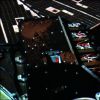
PHOE-SOL039-lg9922-9929-9930.jpgSolar Panels and Scoop - Sol 39 (natural colors; credits: Dr G. Barca)55 visitenessun commentoMareKromium
|
|
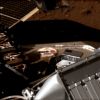
PHOE-SOL039-lg9875-9876-9877.jpgPhoenix Foreshortening - Sol 39 (natural colors; credits: Dr G. Barca)55 visitenessun commentoMareKromium
|
|

PHOE-SOL039-lg_9855.jpgIs that "Us"?!? - Sol 39 (MULTISPECTRUM-2; credits: Lunexit)55 visiteAncora un piccolo oggetto nel Cielo di Vastitas che, nonostante la scarsisima qualità del fotogramma, si risolve in un disco di color bianco.
Sappiamo che NON si tratta di un image-artifact ed allora, ci chiediamo, che cosa potrà mai essere?
Phobos? Diremmo di no, poichè la forma di Phobos è inconfondibile...
Deimos? No: troppo luminoso.
E se fosse la Terra? E se fossimo "noi"?!? In altre immagini (Spirit e Pathfinder), la Terra vista da Marte appariva proprio così e allora...Chissà.
Non ci resta che aspettare che gli Amici di Pasadena ci illuminino d'immenso...
M.L.T.: 13:30
Camera Elevation: 44,7805°
Azimuth: 9,16367°MareKromium
|
|
| 25353 immagini su 2113 pagina(e) |
 |
|
|
|
|
1956 | |
|
|
|
|





