| Piú viste |
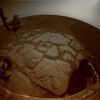
OPP-SOL545-1F176575841EFF5847P1148R0M1-2.jpgThe "Mark", on the Martian Paving... - Sol 545 (natural colors; credits: Lunexit)55 visitenessun commentoMareKromium
|
|

SOL927-1.jpgSolar Panels and Salt - Sol 927 (possible True Colors; credits: Dr G. Barca & Lunexit)55 visitenessun commentoMareKromium
|
|
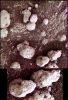
OPP-SOL0199-MF.JPGSigns of Movement? - Sol 199 (Hi-Def3-D - credits and Copyright: Dr M. Faccin and Lunar Explorer Italia)55 visitenessun commentoMareKromium
|
|

Tethys-PIA10506.jpgIthaca Chasma (natural colors - MULTISPECTRUM; credits: Lunexit)55 visiteCaption NASA:"The prominent crater Telemachus sits within the northern reaches of Ithaca Chasma on Saturn's moon Tethys.
Ithaca Chasma is an enormous rift that stretches more than 1000 Km (approx. 620 miles) from North to South across Tethys.
This view looks toward the Saturn-facing Side of Tethys from a position 55° North of the moon's Equator. The image was taken in visible light with the Cassini Spacecraft narrow-angle camera on Sept. 24, 2008.
The view was acquired at a distance of approx. 151.000 Km (such as about 94.000 miles) from Tethys and at a Sun-Tethy-Spacecraft, or Phase, Angle of 61°.
Image scale is 903 meters (2962 feet) per pixel".MareKromium
|
|

OPP-SOL0105-MF.jpgAnybody There?!?55 visiteC'è "qualcosa" dentro il (solito) buco che caratterizza questa roccia?... Una nuova (ed intrigante) interpretazione tridimensionale della Superficie di Meridiani, secondo il nostro eccezionale Dr Faccin.MareKromium
|
|
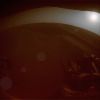
OPP-SOL1700-1R279113699EFF93I3P1311R0M1.jpgUp-Sun with Low Sun - Sol 1700 (natural colors; credits: Lunexit)55 visitenessun commentoMareKromium
|
|
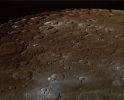
ZZ-Mercury-Limb-PIA11374-0.jpgA View to the South…from the Other Side of Mercury (Extremely Enhanced Natural Colors; credits for the additional process. and color.: Dr Paolo C. Fienga/Lunar Explorer Italia/Italian Planetary Foundation)55 visiteMESSENGER’s 2nd Mercury flyby passed over the opposite side of the Planet from that seen during the Mission’s 1st Mercury encounter. Thus, if one could follow this view obtained by the NAC during the 2nd flyby toward the South, beyond Mercury’s South Pole, it would lead to the Surface seen in an image from MESSENGER’s 1st Mercury flyby (see PIA10187).
Visible in the recently obtained image shown here are many features also seen by Mariner 10: Shevchenko crater named for the 19th century Ukrainian poet, Khansa for the Arabic poet of the 7th century, Rabelais for the Renaissance French writer, Holberg for the Norwegian-Danish writer of the 18th century, Spitteler for the Swiss epic poet who won the Nobel Prize for Literature in 1919, Rameau for the Baroque-era French composer, Puccini for the Italian composer of the late 1800s and early 1900s, and Horace for the ancient Roman poet. Discovery Rupes cuts through Rameau and is named for the ship of English explorer Captain James Cook.
Date Acquired: October 6, 2008
Image Mission Elapsed Time (MET): 131773823
Instrument: Narrow Angle Camera (NAC) of the Mercury Dual Imaging System (MDIS)
Resolution: 510 meters/pixel (0,32 miles/pixel) at the top of the image
Scale: Shevchenko crater is approx. 137 Km (about 85 miles) in diameter
Spacecraft Altitude: approx. 20.000 Km (about 12.400 miles)MareKromium
|
|
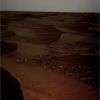
OPP-SOL1702-1P279291306EFF93LGP2378R1M1.jpgMeridiani Twilights - Sol 1702 (natural colors; credits: Lunexit)55 visitenessun commentoMareKromium
|
|
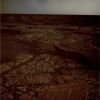
OPP-SOL1702-1N279292226EFF93LGP0723L0M1.jpgMeridiani Twilights - Sol 1702 (natural colors; credits: Lunexit)55 visitenessun commentoMareKromium
|
|
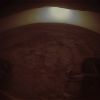
OPP-SOL1702-1R279291207EFF93LGP1311R0M1.jpgLow Sun, High Tau - Sol 1702 (natural colors; credits: Lunexit)55 visitenessun commentoMareKromium
|
|

OPP-SOL0053-MF.jpgDark (Organic?) "Matter" under the pebble... - Sol 53 (Hi-Def3-D - credits and Copyright: Dr M. Faccin and Lunar Explorer Italia)55 visiteSembrava a tutti che la "chiazza scura" che vedete al di sotto del sassolino bianco (il più grande del frame - dimensioni: circa 2 cm) fosse una sorta di avvallamento. Un buchetto, insomma.
E invece no: grazie al processing in Super 3D del Dr Faccin, andiamo a verificare e ci accorgiamo che la "macchia", in realtà, è un agglomerato di qualcosa (sembrano dei pallini scuri, tipo caviale...). Un agglomerato che - anche se bisogna dirlo con calma ed a voce molto bassa - sembra essere costituito da materia organica. densa e di colore nettamente diverso e più scuro rispetto al suolo.
Che cosa stiamo osservando?!?MareKromium
|
|

Pallene-N00119642.jpgPallene55 visitePallene è un satellite naturale minore del pianeta Saturno, la cui orbita è situata fra quelle di Mimas ed Encelado. Pallene è stata scoperta nel 2004 da Sébastien Charnoz del Cassini Imaging Team, il gruppo scientifico responsabile dell'analisi delle immagini scattate dalla Sonda Cassini, guidato da Carolyn Porco.
Dopo aver ricevuto la designazione provvisoria S/2004 S 2, il satellite fu successivamente battezzato dall'Unione Astronomica Internazionale con il nome di Pallene, una Ninfa della mitologia greca. Si rilevò inoltre che il satellite coincideva con un oggetto avvistato il 23 agosto 1981 in una singola fotografia scattata dalla sonda spaziale Voyager 2, con una distanza stimata da Saturno di circa 200.000 km; al satellite, di cui non fu possibile stabilire l'orbita esatta, venne allora attribuita la designazione S/1981 J 14.
L'orbita di Pallene è visibilmente influenzata da una Risonanza Orbitale con Encelado, molto più grande, anche se l'effetto è meno intenso rispetto alle perturbazioni esercitate da Mimas sulla vicina Metone. Il fenomeno è all'origine delle oscillazioni periodiche nel semiasse maggiore di circa 4 Km, e della longitudine del Nodo Ascendente di 0,02° (pari a circa 75 Km). Anche l'Eccentricità Orbitale di Pallene varia (fra 0,002 a 0,006), mentre la sua Inclinazione oscilla fra 0,178° e 0,184°.MareKromium
|
|
| 25353 immagini su 2113 pagina(e) |
 |
|
|
|
|
1944 | |
|
|
|
|





