| Piú viste |

as04-01-641~0.JPGAS 04-01-0641 - Crescent Mother Earth55 visitenessun commentoMareKromium
|
|

as17-152-23288-0.JPGAS 17-152-23288 - Mare Australe55 visitenessun commentoMareKromium
|
|

as16-113-18353.JPGAS 16-113-18353 - Radioisotope Thermoelectric Generator and "Lunar Trash"...55 visiteCaption NASA:"Rightward of 18352, across the RTG. The object beyond the RTG is probably a piece of discarded ALSEP packaging material".MareKromium
|
|
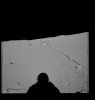
as16-113-18349.JPGAS 16-113-18349 - The "Magnetometer"55 visiteCaption NASA:"Charlie has started an ALSEP Pan from just south of the RTG (Radioisotope Thermoelectric Generator). This first frame is a down-Sun of the Magnetometer".
MareKromium
|
|

SOL590-2N178745810EFFAEBJP0677R0Mx.jpgWhat's all around? - Sol 59055 visiteDal nostro Amico e Lettore, Marco Faccin, un interessante mosaico dei dintorni di Spirit, quando il suo cammino era ancora - in un certo senso - agli inizi. I dettagli ampliati dal bravissimo Marco sono solo un "assaggio" delle migliaia di Singolarità che il MER ha incontrato durante il suo cammino: altre, che ci sono sfuggite, sono ormai passate ed altre, lo sappiamo, ne verranno.
Ci piacerebbe essere capaci di spiegare tutto e di avere sempre una risposta valida e sensata ai Vostri quesiti ma, ahinoi, purtroppo non è così e questa risposta - tante volte - noi non riusciamo a darla. Ma non giudicateci male se, di quando in quando, alle Vostre domande possiamo opporre solo il nostro silenzio: in effetti, piuttosto che improvvisare o dire stupidaggini, noi preferiamo tacere o dire "non lo so".
A noi sembra che questo modus operandi, in fondo, rispetti non solo la nostra Competenza e Credibilità ma anche, e soprattutto, la Vostra Intelligenza e Sensibilità.
Complimenti al bravissimo Marco per questo Lavoro e Complimenti a tutti coloro i quali ci stanno scrivendo (ogni giorno di più!) e che, oltre a porci domande alle quali è sempre più difficile trovare una risposta, ci stanno anche mandando elaborati, dettagli, ipotesi, fotografie...
Grazie a Tutti!MareKromium
|
|

Tethys-PIA09737.jpgCrescent Tethys55 visiteCaption NASA:"The pockmarked crescent of Tethys displays slightly darker terrain in a band at its Equator. The rim of the great crater Odysseus lurks on the Terminator.
Lit terrain seen here is on the Leading Hemisphere of Tethys. North is up.
The image was taken in visible light with the Cassini spacecraft wide-angle camera on Aug. 29, 2007. The view was obtained at a distance of approx. 56.000 Km (such as about 35.000 miles) from Tethys and at a Sun-Tethys-spacecraft, or phase, angle of 105°.
Image scale is roughly 3 Km (about 2 miles) per pixel".MareKromium
|
|
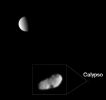
Tethys_and_Calypso-PIA09735.jpgTethys and Calypso55 visiteCaption NASA:"Two companion moons share the sky before the Cassini Spacecraft. Tethys is seen here with one of its two Trojan moons. Calypso, which trails the larger moon in its orbit by 60°, is a couple of pixels across near lower right. Telesto (not pictured) is the other Tethys co-orbital moon, leading Tethys by 60°.
The image was taken in visible light with the Cassini spacecraft narrow-angle camera on Aug. 25, 2007. The view was obtained at a distance of approx. 2,2 MKM (about 1,4 MMs) from Tethys.
Image scale is roughly 13 Km (about 8 miles) per pixel on Tethys".MareKromium
|
|

ZZ-ZZ-ZZ-Martian_Small_Rock.jpgRocks (possible natural colors)55 visitenessun commentoMareKromium
|
|
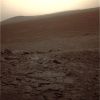
SOL1332-2P244621550EFFAVCBP2398R1M1-1.jpgGusev Crater's Panorama - Sol 1332 (possible natural colors; elab. Lunexit)55 visitenessun commentoMareKromium
|
|

ZZ-Pluto-PIA09234.gifPluto! From New Horizons (GIF-Movie)55 visiteCaption NASA:"The Long Range Reconnaissance Imager (LORRI) on New Horizons acquired images of the Pluto field 3 days apart in late September 2006, in order to see Pluto's motion against a dense background of stars. LORRI took 3 frames at 1-second exposures on both Sept. 21 and Sept. 24.
Because it moved along its predicted path, Pluto was detected in all six images.
These images are displayed using false-color to represent different intensities: the lowest intensity level is black, different shades of red mark intermediate intensities, and the highest intensity is white. The images appear pixilated because they were obtained in a mode that compensates for the drift in spacecraft pointing over long exposure times. LORRI also made these observations before operators uploaded new flight-control software in October; the upgraded software package includes an optical navigation capability that will make LORRI approximately three times more sensitive still than for these Pluto observations".MareKromium
|
|

Japetus-PIA08376-1.jpgRising Japetus (false colors - elab. NASA)55 visiteThe slim crescent of Iapetus looms before the Cassini spacecraft as it approaches the mysterious moon.
Iapetus, 1,468 kilometers (912 miles) across, seen here in false color, is unique in its dramatic variation in brightness between the northern polar region and the middle and low latitudes. Equally prominent is the moon's equatorial ridge of towering mountains. The profile of the ridge against the darkness of space reveals that it is topped by a cratered plateau approximately 15 kilometers (9 miles) wide. Further west, the profile of the ridge changes from a long plateau to discrete peaks.
The mosaic consists of four image footprints across the surface of Iapetus and has a resolution of 489 meters (0.3 miles) per pixel.
A full-resolution clear filter image was combined with half-resolution images taken with infrared, green and ultraviolet spectral filters (centered at 752, 568 and 338 nanometers, respectively) to create this full-resolution false color mosaic.
The color seen in this view represents an expansion of the wavelength region of the electromagnetic spectrum visible to human eyes. The intense reddish-brown hue of the dark material is far less pronounced in true color images. The use of enhanced color makes the reddish character of the dark material more visible than it would be to the naked eye. In addition, the scene has been brightened to improve the visibility of surface features.
This view was acquired with the Cassini spacecraft narrow-angle camera on Sept. 10, 2007, at a distance of about 83,000 kilometers (51,600 miles) from Iapetus.
MareKromium
|
|

Enceladus-N00093907.jpgThe Gem in the Sky of Saturn... (possible true colors; elab. Lunexit)55 visitenessun commentoMareKromium
|
|
| 25353 immagini su 2113 pagina(e) |
 |
|
|
|
|
1930 | |
|
|
|
|





