| Piú viste |

SOL045-ANOMALY-2P130365377EFF0900P2413R1M1.jpgRocky panorama (2 - MULTISPECTRUM; credits: Lunexit)55 visitenessun commentoMareKromium
|
|
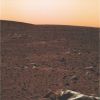
SOL035-1.jpgDeflated airbags and surroundings - Sol 35 (natural colors; credits: Dr G. Barca)55 visitenessun commentoMareKromium
|
|

SOL066-2R132142711EFF1600P1310R0M1.jpgMartian Sandglasses? - Sol 66 (MULTISPECTRUM; credits: Lunexit)55 visitenessun commentoMareKromium
|
|

OPP-SOL065-1P133953115ESF08AQP2574L6M1.jpgMartian Sandglasses? - Sol 65 (version 3)55 visitenessun commentoMareKromium
|
|

OPP-SOL065-1P133953084ESF08AQP2574L5M1.jpgMartian Sandglasses? - Sol 65 (version 2)55 visitenessun commentoMareKromium
|
|
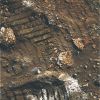
SOL424-1.jpgMartian Moss? - Sol 424 (true colors; credits: Dr M. Faccin)55 visitenessun commentoMareKromium
|
|

as08-13-2246.jpgAS 08-13-2246 - Highly Cratered Region (3)55 visiteCoord.: approx. 15° South Lat. and 165° West Long.MareKromium
|
|

as08-13-2245.jpgAS 08-13-2245 - Highly Cratered Region (2)55 visiteCoord.: 11° South Lat. and 164,5° West Long.MareKromium
|
|

as08-13-2247.jpgAS 08-13-2247 - Highly Cratered Region (4)55 visiteCoord.: 14° South Lat. and 167° West Long.MareKromium
|
|
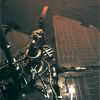
SOL807-2N198008906EFFAR00P1987R0M1.jpgPossible indirect evidence of Mars' "reddish" Sky - Sol 807 (MULTISPECTRUM; credits: Lunexit)55 visitenessun commentoMareKromium
|
|

ZZ-Mercury-Craters-Unnamed_Rayed_Crater-209510.jpgRayed Crater on Mercury55 visiteJust above and to the left of center of this image is a small crater with a pronounced set of bright rays extending across Mercury's surface away from the crater. Bright rays are commonly made in a crater-forming explosion when an asteroid strikes the surface of an airless body like the Moon or Mercury. But rays fade with time as tiny meteoroids and particles from the Solar Wind strike the surface and darken the rays. The prominence of these rays implies that the small crater at the center of the ray pattern formed comparatively recently.
This image is 1 in a planned set of 99. Nine different views of Mercury were snapped in this set to create a mosaic pattern with images in 3 rows and 3 columns. The WAC is equipped with 11 narrow-band color filters, and each of the 9 different views was acquired through all 11 filters. This image was taken in filter 7, which is sensitive to light near the red end of the visible spectrum (750 nm), and shows features as small as about 6 Km (about 4 miles) in size.
The MESSENGER team is studying this previously unseen side of Mercury in detail to map and identify new geologic features and to construct the Planet’s geological history.
Mission Elapsed Time (MET) of image: 108827618MareKromium
|
|

TheRings_Antares-PIA09829.jpgAntares, through the Rings (MULTISPECTRUM; credits: Lunexit)55 visiteCpation NASA:"A point of light flickers behind Saturn's Rings as multiple instruments on the Cassini Spacecraft observe a stellar occultation of Antares (or alpha Scorpii).
Such observations are designed to understand the fine-scale structure of the Rings. Scientists look at variations in the observed brightness of the star (whose actual brightness is well known) to determine the opacity of the Rings in different places.
Among other things, Cassini's prior stellar occultations have been used to examine density and bending waves induced in the A-Ring by Saturn's various moons.
This view looks toward the unilluminated side of the Rings from about 34° above the Ring-Plane.
The image was taken in visible light with the Cassini spacecraft narrow-angle camera on Jan. 3, 2008. The view was obtained at a distance of approx. 541.000 Km (such as about 336.000 miles) from Saturn.
Image scale is about 4 Km (a little less than 3 miles) per pixel".MareKromium
|
|
| 25353 immagini su 2113 pagina(e) |
 |
|
|
|
|
1927 | |
|
|
|
|





