| Piú viste |
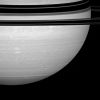
Saturn-PIA09913.jpgJust a Matter of "Proportions"...55 visiteCaption NASA:"A great, eye-like vortex stares out of Saturn's roiling atmosphere. The storm is wide enough to span the distance from Washington, DC to London. Bright Enceladus drifts past in the foreground.
This view looks toward the unilluminated side of the Rings from about 3° above the Ring-Plane.
The image was taken with the Cassini Spacecraft wide-angle camera on April 23, 2008 using a combination of spectral filters sensitive to wavelengths of polarized infrared light centered at 752 nanometers. The view was acquired at a distance of approx. 1,3 MKM (such as about 783.000 miles) from Saturn.
Image scale is roughly 72 Km (about 45 miles) per pixel".MareKromium
|
|
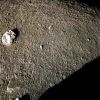
PHOE-SOL008-lg_2336-2337-2342.jpgThe soil of Vastitas Borealis - Sol 8 (Natural Colors + MULTISPECTRUM; credits: Dr Gianluigi Barca & Lunexit)55 visitenessun commentoMareKromium
|
|
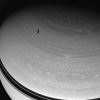
Saturn-PIA09917.jpgFrom farther North, than the North Pole...55 visiteCaption NASA:"Myriad vortices churn through Saturn's high Northern Latitudes while Dione's shadow drifts across the gas giant's face.
This view looks toward the unilluminated side of the Rings from about 43° above the Ring-Plane.
The image was taken with the Cassini Spacecraft wide-angle camera on May 7, 2008 using a spectral filter sensitive to wavelengths of infrared light centered at 752 nanometers.
The view was obtained at a distance of approx. 1,2 MKM (about 760.000 miles) from Saturn. Image scale is roughly 69 Km (about 43 miles) per pixel".MareKromium
|
|
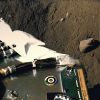
PHOE-SOL013-lg_3315-3316-3317-D.jpgLander and Surface - Sol 13 (Superdefinition + MULTISPECTRUM; credits: Dr G. Barca & Lunexit)55 visitenessun commentoMareKromium
|
|

PSP_006237_1460_RED_abrowse.jpgLandforms of Dao Valles (MULTISPECTRUM-2; credits: Lunexit)55 visiteThis image in a section of Dao Valles contains a multitude of landforms that may result from the actions of ice. Aligned ridges on the valley floors are evidence of glacier-like flow of this material as it gets diverted around obstacles such as the valley walls and local mesas and knobs.
In some areas where the flow appears to have traveled over an obstacle instead of around, a series of fractures occur, analogous to crevasses that form in glaciers on Earth when ice flows over obstacles. The surface we see is covered with rocky debris and soil that may be protecting ice from sublimation.
Throughout the Region, the surface has been mantled by a smooth deposit that appears to have been eroded in a few locations. This sort of mantle is common at Martian High Latitudes and is thought to be a mixture of dust and ice, either ice-cemented soil or very dirty snow. The eroded areas could be due to ice loss trough sublimation, leaving the remaining surface to collapse or be eroded by the wind.
Many gullies are observed that appear to be carved into the valley walls by liquid water. Incised channels in places cut deeply into the surface and fans of debris with crisscrossing small channels indicate where the flow of water slowed and deposited material eroded from upstream. The source of water is as yet unknown. One theory has been proposed involving melting of surface ice or ice-rich soil in the cold Martian climate. Another theory suggests that an aquifer a few hundred meters (yards) below ground is feeding the gullies.
MareKromium
|
|

SOL533-1.jpgThe Sleeper - Sol 533 (natural colors + MULTISPECTRUM; credits: Dr M. Faccin & Lunexit)55 visitenessun commentoMareKromium
|
|
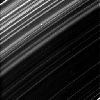
TheRings-N00114226-N00114326.gifThe Rings, with "noise", "cosmic rays" and "unknown objects" - GIF Movie (credits: Dr Gianluigi Barca)55 visiteUno splendido filmato GIF il quale, oltre a darci la sensazione visiva del "movimento" degli Anelli (rectius: di Cassini rispetto agli Anelli), ci fornisce un gran numero di esempi di possibili Anomalìe e "disturbi" di segnale.
In tre parole: un Filmato Didattico. Congratulazioni, come sempre, al Dr Barca!
...e per gli Esperti: riuscite a distinguere alcune "Spikes"?MareKromium
|
|

PHOE-SOL022-PIA10905.jpgSnow-White - Sol 22 (MULTISPECTRUM; credits: Lunexit)55 visiteCaption NASA:"NASA's Phoenix Mars Lander began excavating a new trench, dubbed "Snow White", in a patch of Martian Soil located near the center of a polygonal surface feature, nicknamed "Cheshire Cat".
The trench is about 2 cm (0,8") deep and 30 cm (about 12") long.
The "dump pile" is located at the top of the trench, the side farthest away from the Lander, and has been dubbed "Croquet Ground". The digging site has been named "Wonderland".
At this early stage of digging, the Phoenix team did not expect to find any of the white material seen in the first trench, now called "Dodo-Goldilocks". That trench showed white material at a depth of about 5 cm (approx. 2"). More digging of Snow White is planned for coming Martian Days.
The dark portion of this image is the shadow of the Lander's Solar Panel; the bright areas within this region are not in shadow.
Snow White was dug on Sol 22 (June 17, 2008) with Phoenix's Robotic Arm. This picture was acquired on the same day by the lander's Surface Stereo Imager. This image has been enhanced to brighten shaded areas". MareKromium
|
|

PHOE-SOL022-lg5762-5764-5771.jpgSnow-White - Sol 22 (Superdefinition; credits: Dr G. Barca)55 visitenessun commentoMareKromium
|
|

Methone-N00111933.jpgStar-Trails and Methone55 visitenessun commentoMareKromium
|
|
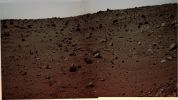
SOL1398-Panoramic.jpgRocky Panorama - Sol 1398 (credits: Dr G. Barca & Lunexit)55 visitenessun commentoMareKromium
|
|

SOL365-369-Panoramic.jpgLate Morning over Gusev Crater (credits: Dr G. Barca & Lunexit)55 visitenessun commentoMareKromium
|
|
| 25353 immagini su 2113 pagina(e) |
 |
|
|
|
|
1926 | |
|
|
|
|





