| Piú viste |
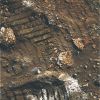
SOL424-1.jpgMartian Moss? - Sol 424 (true colors; credits: Dr M. Faccin)55 visitenessun commentoMareKromium
|
|

SOL045-2P130374235EFF0900P2412L7M1.jpgSpirit: Martian landscapes (MULTISPECTRUM; credits: Lunexit)55 visitenessun commentoMareKromium
|
|

as08-13-2246.jpgAS 08-13-2246 - Highly Cratered Region (3)55 visiteCoord.: approx. 15° South Lat. and 165° West Long.MareKromium
|
|

as08-13-2245.jpgAS 08-13-2245 - Highly Cratered Region (2)55 visiteCoord.: 11° South Lat. and 164,5° West Long.MareKromium
|
|

as08-13-2247.jpgAS 08-13-2247 - Highly Cratered Region (4)55 visiteCoord.: 14° South Lat. and 167° West Long.MareKromium
|
|
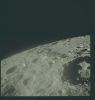
as17-151-23114.jpgAS 17-151-23114 - Crookes, Doppler and Korolev Crater55 visiteImage Collection: 70mm Hasselblad
Mission: 17
Magazine: 151
Magazine Letter: OO
Revolution: 1
Latitude: 6,7° South
Longitude: 163,1° West
Lens Focal Length: 80 mm
Camera Tilt: 66°
Camera Azimuth: 351
Camera Altitude: 117 Km
Sun Elevation (on Local Horizon): 11°
Mission Activity: REV 1
Film Type: SO-368
Film Width: 70 mm
Film Color: color
Feature(s): CROOKES; DOPPLER and KOROLEVMareKromium
|
|

SOL049-1.jpgRover Tracks - Sol 49 (possible true colors; credits: Dr G. Barca)55 visitenessun commentoMareKromium
|
|

OPP-SOL012.jpgUndisturbed Soil - Sol 12 (natural colors; credits: Dr G. Barca)55 visitenessun commentoMareKromium
|
|
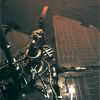
SOL807-2N198008906EFFAR00P1987R0M1.jpgPossible indirect evidence of Mars' "reddish" Sky - Sol 807 (MULTISPECTRUM; credits: Lunexit)55 visitenessun commentoMareKromium
|
|

ZZ-Mercury-Craters-Unnamed_Rayed_Crater-209510.jpgRayed Crater on Mercury55 visiteJust above and to the left of center of this image is a small crater with a pronounced set of bright rays extending across Mercury's surface away from the crater. Bright rays are commonly made in a crater-forming explosion when an asteroid strikes the surface of an airless body like the Moon or Mercury. But rays fade with time as tiny meteoroids and particles from the Solar Wind strike the surface and darken the rays. The prominence of these rays implies that the small crater at the center of the ray pattern formed comparatively recently.
This image is 1 in a planned set of 99. Nine different views of Mercury were snapped in this set to create a mosaic pattern with images in 3 rows and 3 columns. The WAC is equipped with 11 narrow-band color filters, and each of the 9 different views was acquired through all 11 filters. This image was taken in filter 7, which is sensitive to light near the red end of the visible spectrum (750 nm), and shows features as small as about 6 Km (about 4 miles) in size.
The MESSENGER team is studying this previously unseen side of Mercury in detail to map and identify new geologic features and to construct the Planet’s geological history.
Mission Elapsed Time (MET) of image: 108827618MareKromium
|
|
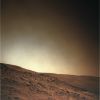
SOL1434-2N253666065EFFAX05F0006L0M1.jpgMartian Sky... (1) - Sol 1434 (MULTISPECTRUM; credits: Lunexit)55 visitenessun commentoMareKromium
|
|

as15-86-11619.jpgAS 15-86-11619 - Hadley Rille Panorama (1)55 visiteCaption NASA:"Hadley Rille from the first Station 6 Sampling Site".MareKromium
|
|
| 25353 immagini su 2113 pagina(e) |
 |
|
|
|
|
1906 | |
|
|
|
|





