| Piú viste |
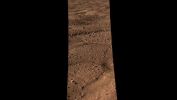
PHOE-SOL001-PIA10693.jpgMartian Surface (Approximate Colors; credits: NASA/JPL-Caltech/University of Arizona/Texas A&M )55 visitenessun commentoMareKromium
|
|

PHOE-SOL002-lg_533.jpgPhoenix in True Colors! - Sol 2 (credits: Dr Marco Faccin)55 visitenessun commentoMareKromium
|
|

PHOE-SOL003-lg_570.jpgThe soil of Vastitas Borealis - Sol 3 (Natural Colors + MULTISPECTRUM; credits: Lunexit)55 visitenessun commentoMareKromium
|
|

PHOE-SOL000-PSP_008579_9020.jpgThe Descent of Phoenix, from MRO - Sol 0 (MULTISPECTRUM; credits: Lunexit)55 visiteCaption NASA:"MRO's HiRISE camera acquired this dramatic oblique image of Phoenix descending on its parachute. Shown here is a a wider view of the full image, showing a 10 Km diameter crater informally called “Heimdall,” and an improved full-resolution image of the parachute and lander (in the inset).
Although it appears that Phoenix is descending into the crater, it is actually about 20 Km in front of it. It is difficult to believe that it is in front of the crater because it is so much smaller, but in reality it is, and that's a good thing because landing on the steep rocky slopes of the crater would have been far too exciting (or risky).
Images from the lander clearly show that it sits on a flat plain, although the rim of Heimdall may be visible on the horizon. Given the position and pointing angle of MRO, Phoenix is at about 13 Km above the surface, just a few seconds after the parachute opened.
This improved image shows some details of the parachute, including the gap between upper and lower sections. At the time of this observation, MRO had an orbital altitude of 310 Km, traveling at a ground velocity of 3,4 Km/second, and a distance of 760 Km to the Phoenix lander.
The image was rotated to a position that seems approximately parallel to the horizon based on the elongation of Heimdall Crater, but this is not exact. Thus, although Phoenix appears to hang from the parachute at an angle, as if swaying in the wind, the exact geometry has not yet been determined. The parachute image is very sharp as its apparent motion was straight down the HiRISE TDI (Time Delay Integration) columns. However, the surface of Mars was moving at an angle to the TDI columns, and thus is smeared by a few pixels, although the smear is not apparent at the reduced scale of the image shown here.
The Sun is almost directly behind HiRISE, so the parachute should be casting a shadow onto the slope of the Crater, but we cannot determine which of many dark spots is the shadow until a detailed geometric analysis has been completed". MareKromium
|
|
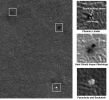
PSP_008585_2915_.jpgPhoenix Lander "Hardware" (Night-Time Frame)55 visiteCaption NASA:"MRO's HiRISE camera acquired this image of the Phoenix Landing Site 11 hours after landing. The image shows 3 unusual features, which were not present in the earlier, pre-landing HiRISE image.
We expect to find three main pieces of hardware: the Parachute attached to the Back-Shell, the Heat-Shield, and the Lander itself. The Parachute (lower right) is easy to identify because it is especially bright, although this image doesn't clearly reveal the Back-Shell.
The double dark marking at upper right seems most consistent with disturbance of the ground from impact and bouncing of the Heat-Shield, which fell from a height of about 13 Km.
The last object (upper left) appears to be a about the right size and height for the Lander and with dark objects on each side (to the East and West) consistent with the solar arrays.
This image was acquired in the nighttime, when the Arctic Sun was only 12° above the horizon to the North-East. Later images will be acquired in the daytime with the Sun higher in the sky and to the South-West, and could confirm our initial interpretations. North is about 7° to the left of straight up in this image.
These objects were later confirmed on the subsequent HiRISE observation acquired 22 hours after landing".MareKromium
|
|
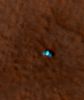
PSP_008591_2485_cut_b.jpgPhoenix! (Natural Colors; credits: NASA/JPL/University of Arizona)55 visitenessun commentoMareKromium
|
|
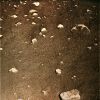
PHOE-SOL004-lg_671.jpgThe soil of Vastitas Borealis - Sol 4 (Natural Colors + MULTISPECTRUM; credits: Lunexit)55 visitenessun commentoMareKromium
|
|
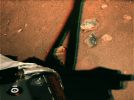
PHOE-SOL004-lg_877-A.jpgHalf-Dusty and Half-Clean... - Sol 4 (Context Frame/Superdefinition; credits: Dr M. Faccin)55 visitenessun commentoMareKromium
|
|
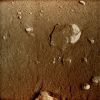
PHOE-SOL005-lg_1015.jpgSmall Rocks in a Greenish/Reddish Soil - Sol 5 (MULTISPECTRUM; credits: Lunexit)55 visitenessun commentoMareKromium
|
|
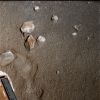
PHOE-SOL005-233915main_SS005EFF896647184_1170ER1M1-2-3.jpgSmall Rocks in a Greenish/Reddish Soil - Sol 5 (Superdefinition; credits: Dr G. Barca)55 visitenessun commentoMareKromium
|
|
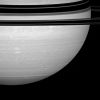
Saturn-PIA09913.jpgJust a Matter of "Proportions"...55 visiteCaption NASA:"A great, eye-like vortex stares out of Saturn's roiling atmosphere. The storm is wide enough to span the distance from Washington, DC to London. Bright Enceladus drifts past in the foreground.
This view looks toward the unilluminated side of the Rings from about 3° above the Ring-Plane.
The image was taken with the Cassini Spacecraft wide-angle camera on April 23, 2008 using a combination of spectral filters sensitive to wavelengths of polarized infrared light centered at 752 nanometers. The view was acquired at a distance of approx. 1,3 MKM (such as about 783.000 miles) from Saturn.
Image scale is roughly 72 Km (about 45 miles) per pixel".MareKromium
|
|

PHOE-SOL006-lg_1300.jpgIn the Sky over Vastitas Borealis... - Sol 6 (MULTISPECTRUM; credits: Lunexit)55 visiteM.L.S.T. (Mars Local Solar Time): 12:59:34
Camera Elevation: 83,7873°
Azimuth: 208,49°
MareKromium
|
|
| 25353 immagini su 2113 pagina(e) |
 |
|
|
|
|
1900 | |
|
|
|
|





