| Piú viste |

007-Ceres-PIA10235.jpg1-Ceres (natural colors, from HST - credits: NASA/ESA et al.)55 visiteCaption NASA:"This is a NASA Hubble Space Telescope color image of 1-Ceres, the largest object in the Asteroid Belt.
Astronomers enhanced the sharpness in these Advanced Camera for Surveys images to bring out features on Ceres' surface, including brighter and darker regions that could be asteroid impact features.
The observations were made in Visible and UV Light between December 2003 and January 2004.
The colors represent the differences between relatively red and blue regions. These differences may simply be due to variation on the surface among different types of material.
Ceres' round shape suggests that its interior is layered like those of terrestrial planets such as Earth. Ceres may have a rocky inner core, an icy mantle, and a thin, dusty outer crust inferred from its density and rotation rate of 9 hours. Ceres is approximately 590 miles (about 950 Km) across and was first discovered in 1801".MareKromium
|
|
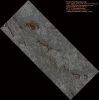
PSP_005095_0935_RED_browse~0.jpgSouth Pole Residual Cap (Swiss-Cheese Terrain Monitoring) - (Natural Colors; credits: Lunar Explorer Italia)55 visitenessun commentoMareKromium
|
|

PSP_003492_1405_RED_abrowse~0.jpgUnnamed Southern Mid-Latitude Crater with "unusually bright" Gullies (MULTISPECTRUM; credits: Lunexit)55 visiteThis image shows a Southern Mid-Latitude (unnamed) crater: it has bright landslides on its South-East and West walls, some of which have noticeable boulder tracks where boulders rolled down the slopes.
The most noticeable features of this crater are the gullies on the North wall. A couple of small gullies appear to emanate from an overhang.
The others originate at or near layers up-slope.
The layers are sturdy and resistant from erosion: the layers that appear to be decaying into resolvable boulders, instead of particles easily moved by the wind, are evidence of this.MareKromium
|
|
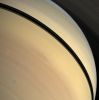
Saturn-PIA10588.jpgJust like an Iris... (Natural Colors; credits: NASA/JPL/Space Science Institute55 visiteCaption NASA:"Rendered in myriad hues, vivid details of Saturn's stormy Atmosphere play out below the shadow of the Rings. A well defined storm swirls through the atmosphere of the southern hemisphere in the lower left of the image, like the tight blue circle of an eye's iris.
This view looks toward the sunlit side of the Rings from about 36° below the Ring-Plane.
Images taken using red, green and blue spectral filters were combined to create this Natural Color view. The images were obtained with the Cassini Spacecraft wide-angle camera on Dec. 29, 2008 at a distance of approx. 1,1 MKM (such as about 680.000 miles) from Saturn and at a Sun-Saturn-Spacecraft, or Phase, Angle of 51°.
Image scale is roughly 60 Km (about 37 miles) per pixel".MareKromium
|
|

SOL617-GB-LXT.jpgBeautiful (and Colourful) Rocks - Sol 617 (possible True Colors; credits: Dr G. Barca & Lunar Explorer Italia)55 visitenessun commentoMareKromium
|
|

Mimas-PIA10589.jpgSunshine v/s Saturnshine on Mimas (Natural Colors; credits: Lunar Explorer Italia)55 visiteCaption NASA:"The transition from light to dark takes place on two fronts in this image of Mimas. The two Terminators that stretch across the moon are created by Sunshine across the North and Saturn-shine in the East.
This view looks toward the Trailing Hemisphere of Mimas. North on Mimas is up and rotated 33° to the right.
The image was taken in Visible Light with the Cassini Spacecraft narrow-angle camera on Jan. 23, 2009. The view was acquired at a distance of approx. 508.000 Km (about 316.000 miles) from Mimas and at a Sun-Mimas-Spacecraft, or Phase, Angle of 152°.
Image scale is roughly 3 Km (a little less than 2 miles) per pixel".MareKromium
|
|

Moonlet-PIA11148-1.jpgTiny Moonlet within a G-Ring Arc55 visiteCaption NASA:"This sequence of three images, obtained by NASA's Cassini Spacecraft over the course of about 10 minutes, shows the path of a newly found moonlet in a bright arc of Saturn's faint G-Ring.
In each image, a small streak of light within the Ring is visible. Unlike the streaks in the background, which are distant stars smeared by the camera's long exposure time of 46", this streak is aligned with the G-Ring and moves along the ring as expected for an object embedded in the Ring.
Cassini scientists interpret the moving streak to be reflected light from a tiny moon half a kilometer (a third of mile) wide that is likely a major source of material in the arc and the rest of the G-Ring.
Debris knocked off this moon forms a relatively bright arc of material near the inner edge of the G-Ring, the most visible part of the Ring in these images. That arc, in turn, leaks material to form the entire Ring.
These images were captured by Cassini's narrow-angle camera on Oct. 27, 2008.
The first image (left) was taken in Visible Light, the second image (middle) was taken in Red Light, and the third image (right) in Near-InfraRed Light centered at a wavelength of 750 nanometers.
Image scale for the first image is roughly 7 Km (a little more than 4 miles) per pixel while the second and third were taken at reduced resolution.
These spatially compressed images were captured at 14 Km (about 9 miles) per pixel and then displayed at a size equal to the first image. This view looks toward the un-illuminated side of the Rings from about 5° above the Ring-Plane.
The view was acquired at a distance of approx. 1,2 MKM (such as about 751.000 miles) from Saturn and at a sun-Saturn-Spacecraft, or Phase, Angle of 23°".MareKromium
|
|

OPP-SOL696-1N189963638EDN64KCP1585L0M1.jpgUp-Sun - Sol 696 (Natural Colors; credits: Lunar Explorer Italia)55 visitenessun commentoMareKromium
|
|
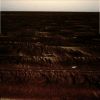
OPP-SOL622-1P183405125EDN63IRP2277L1M1.jpgPostcards from Erebus Crater (6) - Sol 622 (Natural Colors; credits: Lunar Explorer Italia)55 visitenessun commentoMareKromium
|
|

OPP-SOL202-1P146029804EFF3535P2554R1M1.jpgDunes, in FULL detail! (2 - Natural Colors; credits: Lunar Explorer Italia)55 visitenessun commentoMareKromium
|
|
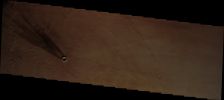
Aeolian_Features-Windstreaks-Pavonis_Mons-20090306a.jpgBeautiful Windstreak, East of Pavonis Mons (Enhanced and Darkened Natural Colors; credits for the additional process. and color.: Dr Paolo C. Fienga - Lunar Explorer Italia)55 visiteCaption NASA:"This Windstreak is located on the Volcanic Flows located East of Pavonis Mons. The multiple tail ends indicate the direction of the wind has changed over time. The darkest tail is the most recent".
Coord.: 0,8° South Lat. and 256,5° East Long.MareKromium
|
|

OPP-SOL1773-GB-LXT~0.jpgThe beautiful Martian Paving - Sol 1773 (Natural Colors; credits: Dr G. Barca & Lunar Explorer Italia)55 visitenessun commentoMareKromium
|
|
| 25353 immagini su 2113 pagina(e) |
 |
|
|
|
|
1890 | |
|
|
|
|





