| Piú viste |

OPP-SOL1776-1N285857447EFF9500P1930R0M1.jpgPanorama, on the way to Endeavour Crater - Sol 1776 (1 - Natural Colors; credits: Lunar Explorer Italia)55 visitenessun commentoMareKromium
|
|

OPP-SOL522-GB-LXT.jpgSurface... - Sol 522 (Natural Colors; credits: Dr G. Barca & Lunar Explorer Italia)55 visitenessun commentoMareKromium
|
|
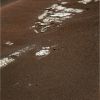
OPP-SOL542-GB-LXT.jpgTenuous Blue-Orange Shades... - Sol 542 (possible True Colors; credits: Dr G. Barca & Lunar Explorer Italia)55 visitenessun commentoMareKromium
|
|

SOL1789-1-GB.jpgLayers in the Dust - Sol 1789 (possible True Colors; credits: Dr G. Barca & Lunar Explorer Italia)55 visitenessun commentoMareKromium
|
|

OPP-SOL549-1-GB.jpgHole in the Ground! - Sol 549 (possible True Colors; credits: Dr G. Barca & Lunar Explorer Italia)55 visitenessun commentoMareKromium
|
|
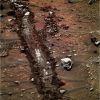
SOL1804-1-GB.jpgColourful Surface - Sol 1804 (possible True Colors; credits: Dr G. Barca)55 visitenessun commentoMareKromium
|
|

OPP-SOL1782-1N286394589EFF95MKP1961R0M1.jpgMartian Twilights - Sol 230 (Natural Colors; credits: Lunar Explorer Italia)55 visitenessun commentoMareKromium
|
|

Craters-Unnamed_Crater-PIA11793-PCF-LXTT.jpgLobate and Chevron Flows (possible Natural Colors; credits: Dr Paolo C. Fienga - Lunar Explorer Italia)55 visiteCaption NASA:"The lower portion of this image from the Thermal Emission Imaging System camera (THEMIS) on NASA's Mars Odyssey Orbiter shows a Crater about 16 Km (approx. 10 miles) in diameter with features studied as evidence of deposition or erosion.
The Crater is centered at 40,32° South Lat. and 132,5° East Long., in the eastern portion of the Hellas basin on Mars. It has Gullies and Arcuate Ridges on its North, pole-facing interior wall.
This Crater is in the center of a larger (60-Km or aaprox. 37-mile diameter) crater with lobate flows on its North, interior wall. The image, number V07798008 in the THEMIS catalog, covers a swath of ground of about 17,4 Km (such as approx. 10,8 miles) wide".
Nota Lunexit: c'è un'indicazione NASA che abbiamo barrato con un "NO" poichè essa indica (e quindi definisce) come "Lobate" un rilievo che è invece - a nostro parere - caratterizzato da una configurazione superficiale a "Chevron".
Verificate Voi stessi.
A titolo di annotazione personale, ci sembra davvero strano che un Addetto NASA (sulla cui competenza non discutiamo) possa incorrere in una simile svista.
Inoltre, sempre con riguardo a questo rilievo a "Chevron", siamo anche dubbiosi sul fatto che esso possa essere definito come "Flow" (ossìa "flusso", evidenza di una "colata").
Più che altro, il rilievo in questione ci SEMBRA una sorta di doppia-cresta del terreno la quale è stata - parzialmente - sepolta a seguito di un fenomeno alluvionale (per i più "Immaginosi" fra i nostri Lettori, poi, vi è anche la possibilità che si possa trattare di una struttura più complessa e "meno naturale" di una semplice increspatura del suolo la quale, sempre a seguito di un evendo alluvionale, è stata quasi completamente sepolta da fango e detriti, poi solidificatisi).MareKromium
|
|
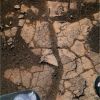
OPP-SOL556-1-GB.jpgThe colourful Surface of Mars - Sol 556 (possible True Colors; credits: Dr G. Barca)55 visitenessun commentoMareKromium
|
|
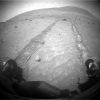
SOL1806-2F286696020EFFAZDHP1214L0M1_br.jpgStuck! - Sol 180655 visiteCaption NASA:"The Hazard Avoidance Camera on the Front of NASA's Mars Exploration Rover Spirit (Front Haz-Cam) took this image after a drive by Spirit on the 1806th Martian Day, or Sol, (such as January 31, 2009) of Spirit's Mission on the Surface of Mars.
The wheel at the bottom right of the image is Spirit's right-front wheel. Because that wheel no longer turns, Spirit drives backwards dragging that wheel. The drive on Sol 1806 covered about 30 centimeters (1 foot). The Rover Team had planned a longer drive, but Spirit stopped short, apparently from the right front wheel encountering the partially buried rock visible next to that wheel.
The Hazard Avoidance Cameras on the Front and Back of the Rover provide wide-angle views. The hill on the horizon in the right half of this image is Husband Hill. Spirit reached the Summit of Husband Hill in 2005".MareKromium
|
|

Dione-N00080526~0.jpgDione (Natural Colors; credits: Lunar Explorer Italia)55 visitenessun commentoMareKromium
|
|
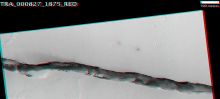
T-CerberusFossae-04.JPGThe Fissures of Cerberus Fossae (Hi-Def3-D - credits and Copyright: Dr G. Barca and Lunar Explorer Italia)55 visitenessun commentoMareKromium
|
|
| 25353 immagini su 2113 pagina(e) |
 |
|
|
|
|
1875 | |
|
|
|
|





